Raise your hand if you've ever asked ChatGPT what to buy.
Now keep it up if you went ahead and bought the thing it recommended. Still up? Okay, last one. Keep it up if you typed your card details into the chat window and completed the purchase right there.
I know you lowered your hand at the last question and it's exactly why most merchants have dismissed agentic commerce as somebody else's problem. The AI buying part barely exists and is going to remain the same way for some time thanks to OpenAI's in-chat Instant Checkout’s massive failure.
But, that being said, AI is learning to do other things better. It can understand technical documentation, compare products, and point shoppers toward your product pages. I mean this redditor proves just how prevalent and swift the whole thing is:
"replace lawnmower blade- not difficult IRL, but it does involve getting the model number off the mower and looking it up on-line (esp. for mulching mowers, esp. with electric mowers- this one is both). Take a pic, give it to ChatGPT and say I want a replacement blade- gives the links, click to order."
See how simple shopping with AI recommendation is? It pulls exactly what you need without you ever having to endlessly browse different digital storefronts. Maybe that's the reason Amazon has been expanding its fight to keep AI bots from scraping its website. They know that when AI acts as the middleman, the retailer loses control of the shopping environment.
A January 2026 study from the IBM Institute for Business Value found that 45% of consumers already use AI somewhere in the buying journey. But are there other parts of the journey where AI helps? Or more importantly, where it hurts?
To answer it better, we need to address a fundamental contradiction about commerce’s future: Most shopping is an irrational behavior (remember the Labubu mania?), but AI is a purely rational actor.
And why’s that a problem? Let’s take an example of the blue t-shirts at Best Buy to understand it all better.

Their job has two halves. They walk you to the right television, and then, once you've settled on it, they ask whether you'd like it covered for three years. Recommendation and attachment happen in one interaction, with one person. That's the retail version of peanut butter meeting jelly and it's been printing money ever since.
You see add-ons, upsells, and cross-sells are incredibly popular amongst merchants because they offer the highest margins. They are the true profit engines of the business.
An AI research assistant nails the first half but skips the second one entirely. It skips it because your coverage terms are live in product page body copy and a linked PDF, and it never saw them.
So, how do you keep add-on attach rates or your upsell opportunities from becoming AI's next casualty?
Your session counts look normal. Your conversion rate looks normal or even slightly better (because some shoppers referred by AI, had 80% made up their mind to purchase). Revenue is holding. All seems well.
Yet, the one number that has been moving is attach rate, and yes, it moves slowly- two or three points across a year.
So the downward trend first gets blamed on the user intent. Then on placement, then on price, and then on the theme updated last spring.
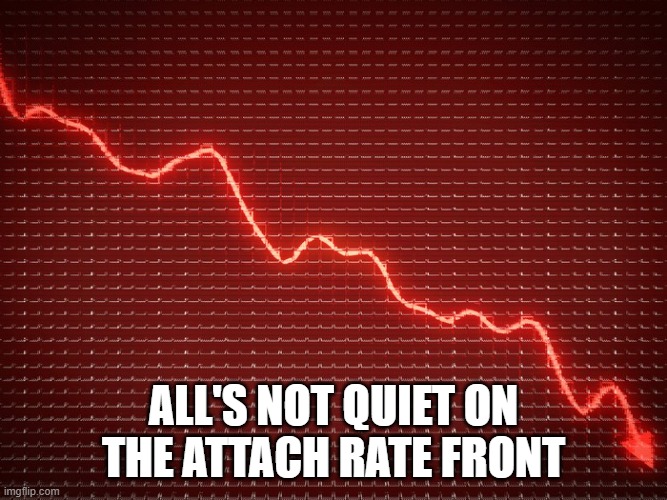
The reason it stays invisible is that nothing in your stack records a sale you were never considered for. A shopper who shortlisted your product from AI and a shopper who stumbled across it from SERPs or other channels look identical by the time they hit your product page. But, zero-click discovery is breaking attribution, and it's taking your add-on revenue along with your traffic reports.
Before fixing anything, find out what a machine can currently see. Give this ten minutes.
List every value-added service you sell, then answer two questions about each. Could an AI assistant find your offers without a human clicking anything? And does it affect the total cost of owning the product?
You don't need a new product to start. All you need is this road map and you'll do just fine:
Here are the four services that you can introduce for your buyer:
Shoppers are wary of handing an AI assistant their credit card, but they are perfectly comfortable asking it what to buy. And that front is catching up with people quickly, just look at the buzz in the same thread above:
“I was at an Adobe conference for marketing technology and they said within the next couple years we will be primarily marketing to AI, not to people. AI will be essentially deciding what we buy via its recommendations. Even trying to Google today you get a long answer from AI before you get to the results.”
In a rare plot twist, the internet got this one right.
Yes, Google is building onto the trend, with it's Shopping Graph now carrying over 50 billion product listings, with more than 2 billion of them refreshing every hour.
But AI isn't changing every purchase equally. People are far more likely to use it for expensive products they expect to own for years, not to decide between a blue couch and a green one.
These are your e-bikes, major appliances, HVAC systems, solar equipment, musical instruments, and medical devices. Sound familiar? They are also the categories where protection plans perform the best.
The reason is simple. When someone's making a big purchase, rather than just asking, "Is this the right product?" They're also asking, "What happens if it breaks?"
We can help you answer both questions at the right place and the right time. Book a demo with SureBright.
.jpg)


M Khizar is a writer enjoys making complicated things feel simple. He writes about warranties, ecommerce, and the small details people usually overlook, until they matter. His work focuses on clarity and helping readers make smarter decisions without overthinking it. Outside of work, he enjoys reading, writing personal blogs, and binge eating with friends.


.jpg)