

The hype dust has finally settled and the saloon doors have stopped swinging. There’s a new gunslinger in town: ChatGPT ads.
Google, Meta and Amazon have spent decades perfecting the art of getting brands in front of buyers. Now ChatGPT has walked into the same dusty street, except its customers are a bit torn about whether it would fire duds or really be counted among legends.
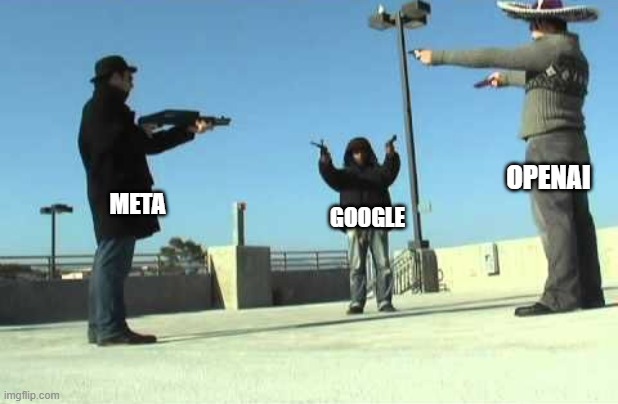
In most internet townhalls, the general spirit is more inclined towards the former than the latter. A while back, someone on r/ChatGPT tried to explain why the whole idea bothered them.
“...I use chatgpt daily for work. the idea of it recommending a tool mid-conversation and getting paid for it makes me uncomfortable in a way I'm still figuring out. Like it's not just an ad. it's an ad dressed up as advice from something you trust.”
That discomfort isn't exactly hard to understand. When you’re used to asking ChatGPT for an answer, an ad inside that answer can feel less like a billboard and more like your trusted bartender suddenly getting a commission for recommending a specific kind of whiskey. Even a survey found 63% of adults saying ads in AI search results would make them trust the output less.
But the ads have shipped anyway and now they have gone from a $200,000-minimum experiment to something you can switch on this afternoon with a card and a product feed. The clicks are reportedly running roughly $3 to $5, which is not exotic money for anyone already buying Google ads.
So, the questions that you must be finding yourself asking would be: Do ChatGPT ads work? Are they worth it for a store your size? Truth is nobody is going to give you a straight answer- neither the guy selling you a course on AI advertising nor the influencer announcing yet another AI revolution , so let me share some data backed research with you.
Let’s look at what the ChatGPT ads costs, who actually sees it, how it compares with other channels, and whether there's sufficient reason for you to pull the trigger.
In two simple words: a lot!
If you read a hot take on ChatGPT ads in January and thought that you’ll get back to it later, almost everything about it has since expired.
But the biggest change OpenAI has seen is in its CEO, Sam Altman’s outlook towards advertisements. The guy went from hating “ads as an aesthetic choice” to finding it “cool things to do that actually seem helpful to users” in a single year. I guess people do evolve (especially when their analysts show them a forecast of billion dollars in new revenue from a thing they hate or tell them how users are dropping off in droves.)
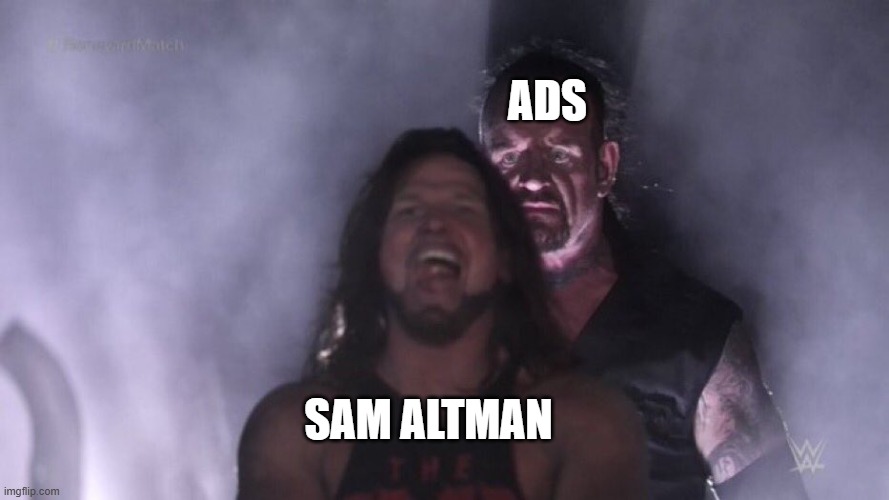
That leads us to a very interesting question... why hasn’t any other AI tool done this yet?
Perplexity did ride the town on an ‘AI search advertising first’ pony - testing sponsored follow-up questions from late 2024. Then it stopped taking new advertisers in October 2025 and walked away completely in February 2026. One wonders what they found staring in the abyss.
The reason wasn't money, because ads were barely a rounding error for them at roughly $20,000 out of $34 million in 2024 revenue. A Perplexity executive said that the trouble with ads is that users simply start doubting everything.
Anthropic went further, publishing an essay in February 2026 committing to keep Claude ad-free permanently, arguing that sponsored placements would conflict with what the assistant is for. Will that stay that way or change after a year like Sam Altman’s outlook... only time can tell. For now, their vision of a trillion-dollar IPO is keeping them growing massively even as OpenAI has been struggling. The company has a far larger free population to pay for.

So the split says less about ethics than about who needs the ad revenue. However, the practical consequence for you is the same either way: a meaningful chunk of AI search traffic has no paid slots to buy at all. On those surfaces, showing up is earned or lost.
Ads only show on ChatGPT's free and Go tiers.
Everyone on Plus, Pro, Enterprise or Education sees nothing. As of July 2026, 51% of US free-tier replies carried a sponsored block, so the inventory is dense where it exists and completely absent where it doesn't.
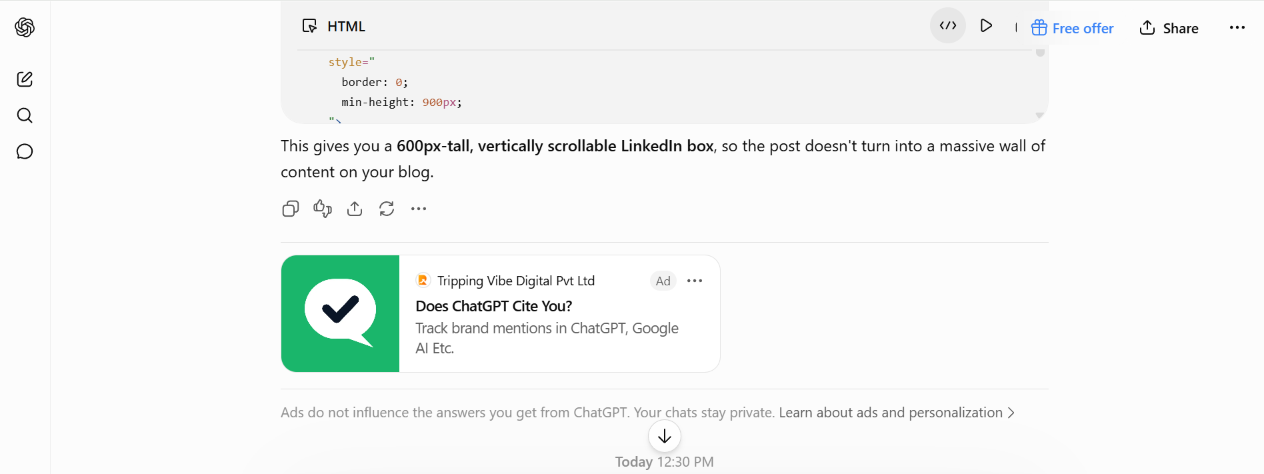
That creates an awkward pattern. An agency ran a test in June 2026 and got 8,940 impressions and 58 clicks at a 0.65% click-through rate, with no signups to show for it. Their diagnosis was an equal combination of uncomfortable and honest: the more closely someone matched their ideal customer, the likelier that person was already paying for an ad-free plan.
For B2B sellers, that ceiling is a nightmare on ChatGPT ads. The operations director evaluating your software probably has the money to afford a Plus subscription. But whether they use that or stay on Claude isn’t a clearly answerable question.
For DTC and retail, this matters less. Most consumer shoppers are on the free tier, and those are exactly the people likely to see these ads while asking for gift ideas, comparing mattresses, or deciding what to buy.
That might sound like a mixed bag. Let’s take a closer look.
Let’s start with the good parts-
Now the rough parts -
Someone who spends their days buying ads had a pretty telling take on r/PPC:
“Conversion performance is well below Google, Meta, or MS at this point for most advertisers. But the platform will very likely improve; keep in mind that we've only had conversion tracking since June and performance based bidding for weeks.”
So, judging the platform on today's numbers is a bit like judging Facebook ads in 2009. But still, just for the sake of it, here’s a comparison table of how ChatGPT ads compare to other platforms that you might already be using:
It is worth testing now if you:
That being said, the harder problem shows up after the click. A stranger who found you through an AI recommendation has no history with your brand, so every doubt they would normally park for a trusted store gets asked at checkout instead.
There’s a way you can show your customers that you care about them, especially when you acquire them through ChatGPT ads.
Adding a warranty to your checkout or post-purchase strategy can work as a signal of trust. Protection coverage works better than another badge or another discount code. Rather than giving them the reason to think you are upselling, it helps your customer build peace of mind for a product they’ve already purchased. That’s just what many renowned brands did – Sennheiser reduced return rates through warranty integrations and got high attach rates in return. So did BBQ Kitchen Pros, Magnum Bikes, and more.
And that’s exactly what SureBright helps you with. We help you integrate protection plans seamlessly and handle the claim side of things so that you can focus on building your customer’s loyalty and trust.
If you are interested, see how SureBright adds protection plans to your store.
.jpg)


M Khizar is a writer enjoys making complicated things feel simple. He writes about warranties, ecommerce, and the small details people usually overlook, until they matter. His work focuses on clarity and helping readers make smarter decisions without overthinking it. Outside of work, he enjoys reading, writing personal blogs, and binge eating with friends.


.jpg)