

Hello fellow merchants,
Are you also an advocate of the good old days when people trusted each other and didn’t treat every purchase like a background verification program?
How’s that going for your store?
If you're still operating like it’s 2022 - increasing ad spend, adding more trust badges to checkout, tweaking your PDP for the billionth time, you’ve probably already felt it: traffic still comes in, but conversions and retention do not.
Your customer wants the product, they just don’t trust you instantly anymore. But, can you even blame them?
AI slop has flooded every feed - every Instagram ad now looks and sounds similar. The five-star reviews on websites sound autogenerated. They stopped meaning anything because every brand says it, every creator says it, and half the time, a chatbot might have written it anyway.
So, allow me to introduce you to the average buyer in 2026.
They verify everything - they see your product on Instagram, then search your brand on Reddit. Then check a review forum like Trustpilot, maybe even consult ChatGPT (it’s also the reason why your attribution system’s broken). And for them every complaint, shipping horror story, refund issue, or fake review signals risk.
.jpg)
That’s essentially trust recession. 61% of people now believe that businesses make their lives harder, not better. 82% of consumers report some level of mistrust when shopping online.
So what do you do when the very foundation of ecommerce, a stranger believing another stranger, starts to crack?
Meet my friend Sarah.
Sarah is 29, reasonably online, has fallen for exactly one scam in her life, and has sworn never again. Which means that before buying a $240 air purifier last month, she conducted what can only be described as a federal investigation.
First, she saw the ad on Instagram. The ad featured a beautiful creative, classic minimalist kitchen. And in a not so surprising turn of events, a founder talking about “reinventing clean air.”
Did she click the ad?
Of course not.
She opened a new tab instead - exactly where your dashboards lost her. Then she spent a week scanning review pages, going through a well-wisher's analysis on Reddit:
“The devices start off promising but soon develop a burnt wire smell, and the replacement filters, even when ordered directly from the manufacturer, exude a chemical odor.”
And after some minor hyperventilation and waking me up in the middle of the night, she finally decided to buy the product. Why? Because enough people on the thread said that theirs worked fine for years.
If you’re thinking Sarah is just one of those rare paranoid shoppers, it’s the right time to tell you that most of your buyers do exactly what Sarah does - discover a brand somewhere, then validate it on Reddit before purchasing. A badly formatted Reddit comment carries more weight than a homepage your team spent three weeks refining.
And so, this is what the ecommerce journey looks like in 2026.
Discover > verify > doubt > cross-check > investigate > maybe buy.
And on the face of it, none of this seems quantifiable, which creates a difficult problem for merchants.
For a customer journey like the one we looked at, your analytics will probably credit Meta, which is only partially true. For all you know, the sale actually happened because three strangers on Reddit said your return policy was reasonable and nobody complained about shipping delays.
And the irony is, consumers don’t even fully trust the places they use for verification anymore.
Trustpilot removed 4.5 million fake reviews in 2024.Studies estimate that nearly 30% of all online reviews are fabricated or manipulated. Which means shoppers now investigate the investigators too.
And the modern customer journey feels increasingly chaotic. Buyers now assemble trust from fragments: a Reddit thread, a creator they vaguely trust, a ChatGPT answer or maybe a friend saying, “Yeah, they’re legit.”

Individually, none of these signals might close the sale. Together, they reduce fear enough to let the customer proceed. Which brings us to the most important question you should ask at this stage: “where does my customer go when they stop trusting me?”
No amount of ad spend or homepage redesign is going to fix what’s happening on touchpoints you’ve never looked at.
The trust your buyer places in you through Reddit threads, ChatGPT answers and some vaguely persuasive founder video was just barely enough to convert them one time. What happens next decides whether they will ever come back.
The real trust test begins once money leaves their account. And the higher the order value, the more emotionally unstable this process becomes.
A $14 phone stand from TikTok Shop can survive disappointment. A $1,200 treadmill cannot. Neither can a smart refrigerator, an ergonomic chair, or even Sarah’s $240 air purifier.
Because expensive purchases create post-purchase paranoia. The excitement lasts maybe a few minutes. Then the questions begin: “What if this breaks?”, “What if support ghosts me?”, “What if returns are impossible?”
And you’ll find your answer to this, just stick a bit longer.
Your customer is watching everything now, from the shipping updates to the tone of your emails, how quickly support responds, and whether your chatbot sounds helpful or not. This is where brands accidentally destroy trust after spending thousands acquiring it.
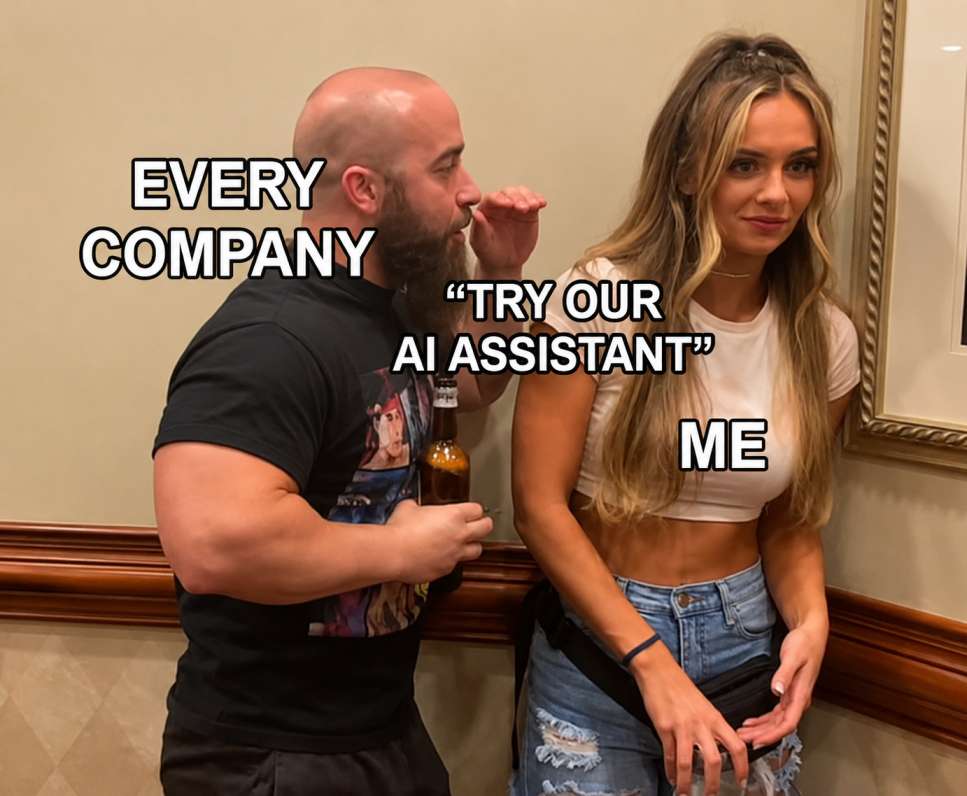
And AI is a multiplier, not a replacement. Automate repetitive work all you want. But the moment a customer is stressed, confused, or angry, throwing a chatbot at them is the surest way of killing that trust.
Moreover, 71% of shoppers say they will never return after a bad return experience.
And true loyalty has declined for the first time in five years. TikTok virality helps you acquire customers quickly, but it also creates customers who disappear just as fast - this is especially true for 43% of Gen Z shoppers admitting to buying a product purely because it was trending on social media.
A repeat customer is someone who went through the entire experience - delivery, support, follow-ups, uncertainty, maybe even a minor issue - and decided they would willingly do it again.
And financially, it matters more than most acquisition wins teams obsess over.
For example, Oram Brothers, a men’s jewelry brand, was stuck at $1.5 million in revenue for three years while aggressively spending on paid acquisition and even taking out loans to sustain growth. Then they flipped the strategy: more focus on retention, lifecycle automation, and stronger brand positioning. They even raised prices by 22%. Revenue jumped 112% within six weeks and they ended the year with $3 million in revenue, having paid off all their business loans to operate on pure profit.
This is perhaps one of the most crucial differentiators right now.
Content is like a broadcast. You publish it, you hope the algorithm shows it to someone, and that’s the end of your involvement. Community is a conversation where you consistently own the relationship.
Decision fatigue is at an all time high. If you really want to build trust, build a space where your customers can talk to each other. Because when Sarah has a question about her air purifier at 11pm, she’s not going to your FAQ page. She’s going to the community. And if that community exists and someone answers her, you just earned more trust than your entire marketing budget could buy. Plus, I forgot to tell you, Sarah got 2 more people to buy that same brand after earning her reputation as the ‘air purifier expert’.
At this point, some of you are probably wondering whether fighting a trust recession simply means “spend more time on Reddit.” Unfortunately, no.
But trust is also not a cosmetic layer sprinkled onto checkout pages with security badges and overly enthusiastic testimonials. What you need to do instead is build trust systematically across every stage of the customer journey.
Build trust signals like a brand story, a journey.
If someone searches “[your brand] reddit” and finds nothing, it is suspicious. And if they find unresolved complaints, you’ve just dug yourself an even deeper pit.
This is also why brands need to stop treating community participation like an intern-level social media task. Building trust now means showing up where customers make decisions and actually being useful when you get there.
Because AI systems are watching those conversations too.
ChatGPT, Perplexity, Gemini - they are increasingly building your brand identity from public discussions, reviews, forums, and customer sentiment, not just your website or PR articles.
Once customers finally arrive on your site after surviving their investigative journey, your job is no longer to impress them but to reassure them. A pretty website is nice and all, but when it comes down to it, being clear beats being clever any day of the week.
Customers want to know who has their back when something goes wrong. Which is why warranties, shipping protection, transparent return policies, and visible support channels matter more than another animated product section your agency charged $14,000 for.
The strongest brands also explain value instead of just presenting price. They use real customer photos, detailed use cases, video testimonials, and language that sounds human.
At the risk of repetition, I am saying this again - one resolved complaint shared publicly on Reddit is often more persuasive than a hundred polished five-star reviews.
Your competence is as important as any other marketing channel.
If you want to survive the trust recession, create environments where customers help each other, validate experiences, answer questions, and collectively reduce fear for new buyers entering the funnel.
The trust recession isn’t going away.
But for merchants willing to build trust as infrastructure, there is more opportunity right now than there has been in years. Because when everyone is equally distrusted, being slightly more believable becomes a disproportionate advantage.
.jpg)