

There is a town in upstate New York called Agloe. You’ve probably never heard of it and for good reason, because it never really existed.
Two mapmakers invented it in the 1930s, scrambled their own initials into the name, and dropped it onto an empty dirt-road intersection in the Catskills, New York. Eventually, a general store appeared there, along with a lodge and even a listing in county records.
Agloe was a paper fingerprint. If another mapmaker copied it, the evidence was right there on the page with a big disclaimer: you plagiarised our map.
Fast-forward nearly a century, and AI companies are pulling a similar trick. The latest to join the party is Claude’s creator Anthropic. That means, if you or your agency has been using their services (or even other AI providers), this could ripple through everything from your product pages to your ads, emails, and SEO. But before we panic about the future, let’s look at what actually changed.
In August 2026, Anthropic publicly confirmed that Claude leaves an invisible watermark in the text it produces. The signal is woven into the word choices themselves, creating a kind of linguistic fingerprint that can help determine whether Claude was involved in writing a piece of text. Anthropic says it is rolling this out to comply with the EU AI Act.
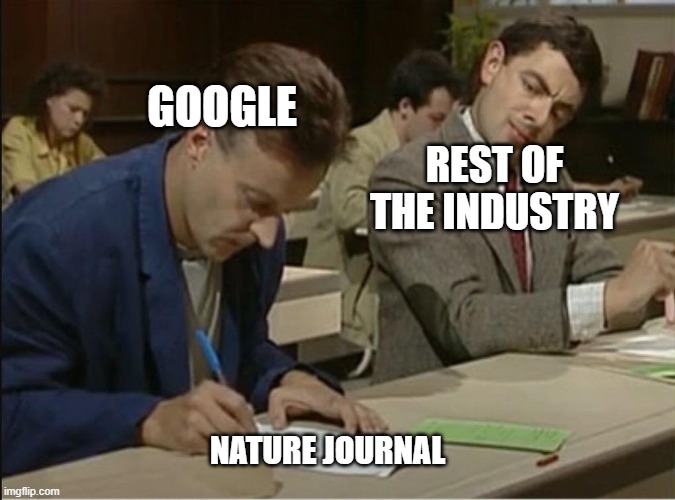
But the interesting part is, Claude has publicly announced that it joined the party, but it is actually late for it. Google has been pulling the same trick with Gemini since 2024 and then published the recipe in Nature Journal so the rest of the industry could have a go at it too.
Which brings us to the part that should genuinely concern every business.
AI-skeptics have spent the last three years waiting for Google to finally announce an AI penalty, which Google never did. But what if it did so secretly, selectively meted out the penalties and we never even realized? Yes, we have some proof.
This piece talks about just that along with what’s confirmed, what’s guesswork, what four years of generated content actually bought you, and finally what to check on your own site before AI detection becomes a problem for you.
When a model writes a sentence, it is constantly choosing between words that are equally good: cold and grey, or cold and overcast. Nobody on earth cares which one lands. The watermark rides on those throwaway choices, nudging them into a pattern that anyone holding the right key can read back later. Anthropic's own explainer walks through it properly if you want the full picture.
But the part that should interest or worry you depending on your AI usage is that Anthropic did not invent this as we discussed before. Google was the first to chart this sea. Which raises the more useful question for your store. If Google has held this capability since 2024...
On paper, nothing to your rankings- at least nothing that’s publicly acknowledged.
Every company's watermark has its own lock and its own key. Google's key opens Gemini's mark and nothing else. Claude's mark is invisible to Google. ChatGPT's is invisible to both. So, if your product descriptions came out of ChatGPT last spring, theoretically Google should not be able to tell.
Anthropic's detector is also not something you can go and buy. It is in private preview, handed out to regulators, law enforcement, journalists, fact-checkers, researchers, teachers, and companies with their own legal reporting duties. Your competitor is not on that list, neither is your SEO agency. But that being, it is not difficult to get a hold of the key. All you need to do is fill out a “Google” form and you just might be eligible to get the access.
On a lighter note, here are two types of content that are safe from being watermarked:
Now, since you cannot change the past or all the generated content that’s already on your store, it is worth asking what all that content actually did for you before you decide should you defend it or not.
Everyone remembers the spike. You turned on the tap, published 40 posts in six weeks, and the graph went up and to the right, screenshots were shared, somebody got promoted... and then what happened?
SE Ranking ran the experiment this year. They published 2,000 AI-generated articles across 20 fresh domains and watched. For the first three months, things looked great. Then, in early February, the share of pages ranking in the top 100 fell from 28% to 3%. The pages stayed indexed. They just stopped being findable by anyone. There was one brief bounce months later during a spam update, but even that did not hold. The recovery never arrived.
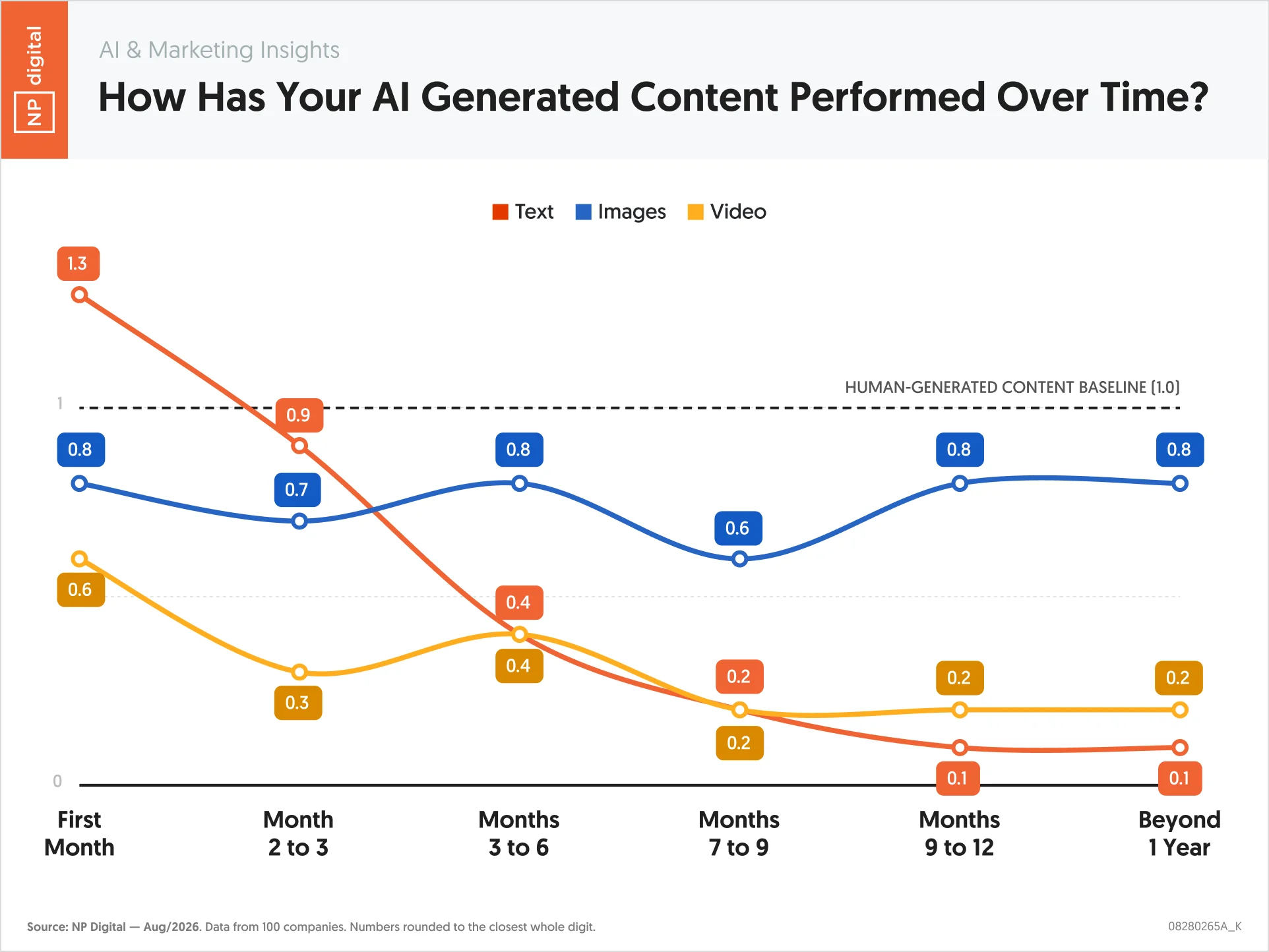
SEO analyst Lily Ray went one better and did something devilish. She pulled the customer success stories published by more than a dozen AI content platforms, tracked the 220+ domains named in them, and charted what happened next.
It was a steep climb, then a drop of almost exactly the same shape. Same pattern across cybersecurity, travel, SaaS, healthcare, crypto and consumer goods. And here’s the part that should make you think: most of the crashes happened after Google’s January 2026 update.
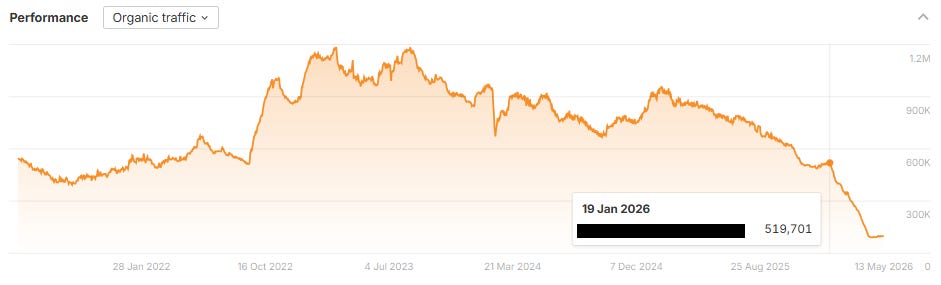
Unsuspectedly, the vendors published evidence against themselves. So, that begs the question – was there any meaningful growth in these last 4 years?
Before we go further, let’s talk about the bigger picture. A study by MIT ran the numbers across more than 300 public AI deployments, along with interviews and surveys of business leaders, and found that 95% of organizations got zero measurable return on generative AI. Somewhere between $30 and $40 billion spent, and almost nothing showed up in the P&L.
So why did the content bet in particular go so flat? Here are the five reasons why:
1. AI works brilliantly when it is the product: Cursor built an entire code editor around it and developers pay monthly for the privilege. Midjourney built an image tool with no free tier and stayed profitable. Both sold the capability itself. Publishing 400 blog posts with it is a different proposition, and the returns look nothing alike.
2. There is no extra attention available to buy: A research tracked how long people hold focus on a screen, and the figure fell from around two and a half minutes in 2004 to roughly 47 seconds today. Doubling your output does not double the hours in anyone's day. You are just competing harder for a shrinking window, mostly against yourself.
3. Shoppers got good at spotting it, and they mind: Gartner found that half of the consumers in 2026 would rather buy from brands that keep generative AI out of their customer-facing content. Another study watched the same question over two years and saw the share who would trust a favorite brand less for heavy AI use jump from 20% to 40%. Gen Z penalizes it hardest, at 54%.
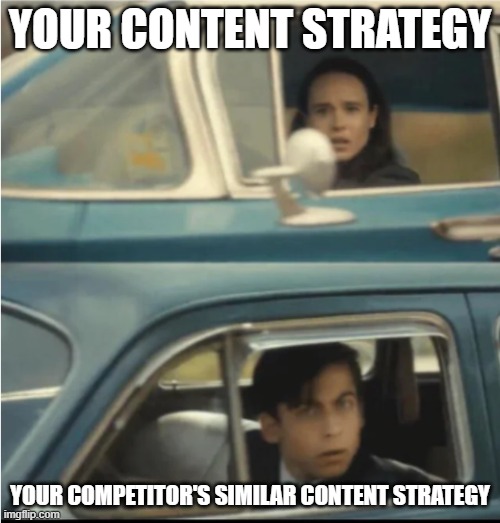
4. Everyone did it at the same time: An advantage that every competitor in your category adopts within the same eighteen months stops being an advantage. It becomes the new baseline cost of being in the category, and nobody gets to charge for it.
5. Brand voice is easy to lose and expensive to rebuild: CNET published AI-assisted finance articles and ended up issuing corrections across a large share of them. Sports Illustrated ran AI-written pieces under invented authors with generated headshots, and the fallout cost it far more than the articles saved. Neither outlet lacked talent. They lacked anyone whose job was to notice that the writing had stopped sounding like them.
Easily the content platforms billing monthly, per seat. Agencies shifting to monthly retainers. AI ranking SaaS tools that played up the hype. Detector companies selling certainty about AI. Humanizer companies selling the cure for that certainty. The same nervousness monetized twice, which is honestly beautiful work if you can get it.
And as we speak a new category is forming - Watermark audits, AI-free certification, compliance scans for your content library.
Even Reddit, the internet’s unofficial town hall, seems to agree, with one commenter putting it this way:
"So instead of writing something and having claude rephrase it, now I need to rephrase whatever claude writes. Cool."
However, humanizers especially now sit in the funniest spot of all. Light edits will not move a watermark. The only thing that reliably removes it is swapping out nearly every word, which has a simpler name. It is called writing the thing.
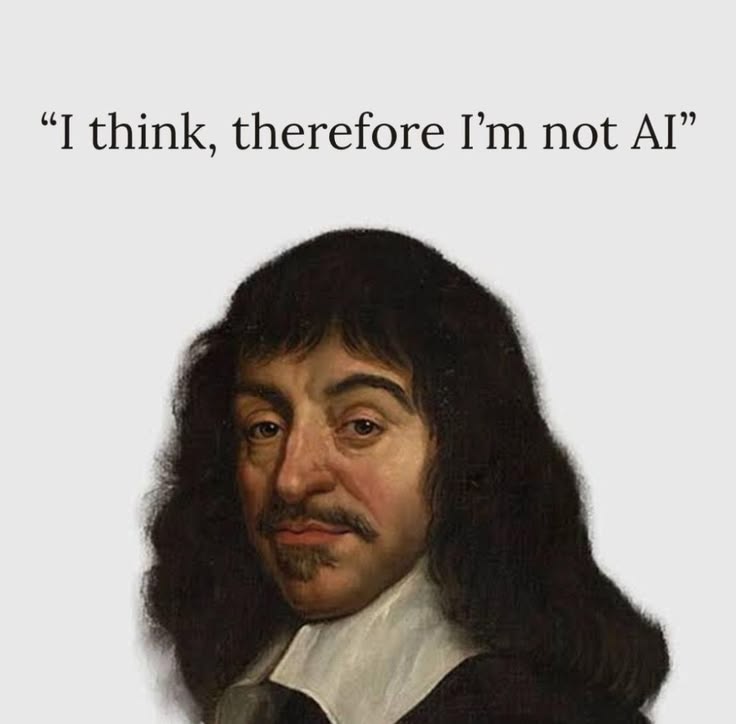
Go and look at the careers pages. Content marketers, editors, creative copy leads, people who know one industry deeply enough to spot when a model is confidently wrong. They pay well for them, because models need good human writing to learn from and to be measured against.
Well, aided by the AI hype, did your store reach the opposite conclusion?
If you really want to save yourself from the crosshair of the algorithm gods, it is always recommended to do this homework:
One last warning before you go. The AI echo chamber is loud, and on the biggest point, it isn’t wrong. These tools really are remarkably good at producing content that looks decent: fast, clean, grammatical.
But go back and check the brief. Was "looks decent" ever what you needed from your product pages?
If not, maybe you should make sure that there’s still enough of your voice in it and that anyone would care who wrote it.
.jpg)


M Khizar is a writer enjoys making complicated things feel simple. He writes about warranties, ecommerce, and the small details people usually overlook, until they matter. His work focuses on clarity and helping readers make smarter decisions without overthinking it. Outside of work, he enjoys reading, writing personal blogs, and binge eating with friends.



.jpg)