

Jerry Seinfeld standing at a rental counter, arguing over a car that isn’t there, is an iconic TV moment - “You know how to TAKE the reservation, you just don't know how to HOLD the reservation. And that's really the most important part of the reservation: the holding.”
In high-risk categories in e-commerce, merchants have the exact same problem with profit margins. They know how to make the sale, but keeping the money becomes a constant challenge.
Sell cheap, lightweight stuff, and taking the money is enough, because post-sale issues are rounding errors. But sell treadmills, furniture, or high-end electronics, and the sale is only half the battle. Between transit damage, component failures, returns, and reverse logistics, the real challenge is stopping post-sale chaos from grabbing all that revenue right back.
One furniture seller took a routine return request and watched their profit margin get mugged by reverse freight:
“furniture return rates run ~20%+, and the dominant reason isn't damage or quality, it's "it didn't fit / looked different in my space." Reverse logistics on a sofa can eat the whole margin.”
It’s definitely generous, if you're the buyer. Not so generous if you sell this stuff. Those pieces cost more to haul back than they’d resell for, so they were written off. And there are more than a few ways a sale can come back looking for its money - a damaged shipment, a chargeback, a “return” that contains a different product, or a perfectly legitimate return that costs more to reverse than the original sale ever made.
So how do you actually hold onto the money and stop one disastrous order from swallowing ten good ones? Let’s dive right in.
We’ve established that the act that a single return can sets off a tragic domino effect across your entire system. Now, in a “best case scenario,” you would assume a returned product is a broken product.
Well, it rarely is.
According to some studies, 95% of returned consumer electronics fall under the category of No Fault Found. The customer could have just gotten lost during setup or simply changed their mind. But no matter how they wish to exploit your generosity, you now own a working unit that can no longer go straight back on the shelf as new.

And the same return can have wildly different consequences depending on what you sell. Electronics carry the phantom defect. One seller watched it play out after a laptop came back tagged as dead:
“Asked guy for a video of problem? Nothing. The return picture he sent doesn't even have a picture of the computer. It was just a random photo from his album. So I'm stuck in a dilemma.”
He refunded anyway, because arguing invites a chargeback. And resale value was clipped for the crime of opening the device.
And this brings us to the part of high-risk e-commerce that’s easy to miss - the loss doesn't always come from the refund itself. Sometimes it comes from what the product is worth after something goes wrong.
For furniture and other bulky goods, that cost can show up in the trip home. A sofa comes back with a torn corner, gets loaded onto another truck, and suddenly the freight bill starts laughing at the margin.
For e-bikes, the stakes can be higher still. In 2025, the CPSC recalled about 24,000 VIVI e-bike batteries after reports of overheating and three fires. At that point, the problem is no longer simply replacing a failed part. It can become a recall, a safety issue and a potentially serious liability.
And sometimes the risk goes beyond getting the product back in worse condition. It’s getting the wrong product back altogether. Jewelry and luxury goods, for instance, are valuable precisely because they're easy to resell, which makes them attractive targets for wardrobing, item-switching and other forms of return fraud.
All four categories face entirely different enemies. Sell apparel, and your headache is volume; a flood of fit-and-vibe returns that each cost pennies. Sell any of the above, and your headache is severity, where one incident does the damage of fifty.
A closed return window just sets a timer; it doesn’t eliminate risk.
In most high-risk categories, failures have a long tail. A customer can use a product happily for four months, leave you a glowing review, and forget about you entirely, until something breaks. Then, suddenly, you’re the first person they call.
So, an expired return window is only half a hope because some of the nastiest margin leaks never show up as returns at all.
Take one Shopify merchant who got hit with a $1,300 chargeback despite submitting HD security footage of the customer picking up the order in person, smiling, and holding up their card and photo ID. The community’s reaction was pure gallows humor, captured by one seller’s response:
“If a presidential candidate ever promises to abolish chargebacks and stand up for e-commerce brands, I will quit my job and campaign for them full-time until they’re elected.”
Safe to say that’s not going to be on the ballot anytime soon. But to add to our saga of why returns are still your kindest nemesis, you also have the old and familiar three-way finger pointing:
The customer swears it arrived defective; you know it left the warehouse flawless. The carrier claims the damage happened somewhere off the record.
And because the other two have little to lose, you’d be stuck paying for it.
.jpg)
A return policy tells you what to do when a box comes back, but it offers zero help when everyone starts pointing fingers over who broke it before it arrived.
As we’re already treading murky waters, trying to plug every leak yourself may not be the smartest way to stay afloat.
The expectation vs. reality gap is perhaps the most glaring in high-risk categories. We already saw the “see how the recliner looks in the living room” version of this problem.
So if a furniture SKU keeps coming back because customers misjudge its size, better dimensions, room photography, or clearer product education can save the next buyer from a very expensive bout of buyer’s remorse:
“It was not only my time that was an issue, but also the huge environmental impact of having a sofa returned (possibly to go in the landfill because it was already openbox) and then getting another sofa shipped to my house. This footprint isn't important to everyone (which is fine), but is very important to me and one of the driving forces behind my reluctance to send it back”
Similar actions can be taken if a treadmill, for instance, arrives with a cracked console three times in a row. That’s when the packaging has earned a hard conversation.
And if a particular carrier keeps turning expensive products into expensive DOA complaints, the shipping data should probably have a seat at the next logistics meeting.
Some returns will happen no matter how beautifully you photograph the product. It could be because the buyer simply changed their mind or wasn’t satisfied with the product. For those cases, your goal must shift from preventing the loss to minimizing it.
Best Buy has built an entire system around this. A returned product does not automatically become dead inventory. It gets inspected, tested, graded, and, where possible, put back on the shelf as open-box merchandise.
Buyers actively hunt for these products because the discount can be substantial. One Best Buy customer picked up an open-box Alienware monitor for $540 instead of nearly $1,000.
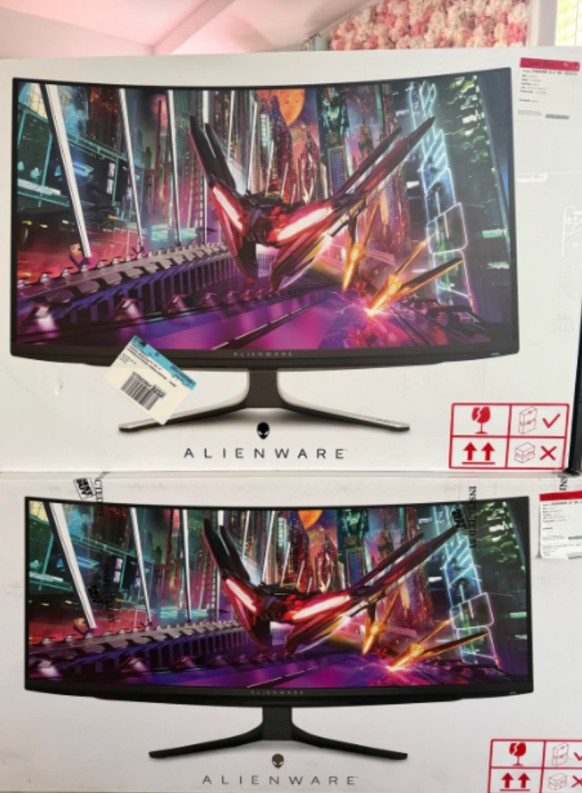
The learning here isn‘t to blindly replicate Best Buy’s model for your humble store. But, when you absolutely cannot prevent a return, sometimes the win is simply in how much of the original sale you can save once it happens. That can mean repairing before replacing, exchanging instead of refunding, recovering value through open-box inventory, or going after the carrier when the damage happened in transit with shipping protection.
This way you’re accounting for cost per incident, which tells you how much of that sale you actually lost to the return and where there’s still room to recover.
The solution most merchants reach for when a product fails outside the window is to point the customer at the manufacturer’s warranty and exhale, thinking it is someone else’s problem now.
But think about how high-risk stuff actually breaks. 21% of oversized online purchases show up already damaged. Almost none of that is a manufacturing defect.
And a manufacturing defect is the one thing the manufacturer’s warranty actually covers. It excludes nearly everything else, and the fine print says so out loud.
Some merchants like Horizon Fitness make their customer pay all return freight, refunds nothing on original shipping, covers no assembly or moving fees, and asks them to disassemble the machine and drag it past their own front door for pickup. In the same category, Treadmill Doctor states, “Any warranty that we administer does not include shipping charges,” plus a 30% fee to test the electronics you send back.
So “it's covered” still means a $200 freight bill and a customer wrestling a hundred-pound machine apart in their garage thinking about the exact wording of their 1-star review.
At this point you could eat the freight and fix it yourself to save the relationship, or hold your ground and inherit the one-star review.
The manufacturer waved goodbye two paragraphs ago, and the bill is on your desk. That is the accidental warranty you have been underwriting since the intro, now in writing. The good news is you can stop underwriting it for free.
You can plug the obvious leaks, tighten the returns, and squeeze every ounce of recovery out of a bad sale. But in a high-risk category, there’s always another expensive surprise waiting below deck, and unfortunately, the manufacturer might cover only a sliver of it.
That’s where extended protection and shipping insurance starts to change the equation.
Instead of you deciding whether to eat the freight or fight the customer, the failure becomes a claim handled by a trusted provider.
With SureBright, one furniture retailer started covering the damage and the breakdowns their manufacturer warranty ignored, and watched complaints drop 17%, ratings climb to 4.6, and attachment rates of 28%.
This way, a customer gets a repair or a replacement instead of a runaround. The transit tear, the dead motor, the drop, the parts and labor the factory warranty skipped - all of it shifts off your desk. You keep a sale you closed, and the cost you used to eat becomes a line of margin instead - which, in categories running 3-7% product margins, is the whole ball game.
.jpg)


.jpg)