.jpg)


Ever heard the phrase: Even nectar is poison if taken to excess.
Well, the e-commerce industry has been chugging that nectar for years.
We spent decades training consumers to treat every single purchase as a free trial. We gave them one-click checkouts, Buy Now Pay Later apps, and massive “Free Returns” banners on every single homepage.
But now, the tide seems to be turning. There are signs the era of worry-free returns is going to be over. The reason is simple: retailers lost an estimated $849.9 billion to returns over the last year. That's nearly one in every five online sales heading right back to the warehouse. Several merchants - already squeezed to razor-thin margins and escalating costs - have begun charging a return fee.
While we’ve already broken down how to tighten your policies without ruining the customer experience, what most merchants still get wrong next is adding a $7.99 return fee onto checkout and calling it a fix when it’s a band-aid at best.

The real question is what kind of fee to charge, how long your return window should actually be, and what needs to change inside your operations so the fee isn't doing all the work alone.
And we’re here to answer all of that.
Last year, a customer left this review for a fashion brand on Trustpilot:
“Ordered a dress to try for a wedding (without reading the reviews!) and I paid for postage and then am now being charged £6.95 to return the dress, including a ‘processing fee’. I’m not sure this is actually in line with consumer law re. Cooling off period. So it’s cost me £12 somehow to try on a dress I’m not keeping.”
To top it off, she ended the review with a line that annoys every merchant: “I won’t be ordering from them again.”
According to the NRF’s 2025 Retail Returns Landscape report, 82% of shoppers say free returns are an important factor in their purchase decisions. For 71%, a single bad return experience can stop them from buying from a brand again.
In colloquial terms that means: charge me for a return, and I’m gone.
Then why are 72% of retailers now charging for at least some returns? More importantly fees that were once limited to electronics have spread to clothing, beauty, and off-price retailers. If fees were killing conversions at scale, the numbers would be shrinking, not growing, won’t they?
Before you panic, know that the “customers leave” threat is an oversimplification. Among merchants who charge for returns, this is how the reality pans out:
53% report that overall return rates dropped. 52% saw an increase in exchanges, which means the money stayed in the brand’s ecosystem instead of walking out the door as a cash refund. And 51% saw customers shift to a free return method, like dropping off in-store, rather than abandoning the brand entirely.
So the majority of customers didn’t leave but adapted.
It would be dishonest to pretend fees come with no cost at all. But let’s look at who’s leaving.
The shoppers most sensitive to return fees are disproportionately the serial returners. And one of the biggest drivers behind that behavior is bracketing, where someone orders five sizes of the same shirt, keeps one, and sends the other four back.
Gen Z shoppers, in particular, return products more frequently than any other generation, averaging 7.7 online returns in the past 12 months alone. They’re also more receptive to exchange-friendly incentives like store credit, which means a poorly handled return policy can push away some of your most expensive customers.
An eBay seller went through something similar:
“Across two accounts in two months we lost over $3000 with free returns. We did not see a $30,000 increase in sales to pay for it.”
Now, if a customer costs you more per return than they generate in lifetime value, are they actually a customer worth keeping?
The data makes it pretty clear that though return fees don’t entirely eliminate returns, they do succeed in redirecting behavior. The risk at this stage is that a poorly designed fee, one that’s flat, blanket, no exceptions, no alternatives, will destroy trust. At the same time, a well-designed one can actually improve your unit economics.
Defending longer return windows, one merchant on Reddit shared their counterintuitive strategy:
“I've got a 365 day return policy for my e-commerce company (been in business 14 yrs). We AB tested this policy against 120 days (what we've offered for almost 10 yrs now) and saw a decent lift in sales (I can't recall the actual number). Returns have stayed around 2% in the past 6 months which is what it's always been. What we found is most people choose to do a return in the first 30 days.”
The point I’m trying to make here is that there’s validity to what they’re saying - not that you should go overboard with a 365-day return policy. The idea is that there's a psychological reason longer windows work, and it has nothing to do with generosity.
Say a customer buys a new area rug from your store.
When it first arrives, they aren’t totally convinced because the color is a little different than it looked in the pictures. They leave it sitting in the box, fully intending to print the return label the next morning.
But next morning, they decide to at least unroll it just to see how it looks.
By the end of the week, their coffee table is sitting on top of it. By week two, the dog has officially claimed the left corner. By week four, a subtle psychological shift happens. It stops being a random item from a warehouse. It becomes their living room rug.
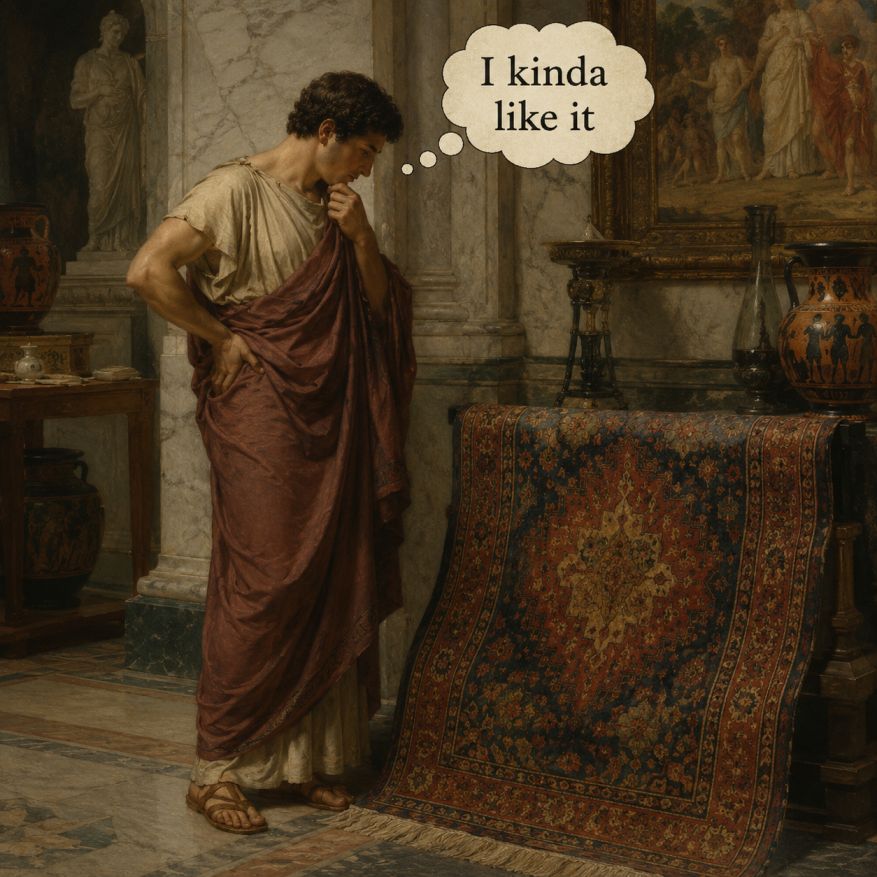
When brands offer those generous 60 or 90-day trial windows, they’re counting on exactly this. The trick is to give your customers enough time to emotionally settle into the ownership, but not stretching it so far that the purchase never feels final.
Let’s not be that gullible either.
You can learn from what ASOS did in the UK. Instead of changing the window for everyone, they track return behavior on a rolling 12-month basis. If you’re returning 70% or more of what you buy, fees kick in. For everyone else, it’s business as usual.
Some brands charge a flat return fee but waive it for premium members. In this way, free returns become a loyalty perk instead of a blanket policy.
The idea is to design specific terms for specific behaviors because pen-ended, unconditional promises don’t age well in any corner of retail. Even brands like L.L. Bean and Eddie Bauer, famous for their “return anything, anytime” generosity had to switch it back once customers learnt to exploit it.
This is the part where we move on from consumer psychology to real unit economics. If you want to protect your margins without alienating customers, your policy needs a tiered approach:
If a customer received something defective or you shipped the wrong item, that’s on you. In this case go for a full refund, no fee, no friction - unless the damage happened in transit, in which case shipping protection covers it so you don’t have to. Anything else and you’ve lost them forever over a mistake you made.
If they just changed their mind? Yep, buyer's remorse is real. That’s where the fee earns its place.
And if they want to exchange or take store credit instead of a cash refund, make that free. The money stays in your business either way, so why would you add friction to the outcome that actually works in your favor?
Merchants now allow customers to redirect a return into a new purchase on the spot, and some even sweeten the deal with a bonus credit.
Ultimately, two brands can both have an identical 25% return rate and end up with completely different balance sheets. The differentiator is disposition velocity - how fast a returned item goes from a customer’s hands back onto a digital shelf? If your third party logistics team takes 20 days to grade a seasonal dress, it’s dead stock. If priority processing gets it back into inventory in five days, it sells at full margin.
A return fee’s best use isn’t just clawing back a few dollars on shipping.
The moment you charge for returns, you’re asking the customer to carry more risk. For someone spending $300 on an appliance and wondering “what if this breaks in two months,” that risk can freeze them at checkout.
This is where product protection closes the loop. Something like an extended warranty in the cart tells the customer they’re covered even after the return window ends. That can neutralize the hesitation a return fee creates. And you earn a decent revenue share on every plan sold. Instead of a refund, you get a second sale.
The era of “free returns, no questions asked” is ending. But what replaces it doesn’t have to be hostile; it just has to be better structured and fair.
.jpg)


.jpg)
.jpg)