Storytime, folks.
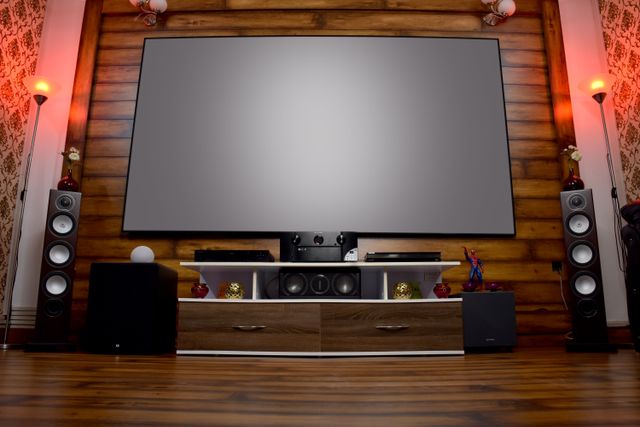
Last year, my friend John was supposed to host New Year’s Eve. And John is the sound guy in our group - the friend who builds the playlist three weeks out. The friend who spent two years assembling his system piece by piece, an amp from Denon, towers from Klipsch, and SVS subwoofers he drove four hours to pick up because shipping felt impersonal.
On December 29th, he pressed play and nothing. No sound, whatsoever.
There was no pop, no smoke, no dramatic crash. Just a light on the amp blinked red, which in audio language means “one of us is broken, good luck finding out who.”
John spent the next two days as a detective in his own living room. The amp brand’s support line suspected the speakers. The speaker brand suspected the wiring. The wiring had no comment. One warranty needed a receipt from a store that had since closed. Another wanted the amp shipped to a service center two states away.
So, what exactly happened at 31st midnight?
Picture twenty people bringing in the new year by dancing to a smartphone propped inside a steel mixing bowl, surrounded by thousands of dollars of premium, perfectly healthy, but utterly useless audio gear.

That’s the problem with home sound systems. They fail like orchestras, not instruments. One silent component can take down the entire performance, while the scattered paperwork keeps protecting individual parts.
And you shouldn’t have to resort to a smartphone in a steel bowl like John just because one component threw a tantrum. Fortunately, that gap can be closed.
But first, let’s look at why traditional warranties leave so many home audio systems exposed.
Ironically, the trouble starts because you actually did your homework. Which means comparing products across different brands and buying accordingly.
This customization gives us incredible sound, but it creates a fragmented defense system by design. Every brand writes isolated rules, starts independent clocks, and accepts responsibility exclusively for their own terms.

So a premium Denon receiver will give you a three-year window, while an entry-level model scales back to two.
Even the audio industry legends are pulling back their safety nets. For decades, Bryston offered a twenty-year transferable warranty. But in early 2026, they trimmed that window to ten years. Audio forums reacted with deep grief, mourning the policy like sports fans watching a hall-of-famer retire.
“This is very disappointing. Bryston just lost a bit of their golden reputation.”
- An audiophile shared his anguish on Reddit
Streaming-era speakers can outlive their own apps.
And that’s the catch with most smart devices now where immortal hardware gets stuck with abandoned software. Sonos owners discovered this in 2020, when the company announced it would stop delivering software updates to older models.
The response was hostile to say the least:
“All worked fine but after Sonos sent the latest update, the app turned unusable and the One SL could not connect connect anymore. Why does Sonos send updates on devices where they know it will neither make sense nor work?”
.jpg)
And, let’s hope that you’re well within an active coverage window. But even then, you’re looking at conditions stacking up.
Most brands won't even look at a claim unless you bought from an authorized dealer and saved the original receipt, which is a total trap if that store goes out of business. Take Denon, for example: the second a piece of gear is altered in any way, your coverage is gone for good.
Navigating that kind of administrative chaos is exhausting enough on a good day. It makes you wonder: if the paperwork is this messy when things are functioning normally, how chaotic does it get the moment a component actually suffers a real crisis?

Let’s give you the best-case scenario. The amp fails, you guess the culprit correctly on the first try, and the brand approves your claim. You’ve won the warranty lottery. Time to collect your prizes.
Factory repair centers typically turn units around in a week or two, but local authorized shops can stretch to a month or more. One Denon owner on AVS Forum watched his covered repair spiral and he posted this update on a community forum:
“So now we're talking 6 - 8 weeks, at least, without a receiver.”
Six to eight weeks. And since the amp is the heart of the system, every healthy speaker in the house goes mute in sympathy.
Serious audio gear runs 50 to 100 pounds, and the shipping cost is generously handed over to you. Yamaha’s terms have a section named “What we pay for and what you must pay for” that states you are “responsible for any installation or removal charges and for any initial shipping charges.”
Yamaha isn’t alone. Klipsch also puts return shipping on the buyer.
To quantify these shipping costs, one buyer even tallied his amp repair costs on Musical Fidelity speakers: $115 to ship it out, a $160 bench fee, and roughly $100 to bring it home. That's $375 gone before anyone replaced a single part.
Your in-wall and in-ceiling units are architecture now, and a replacement box mailed to your door does nothing about the ladder, the wiring, or the drywall. Kicker’s terms exclude “any cost or expense related to the removal or reinstallation of product,” and most brands sing the same tune. Professional AV labor runs $50 to $150, and every minute of it comes from your pocket.
Assuming, of course, the brand believes you.
Because a Yamaha buyer shipped his receiver in for a covered repair and received a denial for “water damage,” on a unit that lived its whole life in a dedicated cinema room.
“After not hearing anything since it was picked up, I have today received an email from the retailer saying Denon won't repair it under warranty due to water damage.
If I had dropped water on it I would be happy to pay for a repair, but the receiver has been sitting behind the screen in a dedicated cinema room, and I know nothing has been spilt on it by me.
Given that it has been away for seven weeks, and this is the first time the damage has been mentioned, can someone please let me know whether I have any comeback with the retailer?”
Proving your innocence becomes your job, and you’re arguing from two states away. So, yes, you have my best wishes.
I’m not one to disagree with the skeptics and neither is my friend John now.
So before you buy or judge any protection plan, let’s go back through everything the fine print excluded: the diagnosis, the labor, the freight, the removal, the reinstallation, the gear from five brands failing as one. That excluded pile is exactly what a whole system warranty covers.
With a Whole System warranty you can say goodbye to the days of playing 20 questions with customer support.
A simple and low-effort complaint like, “The music stopped,” is enough to get you to the claims process. And figuring out whether the amplifier, the speakers, or the wiring is to blame becomes the provider’s problem, not yours.
The same goes for physical work. With SureBright's Whole System Warranty, professional reinstallation is included, so the in-ceiling speaker comes down and its replacement goes up without a labor invoice.
I have some final couple of questions for you:
What did your system cost in total?
What does AV labor run in your area?
How heavy is your biggest component?
And how many of your speakers live inside a wall or ceiling?
If you own a soundbar and a pair of bookshelf speakers, manufacturer coverage with a good extended plan will serve you fine. But when the answers start sounding like “five figures,” “$150 an hour,” “needs two people to lift,” and “three of them,” a failure stops means freight, ladders, silence, and detective work, and no single warranty card in your drawer covers any of it.
That’s exactly the work of a Whole System Warranty . Want to see how it works and get your system covered? Contact us to get started.
.jpg)