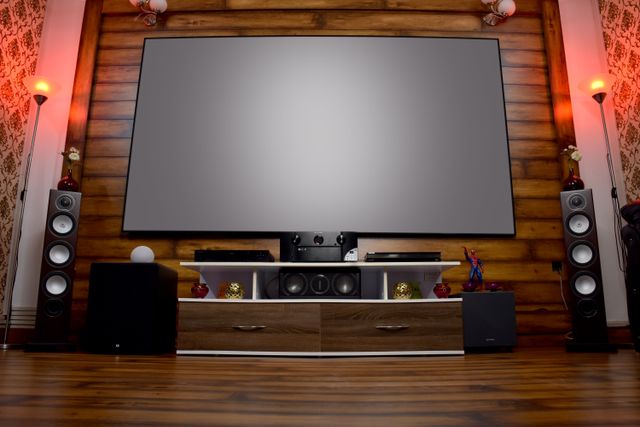


You might have spent the last three months slowly building the ultimate home theater setup.
There’s the projector, Dolby Atmos soundbar, a projector screen. All of this so that you can watch the Super Bowl on big screen. But as soon as Kendrick Lamar pops up, a power surge rolls through your neighborhood and takes out your receiver and your projector in one shot.
No matter how much you think it won’t happen, life always surprises you. Just look at what happened to this poor redditor:
“My apartment was hit by a power surge and some of my electronics were fried. While most were fixed, I have this home theater system that no longer works. Is it possible to buy a new receiver and use the speakers with it?”
Suddenly, the biggest game of the year is happening everywhere except your living room.
So what do you do next?
Just like any reasonable person, you dig out the warranty paperwork. Except there isn't one warranty. There's four. One JBL for the Dolby Atmos soundbar. One from Epson for the projector. A separate one from Denon for the receiver. And somewhere in your email, buried under 3,000 unread messages, a digital card for the soundbar that you may or may not have registered within the 30-day window.
Now you have four companies to call and four "your call is very important to us" hold songs to listen to. What a good use of a Sunday!
You see, the way warranties are sold has nothing to do with the way people actually use electronics. As a matter of fact nearly 70% of people believe they wouldn’t get a refund or repair service after the manufacturer warranty gets over.
And it is my duty, as an upstanding citizen of Mother Earth, to tell them that they are wrong.
Because the solution starts with a warranty that covers the whole system. Never heard of one? You're in the right place.
Let’s take a moment to think about what you actually own.
Is it a TV? Or is it a setup? When did you last sit down to watch just the TV, with no soundbar, no streaming device, no receiver feeding signal to a projector? Exactly. You don't own products, you own an experience. And that experience lives or dies as a whole.
That's the thing nobody talks about at checkout. Retailers sell you components. Manufacturers warranty their individual boxes. And you're left playing with support teams enacting injured players highlighting how the other company’s at fault.
The standard manufacturer warranty model was largely designed in an era when a home entertainment setup meant one television, plugged directly into a wall. So they offered one box, one warranty, done.

Fast forward to today and the average household now owns approximately 25 connected devices, and a serious home theater setup can easily account for five to eight of them all working together, all dependent on each other.
So, with separate warranties you get:
A whole system warranty does what the name says, it covers your entire setup under a single plan. You pay one premium, sign one contract, save one phone number, and file one claim process, regardless of how many components are in the system, regardless of which brand made each one.
Here's what a good whole system warranty should cover for an entertainment setup:
Not all system warranties are made the same way, and the fine print matters significantly. Here's what a genuinely good plan should include, and what to watch for:
The average home theater setup runs anywhere from $3,000 on the modest end to $30,000 or more for a fully integrated custom installation. A power surge that hits multiple components, the single most common catastrophic failure scenario, could realistically mean $4,000–$6,000 in repairs in a single event.
So, the next time a power surge hits, or an accident breaks something, or a component just decides it's done, you want one number to call. One claim to file. One plan that treats your setup as a system, not four separate problems that happen to be in the same room.
SureBright's whole system warranty was built exactly for this. You get one plan, zero coverage gaps, $0 deductible on your first claim, and a claims process that actually works the way you'd expect it to.
Want to know what your setup would be covered for? Contact us now.
.jpg)


M Khizar is a writer enjoys making complicated things feel simple. He writes about warranties, ecommerce, and the small details people usually overlook, until they matter. His work focuses on clarity and helping readers make smarter decisions without overthinking it. Outside of work, he enjoys reading, writing personal blogs, and binge eating with friends.


.jpg)