.jpg)


To: Operations Team
Subject: Urgent: Order #48011 “Arrived completely destroyed, I want a refund ASAP”
Relax - you didn’t accidentally open your actual inbox.
But if your heart rate just spiked, it tells me that a subject line like that is already far too familiar. Consider this blog a greeting from someone who deeply empathizes with the unique operational headaches of running a BigCommerce store.
Shipping damage is already a massive problem for the average e-commerce store; it only becomes magnified the moment you build on BigCommerce.
Why? Because your support queue isn’t dealing with the average $15 phone cases or graphic t-shirts that can bounce around the back of a mail van without a scratch. Many businesses choose BigCommerce to sell more complex products - whether that’s heavy freight, furniture, home improvement products, automotive parts, industrial equipment, or major appliances - where every shipment, delivery, and return carries higher stakes.
But shipping those premium, high-ticket items means that somewhere out on the interstate, an $800 standing desk your team carefully packed this morning is about to encounter a forklift operator who aggressively drop-kicks it across a loading dock in Ohio.

When it lands on the customer’s porch completely shattered, do you think she is going to email the carrier? No, she’s emailing you to foot the bill for an immediate replacement.
The physical gap between “shipped’ and “delivered in one piece” is wider than any platform setup guide will ever admit. This piece is about that exact gap: why it’s getting exponentially more expensive to ignore, and exactly how to fix it.
Well, the obvious answer is that platform AOV on BigCommerce sits at $137, well above the broader ecommerce baseline. The dominant verticals are home and garden (16.7%), apparel (13.7%), automotive (7.8%), sports (7%), and business and industrial (7%).
But let’s pull these dry statistics off the spreadsheet and look at how they actually play out on the warehouse floor.
Michelle and David are two merchants navigating completely different worlds on the exact same platform.
Michelle sells handmade candles. Her AOV sits at $32. Her packages are packed in simple bubble mailers, and if a courier accidentally crushes a box, a replacement candle costs her pennies to make and reship.
Then there’s David. David sells outdoor patio furniture, pushing his AOV up to $480.
Unfortunately, both saw a delivery go wrong this week and both their damage rates hovers around 1.5%. And yet, the aftermath looks nothing alike.
Sarah’s broken candle costs her $11 and a quick reship from a stocked shelf. David’s broken patio set costs him $480 in product, $90 in return freight, a $50 white-glove redelivery, three weeks of customer frustration, and a long rant on Reddit despite him treating them like God.
What do you think was common for them? A ding in reputation, yes.
But for David, what happened was an existential threat to his monthly profit margins.
So, the complexity of a lack of shipping insurance in BigCommerce is also the uneven exposure to risk.
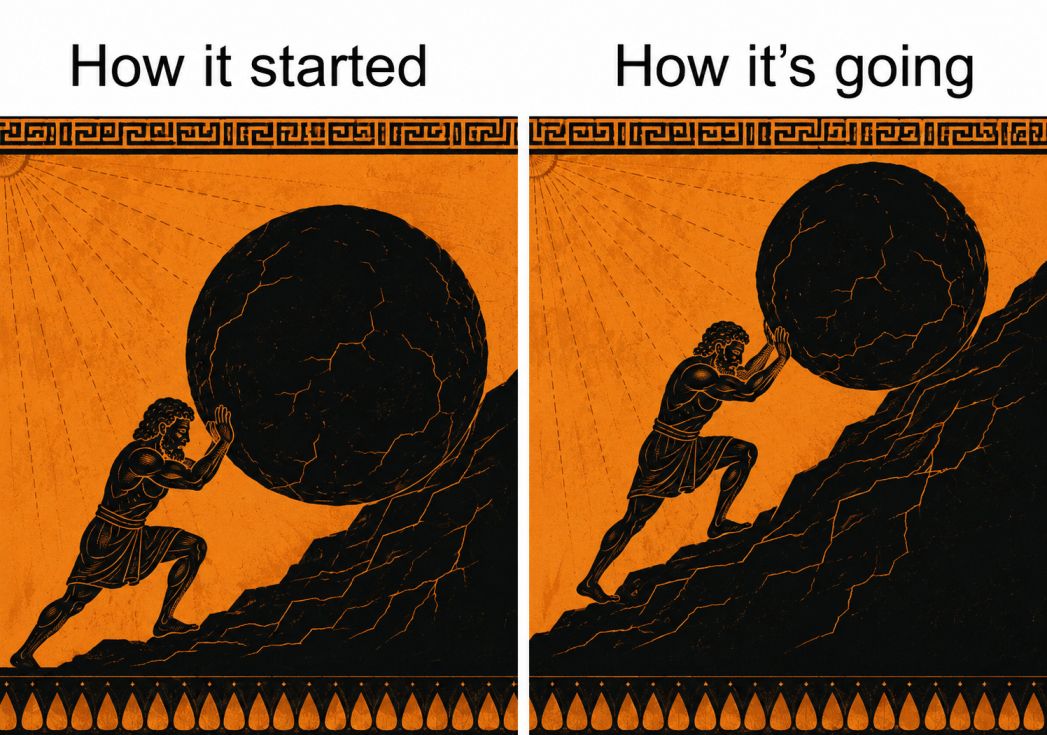
To bypass this nightmare, David might try what thousands of other high-ticket merchants attempt: adding an “Insurance Opt-Out” toggle at checkout. The logic feels ironclad - if the customer explicitly unchecks that box to save a few dollars, the transit risk shifts to them, right?
Legally, this is a total illusion.
Under Uniform Commercial Code (UCC) § 2-509, the risk of loss remains entirely with the seller until the item is successfully delivered into the buyer’s physical possession.
A web-design checkbox cannot override statutory commercial law. If a carrier drop-kicks David’s patio set into splintered firewood on an interstate in Ohio, David is still legally required to deliver a flawless product to that consumer.
If you’re praying on the customer’s innocence and lack of awareness of the law, let me assure you, they’re still not going to quietly accept the $480 patio set. And why would they?
What they might do is bypass your customer service team entirely and trigger a chargeback cascade with their credit card issuer.
So when you go bare without specialized insurance, a single damaged high-ticket order compounds aggressively across your entire balance sheet:
You’ve heard the old advice to never judge a book by its cover?
Well your customers took that seriously. They don’t judge a package by a flawless outer box. But when they cut open a pristine carton only to find the expensive product inside completely shattered or “Dead on Arrival” (DOA), an exhausting three-way blame game begins:
The carrier claims, “The box is perfect, so we didn't mismanage it.”
The manufacturer insists, “It left our factory in mint condition, so it’s a shipping issue.”
The legacy insurer argues, “Since the box is immaculate, this is a factory defect, not transit damage. Claim denied.”
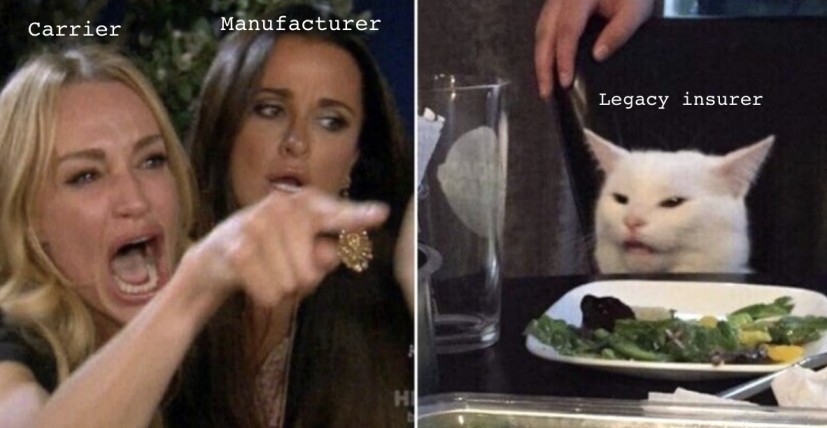
Meanwhile, a bureaucratic standoff is the least of your customer’s concerns. While you fight an un-winnable paperwork battle with an underwriter, they take the fastest route out: a scathing 1-star review and a forced bank chargeback.
By now, you know you need a reliable shipping insurance add-on for your BigCommerce store. But if being convinced of its necessity was the only hurdle, the internet wouldn’t be flooded with merchants complaining about how incredibly difficult it is to actually deploy one.
BigCommerce’s Optimized One-Page Checkout is a conversion machine, but it is also a locked-down fortress built for strict PCI compliance.
Because third-party developers cannot easily inject custom code into this checkout flow, off-the-shelf insurance apps are forced down two highly compromised paths:
The moment a customer updates cart quantities, applies a coupon code, or triggers an API limit, the price calculation breaks, or the insurance item silently drops off the order entirely.
This technical friction multiplies if you are leveraging BigCommerce’s most powerful modern features.
Roughly 30% of BigCommerce stores operate on headless storefronts (separating the backend from a custom frontend). Yet, nearly every major shipping protection widget on the market was built strictly for native, out-of-the-box Stencil themes.
Even if you aren’t headless, BigCommerce's Multi-Storefront (MSF) feature frequently breaks legacy apps. If you look closely at some app listings, the fine print contains multi-storefront disclaimers because their system struggles to map distinct insurance rules across multiple localized storefronts tied to a single backend.
First things first. Find a good vendor. And then, hold them accountable to the following few non-negotiables:
- The solution must integrate directly with the BigCommerce Optimized One-Page Checkout. If it forces a hard page refresh, causes cart resets, or triggers API limits, it’s an absolute conversion killer.
- Most carriers cap liability at $100 by default. Your partner must cover the full retail value of heavy goods and be able to handle high-AOV claim volumes without dropping your account the moment a claim is filed.
- If you are operating on a headless stack or managing multiple storefronts, the protection layer cannot be a rigid, “Stencil-only” widget. It must be platform-aware, ensuring your rules apply consistently across your entire architecture.
- Your support team should not be moonlighting as insurance adjusters. The goal is total risk transfer, where the partner manages the entire customer care lifecycle, offering transparent documentation requirements and rapid, automated resolutions.
And if you want to completely close that “Dead on Arrival” gap, providers like SureBright bridge the space between shipping protection and extended warranties. This eliminates the “manufacturer vs. carrier” fingerpointing and ensures that internal transit shock - even when the box is pristine - is covered under a single policy.
The difference between a failing strategy and a successful one comes down to engineering.
Legacy models rely on a “one-size-fits-all" widget that creates friction for the merchant. By contrast, specialized platforms like SureBright offer shipping protection designed as native infrastructure.
For the BigCommerce merchant, by demanding a partner that understands the nuances of heavy freight and the technical reality of your store, you stop treating shipping as a risk and start leveraging it as a competitive advantage.
.jpg)


.jpg)

.jpg)