.jpg)


You buy an expensive new laptop. You’re careful with it - case, screen protector - you invest in the whole deal. Then suddenly, the charging port stops working.
So, you call the manufacturer and send the laptop in. A week later you get an email: claim denied. Reason? You’d opened the back panel to clean, and the small sticker covering it - “Warranty void if tampered or removed” - was no longer intact.
Panicked, you go to Reddit and find a thread where someone had the exact same scenario happen. The comments are going back and forth. And none of them are too reassuring.
A user with a similar concern says:
“What do you do when a company refuses their warranty obligation? I feel like even suing them isn't worth the trouble.....”
The other half are saying that that sticker means absolutely nothing under federal law.

You don't know who to believe.
But that’s not a warranty problem. That’s an information problem. And it’s one that costs you real money because no one tells you what you are actually entitled to.
This blog fixes that. It discusses myths, grey areas where consumers lose money they don’t have to - and what to say, ask, and document so you don’t become the next cautionary tale on the internet.
But it never was.
The Magnuson-Moss Warranty Act made the stickers federally unenforceable in 1975. And the FTC’s position is that manufacturers can’t void your warranty just because you broke a seal or used a third-party repair shop - unless they provided those parts or services for free.
And yet, whenever someone asks whether the sticker on their pre-built PC is enforceable, top-voted answers only amplify the confusion.
“If you break that sticker, that tells the system manufacturer that you meddled with the components inside and voided your warranty. Perfectly legal.”
That’s a total myth but fighting it is a different story. As a user on Reddit shared:
“It's still terrible advice to suggest someone can remove or tamper with these stickers, considering the cost of bringing a company trying to enforce that to court will dwarf the value of most items.”

Despite a 2021 FTC directive to protect consumer choice, a survey from that same year found that 43 appliance brands would still consider voiding a warranty for independent repairs or tampered stickers, regardless of federal warnings. Talk about impunity.
The law exists because people should not be afraid to get their stuff fixed. And yet, the sticker is still there. And it doesn’t need to be held up in court. It just needs you to not ask questions.
And here’s how that looks in practice:
If you opened the panel and severed a ribbon cable - that’s on you. But if you open it to clean out dust and the motherboard later dies from something unrelated, you’re still covered. The burden of proof is on the manufacturer; they have to prove your action caused the malfunction, not the other way around.
What you must do though is if you do open or repair something yourself - document it with a time-stamped video.
Photos before and after, receipts for parts, an itemized note from the repair shop if you used one - nothing elaborate. A timestamped phone photo and a receipt go further than you’d think when someone tries to pin an unrelated failure on you in the future.
But stickers aren’t the only way a claim gets denied. Sometimes, the denial comes wrapped in language that sounds perfectly reasonable - until it’s used in ways you did not predict.
The suction motor on your cordless vacuum can burn out after a year of normal cleaning. A washing machine drum can give out. But when you file a claim, the response is some version of: “This falls under normal wear and tear, which is excluded from coverage.”
And nobody ever defines what normal means.
A distressed user on Reddit shared:
“One of the burner ring somehow burnt through the stove top and melted the glass cover of that area. But my warranty claim got denied due to it's a "deterioration of the appearance", not failure of a component. I mean.... I get it that burn marks or stains are normal, but how come the surface material could be melted and still be considered normal worn out/deterioation.”
Their reaction pretty much mirrors what anyone would feel.
Another news report highlighted the case of a woman whose couch fabric started pilling within six months. The warranty technician denied the claim because she’d moved apartments after buying it. The fine print read: “Warranty is null and void if furniture has been moved from original point of delivery.”
Kinda fair. But then you’re constantly treading a thin line.
Manufacturers use “wear and tear” as a catch-all bucket to deny claims.
But there’s a difference between fatigue and failure. Fatigue is gradual, expected degradation - brake pads wearing down, battery capacity dropping over years. That’s genuinely not covered.
Failure is when a component gives out well before its expected lifecycle. A hinge cracking at 14 months on a device designed to be opened and closed thousands of times isn’t normal wear but a premature failure.
The single most useful question you want to ask a manufacturer when they deny your claim is: “What is the expected lifecycle of this component?”
But you’re highly unlikely to get a concrete answer.
.jpg)
So, we’ve established that “wear and tear” is doing a lot of heavy lifting for manufacturers. But there’s a subtler version of this that’s even harder to fight - cosmetic technicalities.
Here’s what an earphone user on Reddit shared:
“The crack is purely cosmetic and limited to the outer body It is not near the battery, charging port, PCB, buttons, mic, or any functional component The crack existed earlier, and the device continued to function normally afterward The functional failures appeared much later No technical or causal link was provided explaining how this cosmetic crack could lead to the reported issues My concern: Is it standard or fair practice to deny warranty coverage based only on cosmetic damage?
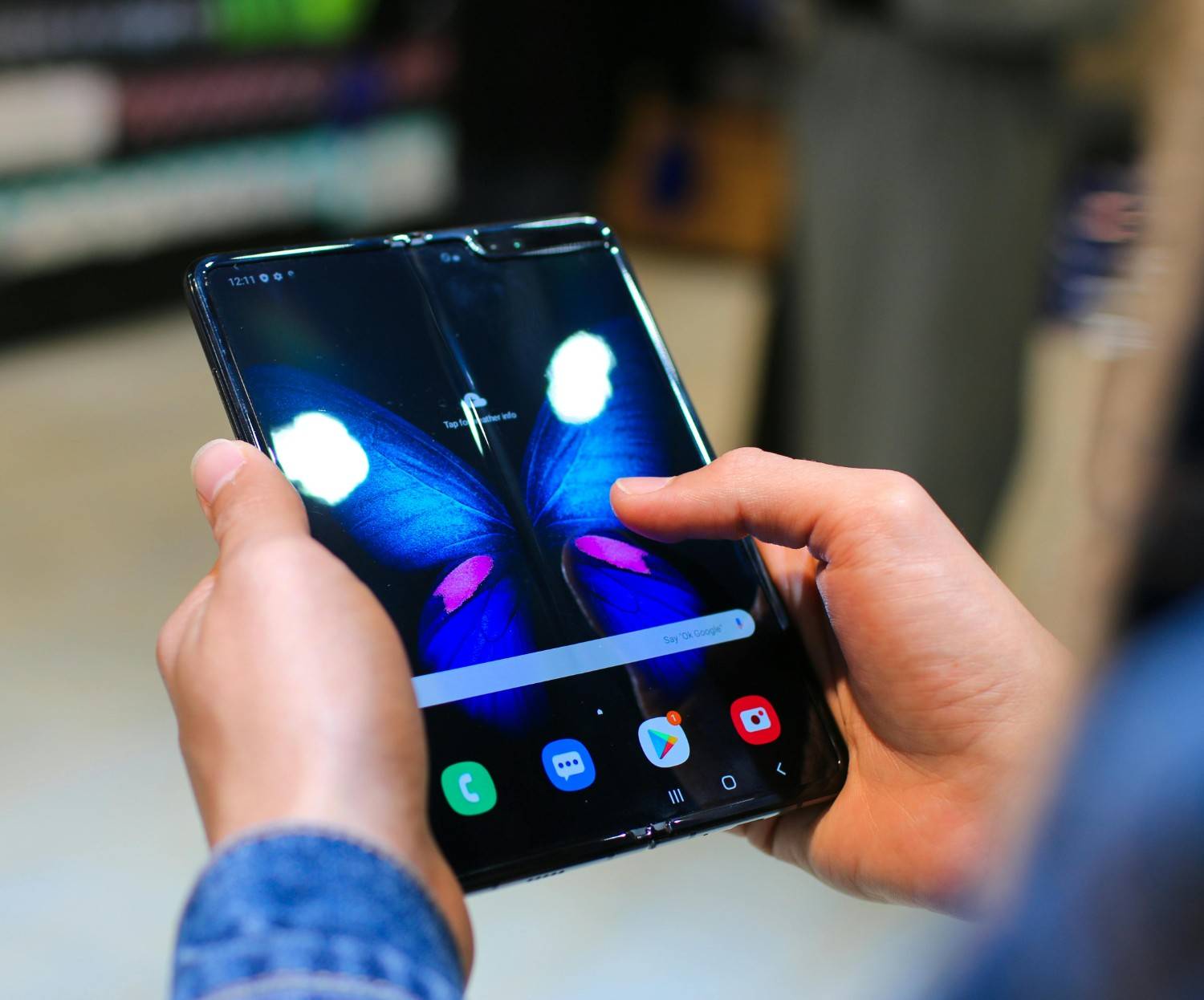
Owners sending in products for internal display failures - green lines, dead pixels, screens going black mid-fold - and getting them back with a denial pinned to something cosmetic. A tiny mark on the corner. A screen protector that started peeling on its own along the crease.
One user shared:
“Samsung denied my warranty repair because of tiny scuff mark on corner of phone. This is how you treat customers of your premium products?”
And with foldables specifically, the screen protector issue has become its own mini-crisis. The factory protector is technically part of the display. If it lifts, which it does, and often on its own - and you peel it off, that becomes the pivot point.
Does a missing screen protector short-circuit a display? No. Does a scratch on the frame cause a motherboard to fail? Also no. And under Magnuson-Moss, the manufacturer can't just imply a connection - they have to prove that your cosmetic change directly caused the mechanical failure.
Which means there’s a question worth asking every time this happens.
“Can you show me documentation proving this cosmetic issue caused the hardware failure?”
Because the link between the scratch and the malfunction might not exist.
Now say you get past the sticker. You survive the wear-and-tear gatekeeping. Your cosmetic dings aren’t held against you. The company agrees what you have is a legitimate hardware failure under warranty.
And then they tell you they can’t fix it because the model’s been discontinued and the repair costs more than they think the product is worth.

A buyer on Reddit had a similar experience:
“I purchased a power bank for around £90, and it has since stopped working. With the purchase comes a 2-year warranty, and I contacted the manufacturer to arrange a replacement. The product is no longer produced, and their options to me are to give me a voucher which will mean I would have to spend an extra ~£40 to get something with similar battery capacity, or a straight swap for something with around 2/3rds of the battery capacity.”
That’s a coverage gap most people only discover when it’s too late. And the company might shift the burden of logistics entirely onto you.
It’s worth knowing that if a company can’t repair your product under warranty, they’re generally required to provide what's called a "like-kind and quality” replacement. Not a gift card, not a depreciated cheque but product with comparable features, specs, and value to what you originally bought.
Most people never invoke this because they’ve never heard of it.
And one more thing. Companies sometimes declare a product “beyond economical repair," meaning fixing it costs more than they think it’s worth.
But even with a legitimate assessment, the provider is not entitled to lowball you. If the warranty says repair or replacement, “too expensive to fix” means they owe you a replacement or a refund. Not a payout calculated on their terms.
If the product is still under warranty, “discontinued” is a logistics problem you’re not liable to handle.
The difference between a consumer who gets a replacement and one who bears the cost is rarely the warranty itself. It’s knowing what to say when someone tells you no. Most of these grey areas exist because warranty providers count on you not pushing back.
Standard manufacturer warranties are built around defects at the point of sale. They’re usually asking, “Was this broken when it left the factory?”
If the answer is no, they consider their job done.

That’s where extended and accidental coverage actually earns its keep.
A manufacturer warranty won’t help you when your laptop battery’s health drops to 60% after a year of heavy charging. But a breakdown protection plan is designed for exactly that window, which is the period after the manufacturer denies but before the product should reasonably have failed.
It covers mechanical and electrical breakdowns from real-world use.
And not every product needs it. But for anything with moving parts, daily stress, or a known history of mid-life failures - that's the gap it fills.
.jpg)




.png)