Sometimes, there is no bigger lie in your warehouse than "don't worry, we have it in stock."
Your system says 40 units, the shelf has 11. And you might know it very well, yes, but your customer who just clicked "buy" always finds out the hard way. That disconnect, between what your software believes and what your warehouse can actually put in a box, is responsible for those angry emails, refunds, one-star reviews, and other bad stuff that make most merchants sit upright.
But 9 out of 10 times, the damage never shows up labeled as an inventory problem. You see it as a cancellation complaint, a shipping delay ticket, a wrong item return, a chargeback, among other things. Five different fires in five different inboxes, and you're putting each one out individually when they're all coming from the same match.
According to industry data, inventory problems are responsible for up to 80% of out-of-stock situations. That means four out of five times a customer can't get what they ordered, it's not a demand problem or a supplier problem. It's a counting problem hiding behind a customer service problem.

Here are the five complaints your team is fielding right now that aren't what they look like.
“I ordered a 14-inch IdeaPad 2-in-1 (AMD) directly from Lenovo and paid for next-day shipping ... Charging $50 for “next-day shipping” on a device that wasn’t ready to ship (and apparently wasn’t even in the U.S. yet) is unacceptable.”
What your team might see with this reddit post is a shipping complaint and a refund request. But what actually happened here is a textbook case of phantom inventory. The system listed units as available when there was nothing ready to ship. The website said "in stock". The checkout accepted a next-day shipping upgrade. Every layer of the buying experience confirmed availability and none of it was true.
This is the most common and most expensive form of inventory inaccuracy because the customer finds out after they've already paid, already planned around the delivery date, and already started trusting you. I guess Reddit hath no fury, like a customer scorned, eh?
The fix is, however, very simple: don’t let customers buy inventory you can’t actually ship. Ever.
“How long do orders usually take to start shipping? I ordered a kb over a week ago and it's still in the "We're preparing these items for shipping" stage”
A customer orders a keyboard from a brand they're excited about. Confirmation email lands instantly. And then... nothing. Other customers jump in with the same story. Some waited two weeks. Some gave up and cancelled.
From the outside, this looks like a lazy warehouse or a bad shipping partner. It's rarely either.
What’s actually happening here is that the inventory exists on paper but can't actually be picked. Maybe it was received at your overseas warehouse but never shelved. Maybe returned stock was auto-added back before inspection. Maybe those units are tied up in orders from another channel. So, your system says they are available, but your warehouse says otherwise.
See, the product isn't out of stock. It isn't lost either. It's in limbo... technically present, practically untouchable. And the customer stares at "preparing to ship" while your team scrambles to figure out where the actual, physical product is.
The fix is to make sure if the product is not pickable, it’s not sellable. Returns stay unavailable until inspected. Inbound stock doesn’t count until it’s shelved. Treat everything between the dock and the pick bin as off-limits for sale.
But even after you fix the warehouse side, you still can't control what happens once the package actually leaves. And a customer who already waited 10 days staring at "preparing to ship" has zero patience left. If that package then gets lost, damaged, or delayed in transit, you will end up losing more than just an order. That's where shipping insurance closes the loop. It covers the leg of the journey your SOPs can't reach, so the customer who finally sees that tracking number move knows they're protected no matter what. For a buyer whose trust is already hanging by a thread, that layer of coverage is the difference between a frustrating experience they forgive and one they post about on Reddit.
“Ordered asics and received a dinosaur, straws and two cups. Absolutely fuming as ive wanted these shoes for a while.”
You read that twice and it still doesn't make sense. That's exactly how the customer felt.
It sounds absurd, until you realize this happens more often than you might find comfortable. According to research, approximately 23% of all online shoppers receive the wrong item, making fulfillment and packing errors the single largest preventable cause of e-commerce returns.
And most of it is due to mislocated inventory.
How?
Well let’s suppose SKU A was sitting in SKU B's bin location. The picker scanned the bin, grabbed what was there, packed it, shipped it. They did their job correctly, only the inventory was in the wrong place. Now you've got two problems walking hand in hand: the customer received the wrong product, and your system still thinks both SKUs are in locations where they aren't.
The fix for this starts upstream. Because by the time a customer gets the wrong item, your warehouse has already starred in its own episode of Brooklyn99: SKU Unit.
Bin-level audits catch products that mysteriously “moved themselves” three aisles over. ABC cycle counts help too: your fastest-moving SKUs get checked weekly, because those are the items most likely to get grabbed, swapped, or shoved into the wrong bin during a warehouse speedrun.
“I’ve been trying to buy something from the Blue Lagoon collection and signed up for restock alerts. I get the texts, but when I click the link, the item is still sold out every time. Why is this happening, and is there anything I can do to actually get my hands on something?”
Do you know what happened with this shopper?
No, this wasn’t a case of crazy high demand for a limited stock product. It just happened the restock alert basically announced a product drop for inventory that never really existed.
A few returned units got scanned back into “available,” the notification went out, and hundreds of customers sprinted to the product page like it’s concert tickets. Meanwhile, the warehouse was staring at maybe three actual units, two of which were still sitting in a returns bin covered in packing tape.
By the time customers clicked the link, the items were sold out again. Not because demand was unbelievable, but because the inventory system briefly hallucinated.
And the worst part about this is even decent channel tools can lag 15–30 minutes behind reality. In ecommerce time, that’s enough for your entire restock to disappear twice.
The customer, however, doesn't see the lag. They just see a brand that keeps crying wolf.
So, what’s the fix? Firstly, restock alerts should only trigger on confirmed, pick-ready inventory and not on units that just entered the system from a return or a PO receipt. If it hasn't been shelved and verified, it shouldn't trigger a notification. Secondly, if you're selling across multiple channels, your alert system needs to account for inventory that's already allocated elsewhere. Sending a "back in stock" text while Amazon and your website are competing for the same 12 units is a recipe for exactly this kind of disappointment.
“Still Waiting for My Refund from TikTok Shop After Almost a Month – Any Advice?”
At this point this poor customer is just wondering if their money is coming back at all.
But, what actually happened?
The return landed at the warehouse but never got scanned back into the system. It's sitting in a staging area... physically present, digitally invisible. The refund workflow is waiting for a system confirmation that the item was received and inspected. And the unit itself is stuck too because it can't be resold because the system doesn't know it exists.
The merchant loses twice. The customer doesn't get their money. The inventory doesn't get restocked. And with nearly 17 - 18% of all online orders being returned, this isn't a one-off thing.
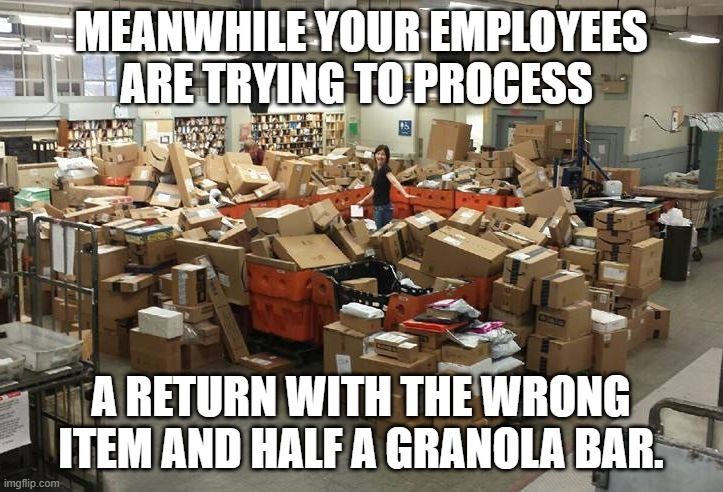
The fix is a returns SOP with zero ambiguity: every returned package gets scanned at the moment it's opened, not after inspection, and definitely not when someone gets around to it. That scan triggers two things instantly: the refund countdown starts for the customer, and the unit enters a quarantine status in your system so it's visible but not yet sellable. Inspection happens next. If the item passes, it gets re-scanned into available inventory. If it doesn't, it gets written off. Either way, the customer got their confirmation within hours of the package arriving, not weeks.
Underneath every single one of them, there’s one simple problem your inventory numbers don't match reality, and your customer is the one paying for it.
The fixes are operational. But even after you tighten every process in your warehouse, trust is hard to rebuild once it's been cracked.
That's where a product warranty does something no SOP can, it makes the promise visible to the customer before anything goes wrong. SureBright lets you offer product protection right at checkout: a simple, visible signal that takes ten minutes to set up, costs you nothing upfront, and gives your customer the one thing that five inventory failures in a row systematically destroyed - a reason to trust you anyway.
So, schedule your demo today.
.jpg)


M Khizar is a writer enjoys making complicated things feel simple. He writes about warranties, ecommerce, and the small details people usually overlook, until they matter. His work focuses on clarity and helping readers make smarter decisions without overthinking it. Outside of work, he enjoys reading, writing personal blogs, and binge eating with friends.



.png)