Tl;dr - Eyewear breaks. Despite being extra careful - it’s inevitable. The smart move is to help your customers plan for it. A protection helps not only your customers but also your business by reducing returns, building trust, and turning everyday product risk into a serious growth lever with higher AOV.
“I havent been happy with my new pair (<6 months old). Lense has popped out on occasion and now started having an issue closing one side. Took it into the warehouse and they said that frame is discontinued but the frame is bent. As someone who has bifocal, I literally have them on the entire day and dont know how I could have bent the frame.”
If you wear glasses, it is hard not to feel for this Redditor. It’s a frustration most of us know too well. We’ve sat on our glasses, stepped on them, shaken our heads so fiercely that they flew away and broke. And every single time, the same question pops up: how did this even happen?
As a matter of fact, in the United States, someone loses, breaks or sits on a pair of sunglasses every 14 minutes. None of those people ever intended it to happen, but that’s just how life is.
So why don’t sellers offer warranties on sunglasses or eyewear protection plans?
Spoiler alert: some smart ones do. And they make 14% higher on their Average Order Value (AOV).
Sounds nice, right?
.gif)
Well, it is indeed nice. Eyewear is one of the biggest markets in the fashion industry, valued around $193.58 billion in 2026, and it is growing at an exponential rate. That being said, glasses are also really easy to break. And manufacturer’s warranty can cover only so much.
That is why including an eyewear warranty becomes very important for eyewear businesses. Not only do they offer an added trust to the customer but also increase your bottom line.
But how does it all work? What does the warranty cover? And what other benefits will you get on glasses warranty as a merchant? Let’s discuss all this and more.
So clean your glasses and read on.
Warranties are not rocket science.
Your customers pay a small additional fee at the time of purchase, and in return, they get coverage when something goes wrong, if it goes wrong, within a defined period.
Easy, right?
However, the catch is that most merchants rely on manufacturer warranties by default. These are typically included with the product and are designed to cover defects in materials or workmanship.
But there’s a lot that manufacturer warranty does not cover:
And so, when anything mentioned above does happen, the customer is left frustrated, and you’re stuck choosing between absorbing the cost or risking a bad experience.
“But isn’t it the customer’s fault?” You might ask.
Well, most of the accidents are not. In fact, they usually come down to everyday use, not misuse. And believe it or not, 33% customers blame retailers when their products break, despite how counter-intuitive it may be.
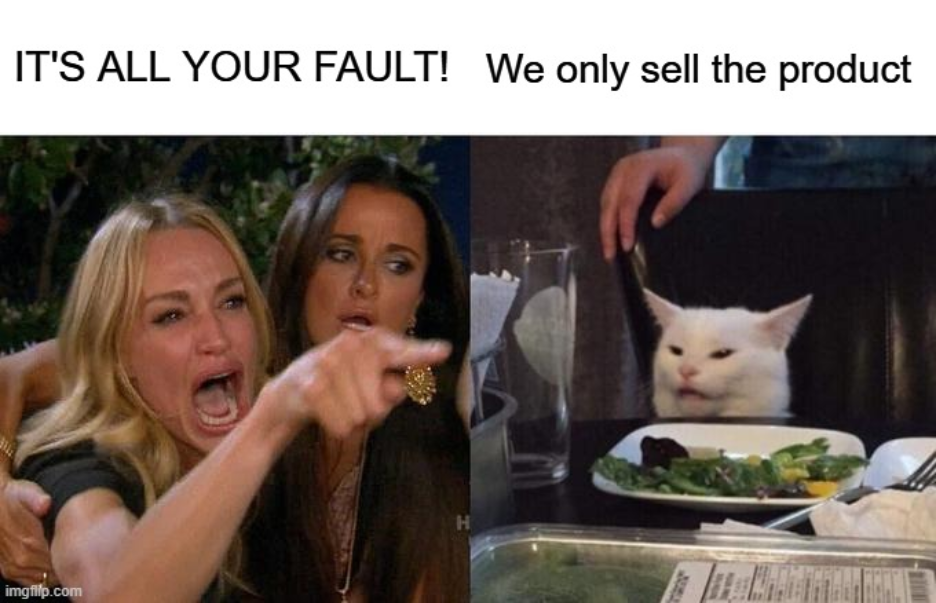
Luckily, after you’re done reading, you’ll neither have to brace the blame nor the cost.
Let’s take a quick look at a quick comparison between an eyewear warranty (manufacturer’s) and an eyewear accident plan.
As you can see, manufacturer warranties cover what shouldn’t happen but eyewear accident plans cover what actually does.
They ease the frustration of damaged glasses for customers while also creating a strong foundation for your business growth. Here’s how:
Both eye glasses warranty and protection plan offer a way to reduce the post-purchase friction. The only difference is that the latter makes the claim process much easier. If you choose a trusted warranty provider, your customers can save themselves from filling out lengthy claim forms or days/weeks of responding time that only adds to the frustration.
In fact, merchants who offer accident plans often see lower return rates because customers shift from wanting their money back to just getting it fixed.
You’ve already done the hard part, getting the customer to click “Add to Cart.” But by including added protection, you can drive more revenue.
In case the glasses break, a frictionless claim experience will increase your customers' trust in your business. They will most likely purchase their next pair of glasses from you. As a matter of fact, one study reports that 87% of the buyers would recommend a brand they had a positive claims experience with.
Put yourself in your customer’s shoes for a second. They’re about to spend $20 to $50, maybe $100, on something they know is fragile. Something they’ll wear every single day.
So naturally, there’s that quiet question in the back of their mind: what if something happens to these?
Now imagine answering that concern before they even have to ask, right there at checkout, with a simple protection plan.
It just makes the decision easier and safer.
And customers respond to that positively. In fact, many are willing to pay up to 21% more when product protection is part of the purchase.
Neat, isn’t it?
Eyewear has built-in doubts. So, customers usually find themselves asking three questions:
A protection plan removes those doubts and reduces risk in the customer’s mind. Merchants offering protection plans consistently see increased conversion rates.
And when risk goes down, conversions go up.
Remember the KitKat robbery, when 400,000 KitKat chocolates just disappeared?
Yeah... shipping comes with its own gamut of hiccups.
Over 620 million packages are lost or stolen annually in the US and 61% of customers blame merchants (not carriers).
But wait till you read something worse: your products are vulnerable, too.
Think about what your eyewear goes through before it reaches your customer:
Sure, you have built processes to ensure that never happens. But all it takes is one rough drop, one poorly handled package or weak corner in the box for your product to break. And if it survives, then there’s always the chance that it can be stolen by porch pirates.
So, when you include shipping damage within your protection plan, you take control of that entire experience.
Instead of a frustrated customer asking for a refund, you offer a quick, seamless replacement.
By now, it’s clear, offering protection isn’t the hard part but offering the right one is.
A bad warranty experience can be worse than no warranty at all. Slow claims, confusing terms, poor support, and it all comes back to you and your brand.
So, here’s what you should actually look for:
The goal is to offer protection while also increasing AOV, reducing returns, and improving customer experience, all at once.
And that’s exactly what SureBright does.
With SureBright, you can offer extended protection plans that are:
And the best part is it works on a revenue-share model, which means you earn on every protection plan sold, without taking on any risk.
So, book your demo today.
Yes, eyewear is fragile and used daily, so customers value the reassurance. A protection plan reduces hesitation and makes them more confident in their purchase.
A manufacturer’s warranty typically covers defects, while a protection plan includes accidental damage, wear and tear, and real-life mishaps.
Quite the opposite. It usually reduces returns, as customers choose repair or replacement through the plan instead of asking for refunds.
It adds a high-margin upsell at checkout, increasing your average order value (AOV) without changing your core product pricing.
Not if you partner with the right provider. Most third-party platforms handle claims, support, and logistics for you.
Yes. Covering shipping mishaps improves first impressions, reduces complaints, and prevents unnecessary refunds or replacements.
.jpg)


M Khizar is a writer enjoys making complicated things feel simple. He writes about warranties, ecommerce, and the small details people usually overlook, until they matter. His work focuses on clarity and helping readers make smarter decisions without overthinking it. Outside of work, he enjoys reading, writing personal blogs, and binge eating with friends.


.jpg)