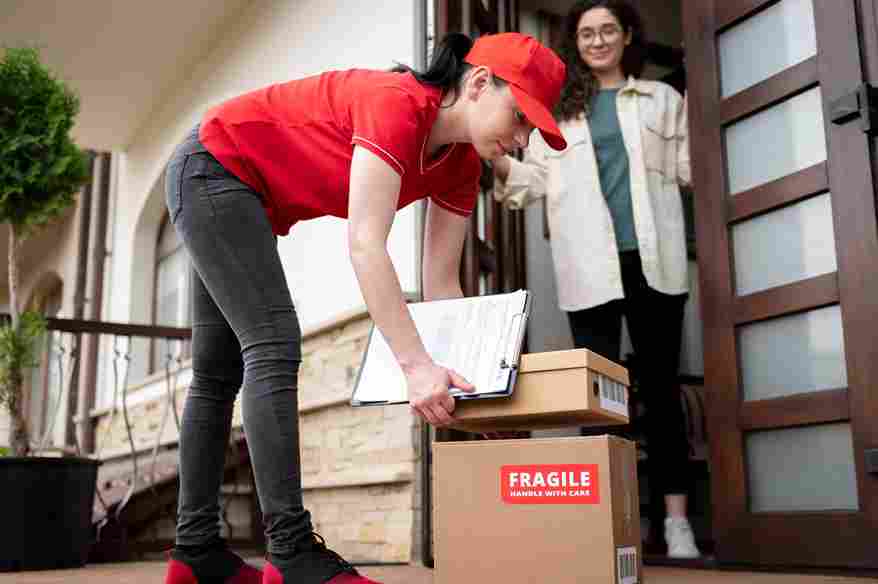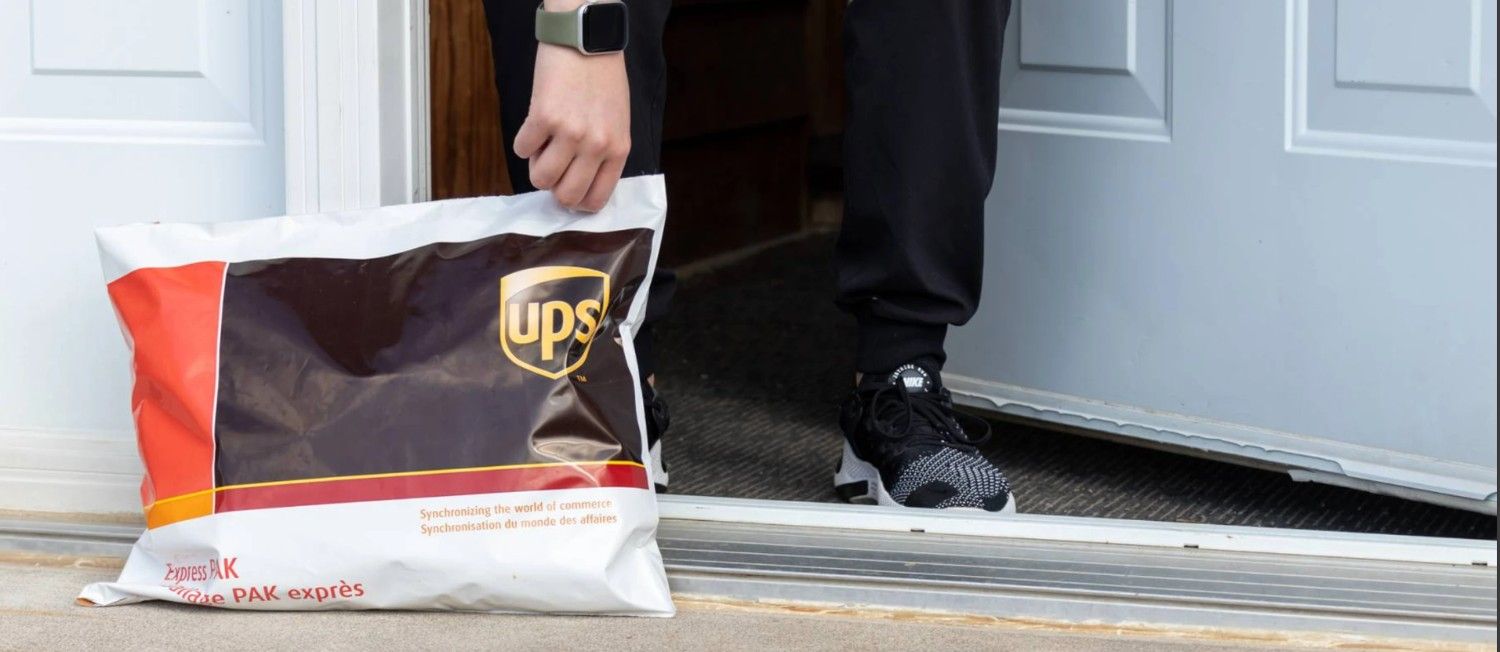


“A customer placed a $450 USD order on one of my personalized products. It wasn't until when USPS was out for delivery he realized he put the wrong address when purchasing the product. He kept saying "Please resend it to me" as if the product is universal or I can make the product again in seconds... I was told that if the recipient does not pick up or call USPS in time, they will just destroy the package. If that happens, for sure the customer will be pissed and ask for refund. I kept emailing him to reach out to USPS but he did not reply.”
- A merchant who shared their frustration on Reddit
As a merchant, getting your products delivered safely is more difficult than it should be. You have to deal with Murphy’s Law on steriods: anything that can go wrong will go wrong across every order you send out.
The proof: over 620 million packages are lost or stolen annually in the United States. And even if the deliveries are successful, the items can be damaged in-transit or stolen by porch pirates.
And unfortunately, merchant experiences go from bad to worse when you factor in the financial losses you have to manage in reverse logistics. Failed deliveries cost an average of $17.2 USD per package. If you’re dealing with hundreds of these, that’s thousands of dollars lost in revenue per month.
But aside from monetary losses, 61% of customers blame merchants (not carriers) for failed deliveries. And upset consumers don’t just deal with it quietly - a loud minority can review-bomb your business across major platforms. One frustrated review for Sephora reads:
“I spent $500 and OnTrac lost my package. OnTrac is blaming Sephora. Sephora is blaming OnTrac. So now I’m stuck making payments on this stuff that I have not received, and I’m not getting any help from either party. It’s been more than a week since it said it was delivered, and no one is helping me. I’m so frustrated I literally never wanna shop here ever again like this is ridiculous!!!!”
So what are you supposed to do when delivery issues happen? And who can you even turn to?
Let’s go over why things go wrong during shipping, what you can do to deal with failed deliveries or package issues, and how shipping insurance protects merchants from heavy financial and reputational losses.
RTOs (Return-to-Origin) are difficult to manage. You send a package out into the world, and instead of arriving safely, it boomerangs straight back to you. You’ve just paid shipping twice, disrupted your inventory, and angered a customer who is now questioning your competence. RTOs are frustrating, expensive, and can sometimes be completely out of your control.
Sometimes, the issue can be as basic as mistyped or wrong addresses. According to research, approximately 2.1% of all e-commerce deliveries fail because of address errors. That number doesn’t sound big until you put it into perspective. If you’re sending 10,000 orders a month, that’s 210 orders with these issues. The average cost for failed deliveries is $17.2, making your monthly loss $3612. Annually? That’s $43,344 down the drain.

And for merchants who ship internationally to and from the US, shipping can get messy because of the tariffs in place. All the changes around customs mean that the criteria for package requirements change way too frequently.
A statement by UPS said this:
"Because of changes to U.S. import regulations, we are seeing many packages that are unable to clear customs due to missing or incomplete information about the shipment required for customs clearance. In those cases, we dispose of it in compliance with U.S. customs regulations.”
COD cancellations are annoying to deal with because the reasoning behind it is simple: the customer changed their mind. By the time it gets to their doorstep, the shipping cost is already spent, and the inventory was already tied up. Then when it RTOs, you're the only one who has paid for something, not them.

36% of failed first delivery attempts occur simply because recipients are not home. The carrier leaves a notice, your customer misses it, and the package begins its journey back to a depot where it will wait for another attempt or two. Meanwhile, 67% of customers report timing issues expecting packages.
The package isn't lost. It's not stolen. It's just... suspended. Somewhere between your warehouse and your customer's living room, in a logistical purgatory you're paying to maintain and they're starting to blame you for. Then, if customers still don’t receive it, carriers like UPS destroy your items.
There were 104 million packages stolen in the US last year. If you’re looking at this in terms of cash; that’s $22 billion in merchant losses.

Stolen parcels aren’t unique to the US either. According to FedEx, over 24% of online shoppers had a package stolen in the past year in Canada. Clearly, there’s an epidemic of thievery that’s affecting merchants worldwide.
US merchants stomached approximately $4 billion in lost goods and claims. That number stings a lot because technically, both you and the customer could have done everything right. The fault in this case lies with the carrier.
Packages can get lost because of heavy traffic days (like those caused by Black Friday and Cyber Monday sales) or because of delays caused by things like shifting tariffs.
Lost parcels can also feel emotionally difficult for a lot of merchants, especially if they’ve put in a lot of effort into their products. One disappointed merchant shared:
“It sucks to have to refund on an expensive item, but I don't even care about the money at this point... what I care about is something I might never see again in my lifetime (because it's pretty rare) is now lost somewhere in the mail and the buyer is disappointed. I'm hoping even if I do have to refund (I've been given a Friday deadline to have it resurface in the mail somewhere or refund), that it magically turns up later and the buyer gets his item. If you have a magic wand and can make this package turn up, now would be a good time... I need all the magic I can find.”
And while carriers can’t refund emotional distress, a few can reimburse lost goods up to $100.
That doesn’t help much, though. Because if your customer ordered an item that cost $180 and it never arrived, the carrier might cover just over half of what you lost. And that's assuming your claim is approved, which is not guaranteed. That means the rest of the loss is yours to manage. So is the cost of whatever you issue to keep the customer happy. So is the reputational loss from the review they left while they waited.
“I recently shipped a package containing computer parts using a UPS Store. However, during transit, the package was RTO’d. Upon receiving it, I noticed visible damage to several parts, including physical bending, and the outer packaging showed signs of impact. When I filed a claim, UPS picked up the package along with its contents but later denied the claim, stating there were "no visible signs of damage." After I responded with photos clearly showing the damage, they changed their reasoning, now claiming the package was 'improperly packaged.' Since the damaged items are worth around $1,000, pursuing a civil claim would not be cost-effective"
- A frustrated store employee ranting on Reddit.
None of this is what you signed up for when you opened a store. But it is, currently, what self-insuring every shipment looks like.
Carriers handle millions of parcels daily. Unfortunately, their definition of "fragile" and yours may not be the same definition.
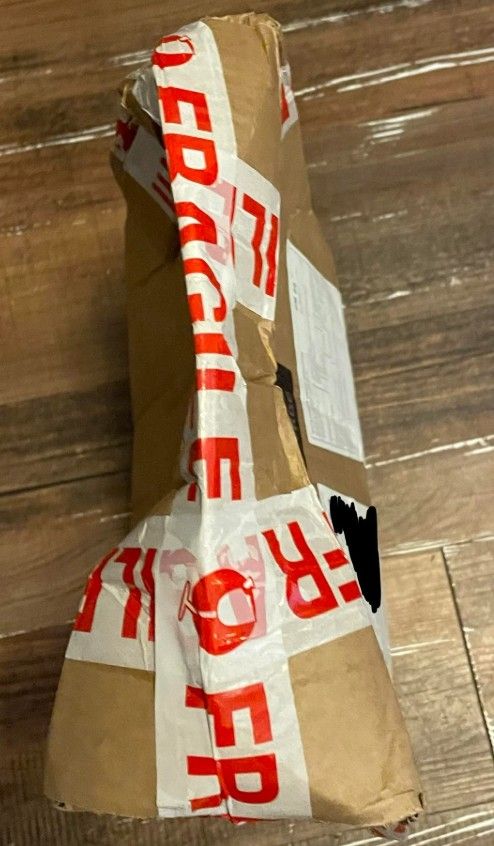
Your item could be bent backwards, scratched up, broken in 2 different places, or simply just dead on arrival. This damage can be stressful for both you and your customer.
“The buyer sent a message about their package arriving damaged with pictures. One of the poster tube's caps was completely removed and missing (even though I taped them both and sealed shut) and they stuck a UPS shipping label directly on to the poster! The poster was damaged obviously being crushed and crumbled and creased along half of it."
- A frustrated customer sharing their experience on Reddit.
Most customers respond the same way: they’ll send you a photo, raise a support ticket, maybe even take it to social media.
But some go even further and file for chargebacks. That’s where things get ugly. Because if you get too many of those disputes, your store might be in danger of shutting down. If you want an example of businesses dealing with chargebacks that aren’t their fault, just look up the impacts of Amazon’s Buy for Me program.
And when your store is impacted by the shipping damage, turning to your carrier won’t help much.
UPS, FedEx, and USPS have additional coverage options that merchants can go for. This might sound great initially, but their limitations and claims processes prove otherwise.
One merchant detailed their stressful experience with UPS,
“I shipped a 1500.00 card and did everything right. Paid the extra insurance, signature delivery, pictures, kept ledgers and receipts all of it. For 3 days they attempted to deliver and the person wasn’t home. I filed a lost claim package and gave the item, the invoice showing the paid amount, pictures of the item, everything. I just received a claim denial and the package just shows sitting there. I’m at a loss. UPS gets to keep my 1500.00 package and I’m out? What?”
Shipping protection keeps you from paying for logistics twice, while also helping you preserve customer relationships.
It ensures that:
Trusted shipping protection partners like SureBright ensure that you won’t lose margins or your customers.
Every order you ship without protection is a small bet: that this one will arrive intact, to someone who's home, via a carrier having a good day. Most of those bets pay off. The ones that don't cost significantly more than any protection premium would have.
Merchants spend years optimizing ad spend, checkout conversion, and fulfillment speed. Shipping protection makes sure the customer experience you've worked to build actually survives the moment the package leaves your building.
You spent months building a product worth buying. Don't let a carrier's bad day be the last thing your customer remembers about you.