


If you’re in the ecommerce space, you’re probably used to getting hundreds of offers on AI brand monitoring tools. It’s really tempting to play the AI hype game, but ecommerce businesses need a reality check on the larger contribution of AI on sales.
This lack of consistency with brand perception isn’t because of your business or a problem with how the monitoring tools work. It’s related to issues with ChatGPT that have been documented by experts for years.
Merchants who have already spent much money and time end up realizing that the promised traffic just isn’t there, the conversions aren’t strong enough, and their sentiment is shifting from excitement to frustration and caution.
Beyond the headlines and PR- OpenAI is dealing with users dropping off in droves.
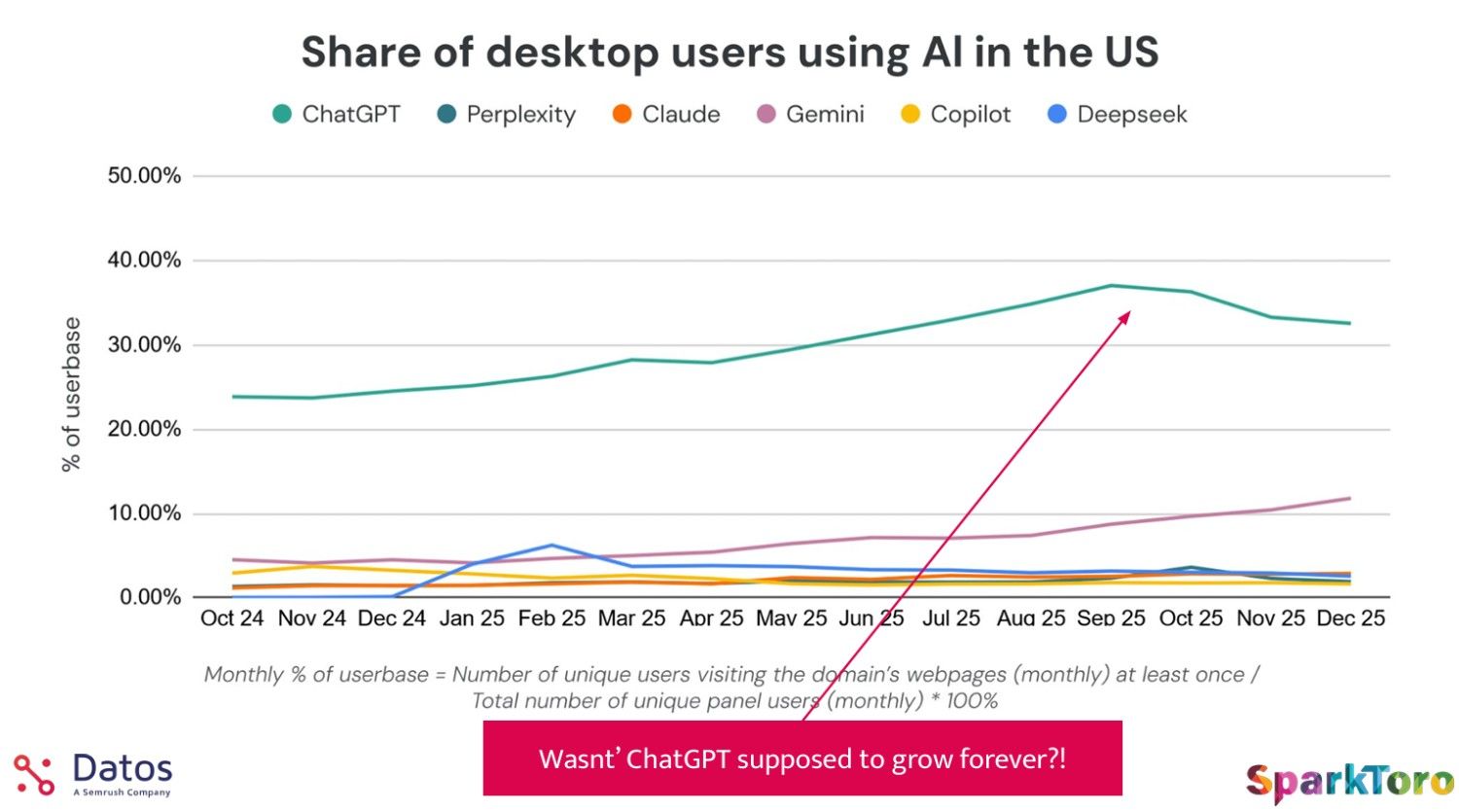
Why is this happening? Is it because the AI model doesn’t work, or is it something much bigger within the ecommerce space?
Let’s take a look at the data.
Despite all the hype they’ve gotten over the years, the research around the ChatGPT’s usefulness isn’t optimistic. One AI scientist said:
“A model can be 97% accurate but only 70% reliable, and the gap can bankrupt you."
While this is true for all major GenAI models available today, ChatGPT’s effectiveness is questioned the most by researchers and real-life users alike.
A study from MIT said that despite investments of nearly 40 billion USD-“ChatGPT forgets context, doesn't learn, and can't evolve. For mission-critical work, 90% of users prefer humans. The gap is structural, because it lacks memory and adaptability.”
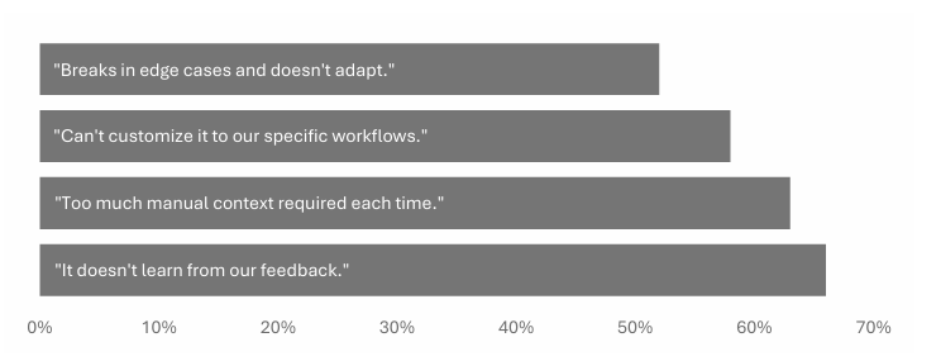
This means that the “future of ecommerce” merchants were promised isn’t here. And probably won’t be for a while.
However, leaders from OpenAI and partner organizations still stick to their claims of “revolutionary” tech. In an interview, Shopify's VP of Product Vanessa Lee talked of their partnership with OpenAI saying,
“Our goal is always to keep merchants on the cutting edge by default. As we expand, merchants will unlock new ways to sell automatically, with their brand and shopper relationships still front and center. We're focused on building tools that help merchants grow, no matter their size or experience.”
The truth? It’s been 5 months since they announced the partnership, but the actual results of the integration have yet to be made public. If they think AI shopping is the next big thing, why aren’t they proving it?
One frustrated merchant said this:
“OpenAI made several insane, groundbreaking, revolutionary announcements in the last 1 year. How many have truly transformed your life/ecommerce?”
Funny enough, some merchants online have turned into part-time conspiracy theorists because of all the misguided claims from OpenAI.
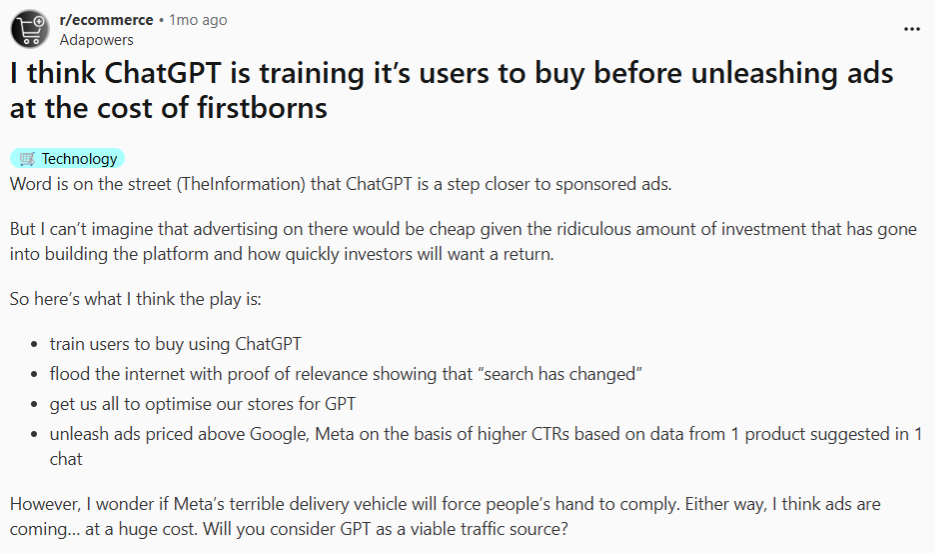
Researchers analyzed traffic across thousands of stores and found that the AI model sends just 0.2% of total sessions as compared to other channels.
Why would any business want to restructure their processes around the AI tool for 0.2%? And yet, the AI monitoring tools industry is thriving, and is estimated to reach $2-5 billion by 2028.
Traditional channels like search, email, paid media and social still dominate, while AI barely registers. Part of the reason might have to do with the fact that ChatGPT sends users to 404 pages far more than its other AI counterparts.
That means even if it does mention your company, it won’t be of much use.
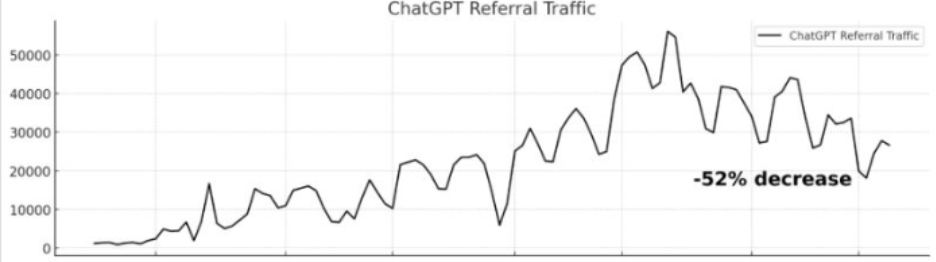
Aside from those errors, website referrals have dropped by 52% since July 2025. This means they’re actively trying to ensure that users don’t visit your website. Instead, with features like Instant Checkout, they’re aiming to keep customers within their chatbot instead of redirecting them to your website.
How are you supposed to track traffic and grow your business if you can’t measure anything?
One digital marketer commented,
“You won’t get clean analytics like Google anymore. The only real signals today are indirect asking customers how they found you, watching branded search lift, inbound quality & seeing your name show up consistently in AI answers when you test real queries.”
Merchants working in SMBs get overshadowed by bigger businesses because of ChatGPT’s bias against them.
The majority of ChatGPT referral traffic flows to already dominant brands; large retailers, marketplaces, and high-authority websites that have spent decades in the game.
This creates a structural imbalance because:
This isn’t an issue limited to this particular AI chatbot though.
When Amazon expanded its marketplace, large sellers took the majority share. Plus, its Buy For Me program works only for more established businesses who have the means to support that traffic.
ChatGPT is just following the same pattern.
Even when ChatGPT sends traffic, it doesn’t convert as well.
Merchant-level ecommerce data shows ChatGPT referral traffic has:
That’s not surprising when you consider intent. According to research done on how people use ChatGPT, 80% of usage is around asking for practical guidance, those seeking Information across different topics, and for writing.
These account for inspiration or research, not transaction intent. And inspiration alone doesn’t drive revenue.
One algorithm change can wipe out visibility instantly. That’s been a real issue for millions of merchants across the world. Every 2 months, there’s some new update that asks businesses to update their AI playbook.
“In the last few days, ChatGPT (business version) has become stupid, useless and really, really bad.”
- An exasperated employee on Reddit.
Platform-level adjustments to how ChatGPT cites sources, ranks information, or prioritizes feeds can dramatically alter which merchants get visibility.
And merchants have no recourse.
They can’t:
They are dependent on an opaque system they don’t control or understand.
That uncertainty makes merchants cautious. And that makes ChatGPT far less attractive as an acquisition channel.
ChatGPT’s declining usage amongst sellers isn’t that shocking. But merchants can’t justify reworking their business processes just for a measly 0.2% of traffic. All the 404 pages, the drastic site referral reduction, and lack of transparency just aren’t worth dealing with for negligible results.
That doesn’t mean the ecommerce ecosystem is rejecting ChatGPT; merchants are simply seeing it clearly for what it is, despite the hype.
The AI model functions handles light tasks well, can be a decent productivity tool, and can help you strengthen existing resources. But it’s not yet a reliable acquisition engine, meaningful traffic source, or even a replacement for search, marketplaces, or direct channels.
Whatever it is, OpenAI’s solution is not anywhere close to what its creators promised- and merchants have had enough.