

In June this year, I was on a roll on reddit.
My posts were hitting double digit comments, the upvotes were piling up, the karma was growing. They were being pushed everywhere, reshared, rewritten with a new take. The algorithm gods were pleased with me... or so I thought.
But, one day, in the middle of my streak, I woke up to find my account silently banned for a reason I didn’t even know, that too by the very algorithm that rewarded me earlier.

Eerily enough, this is the same fate ecommerce stores seem to be going towards.
Except when an algorithm decides your store has done something wrong, the stakes are a much higher than losing your Reddit karma. You could lose your Featured Offer on Amazon, your Google Shopping listings could disappear, or a payment processor could hold your funds for almost a year. Your account could get suspended while you scramble to figure out which invisible line you crossed.
And that can become more frustrating than you think.
That’s because more of the decisions affecting your store are being made by algorithms scoring everything from customer complaints and late deliveries to returns, chargebacks, product information and payment behavior. Most of which you’d never see or control.
The same algorithmic magic that once helped you get discovered can also decide that you’re suddenly a problem.
And when that happens, you’re often left playing detective: digging through dashboards, reading vague emails, opening support tickets, and hoping a human, not a bot pretending to be human, eventually takes a look.
So, who are these algorithms? What are they actually looking at? And, more importantly, how much control do you really have when any one of them decides to pull the plug?
Just like a blind oracle, algorithms read the value you are offering to the platforms and decide the future of your business.
Here are 5 examples of how they are impacting you right now:
Google's AI Mode doesn't visit your beautifully written product page. It reads the Shopping Graph, an index of 50 billion-plus listings refreshing two billion of them an hour, which is built from your Merchant Center feed and your schema markup.
Your website is on the shop floor. Your feed is the paperwork Google checks behind the scenes. Get that paperwork wrong, and shoppers may never make it to the shop floor.
Which explains a lot of mysterious disappearances, because a single disapproval on one product can pull it from every AI Shopping surface until you fix it.
A mismatched price between your feed and your page counts. So does stale stock availability. And if Google flags your account, the explanation often arrives under the wonderfully vague label “misrepresentation.” That term can cover everything from an actual scam to something as mundane as a shipping price table you forgot to update in 2024.
Just like the uncle who showed up with a bag of candy for your sibling and somehow forgot you existed, AI systems pick and choose “credible businesses” to mention. That means being good isn’t always the qualifier, being famous is.
We've argued before that AI Overviews lean hard toward big brands. What the newer data shows is why, and it's worse than simple favoritism.
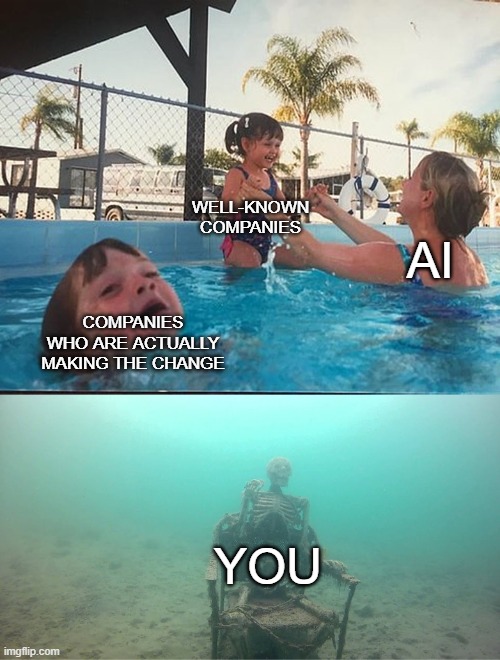
Brand mentions across the open web correlate with AI citations at 0.664, roughly three times stronger than backlinks at 0.218. These algorithms aren't checking who links to you but whether the internet talks about you unprompted. Which is a game in favor of an incumbent brand with years of press coverage.
Did The New York Times mentioned you? Congratulations, the AI noticed. No backlinks? Apparently, the internet has decided your content isn’t that interesting.
And this time, even your SERP rankings won't rescue you. The share of AI Overview citations coming from Google's top 10 organic results fell from about 76% in mid-2025 to somewhere between 17% and 38% by early 2026. Eighty-eight percent of AI-cited URLs don't rank in the top 10 for the query at all. You can be page one and still do not exist in the answer.
There's also a joke here without a funny punchline. Tools like ChatGPT lean heavily on Wikipedia and Reddit for sourcing. So, the platform that banned my account without explanation is one of the sources deciding which merchants get recommended.
You really see the algorithmic circle of life here.
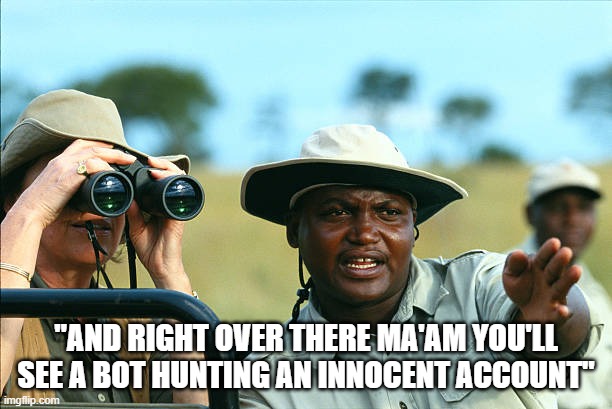
On July 8, 2026, Amazon removed the standalone performance gate for the Featured Offer and folded your Order Defect Rate, chargebacks and customer complaints into one continuous ranking score.
In plain English: account health used to be a test you passed once and forgot about. Now it's a grade you re-earn on every offer, every day, with no threshold left to hide behind.
Right after the update, many merchants saw a sharp drop in their feature offer rate:
“my featured offer has been consistently 100-97% for the last 2 years and now I have dropped to 60% on my own branded custom products. I don’t understand”
Lose the box and Amazon can also stop you advertising that listing. The company calls this gate Buy Box Suppression. Which leaves the ad auction as your route back in.
Except in August 2026, the FTC and 22 state attorneys general sued Amazon, alleging it had hidden a surcharge in that auction since 2019, known internally as a "soft reserve price." Sponsored Products advertisers allegedly paid their full bid around 80% of the time, and the surcharge was ramped up before Prime Day and Black Friday. Amazon calls the case misguided.
One algorithm decides whether you're visible. The other, allegedly, overcharged you to fix it.
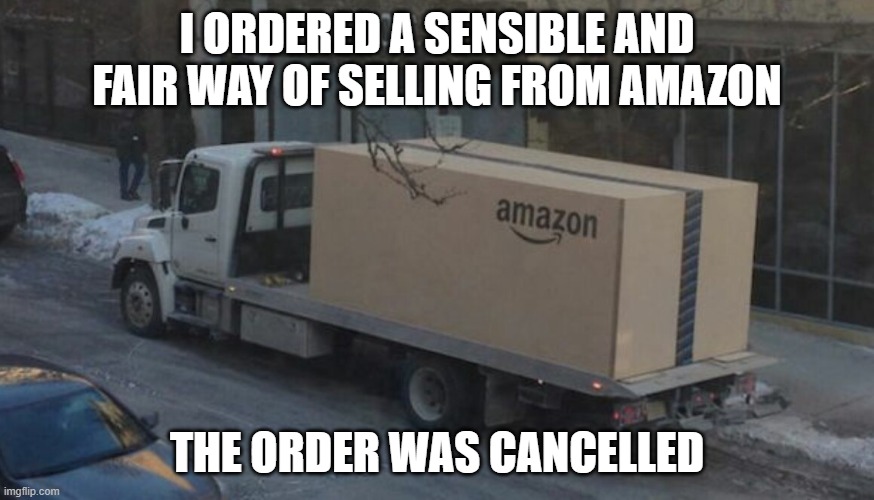
If you use Shopify Payments, you don’t have a dedicated merchant account just for your business. You’re part of a larger pool of sellers, so a reserve can be placed on your account based on Shopify’s broader risk rules rather than someone first sitting down to review your specific business. It’s kind of a blanket risk policy, applied algorithmically, at scale.
And it runs on inputs you'd never guess were risk signals. Elevated chargebacks, that’s obvious. But then there’s also a sudden jump in sales volume. What about a new product category? That also counts. A refund rate that ticked up after a bad supplier run? Check. Even your best week can look identical to a fraud pattern.
When it fires, it keeps typically 5% to 30% of every transaction, for 30 to 180 days. On a store earning $20M, a 10% reserve at 90 days locks up roughly $493,000 of working capital at any given moment. Your suppliers, unfortunately, remain on their original payment schedule.
Then there's the part that should genuinely worry you. A merchant posted on Shopify's own community forum describing a $90,000 reserve hold against a 0.3% chargeback rate and 11,800 fulfilled orders:
“Despite two follow-up emails and multiple live chat attempts, we have now gone 11 days without any response from the Risk or Merchant Trust team. Live chat confirmed it was escalated, but we’ve had no resolution, no updates, and no timeline.”
Meanwhile, the held funds stopped them fulfilling orders, the delays generated fresh chargebacks, and the new chargebacks pushed their risk metrics higher.
Visa's merchant threshold for fraud and dispute activity (christened as VAMP or Visa Acquirer Monitoring Program) dropped from 2.2% to 1.5% on April 1, 2026, with an $8 fee per dispute and no early-warning tier. It counts events rather than dollars.
That means a merchant facing a 1.8% rate last March could suddenly be over the limit in April without changing a single thing.
And that’s what makes this one particularly brutal. There’s no context box where you can explain that three disputes came from one bizarre week, or that your biggest customer had an unusual run of chargebacks.
You can explain your business to a person. Try explaining it to a ratio.
It would be easy to write all of this up as platforms being tyrants, and it would be wrong.
Merchant Center is strict because AI answers quoting wrong prices and phantom stock would poison the whole system for every honest seller on it.
AI tends to favor brands the internet already talks about because it’s an easy shortcut for “this brand is probably legit.” And honestly, that’s not a terrible instinct when the alternative is recommending a store that disappears right after taking your money.
Amazon folding defect rates into ranking makes sense when shoppers blame Amazon, not you, for a parcel that never turned up. And your processor holds reserves because in a pooled account, your chargebacks are genuinely their liability.
Every one of these has a defensible reason behind it.
But the rules aren't the problem here. It is how it’s all calibrated. These systems get tuned for the worst actors and then pointed at everybody. All they end up doing is creating havoc so that in the end a human intervention is necessary.
And getting a human to review your case, let alone hearing back from one, can feel almost impossible. Nothing is particularly transparent, so you’re left second-guessing every move. And the advice you find online is that mostly thousands of people guessing together, just with more confidence.
You can do many things apparently. These are the best few:
There’s a version of this article that ends with “adapt or die.” I don’t think that’s the honest one.
A machine-learning model can tell you exactly what triggered a decision. Platforms could give you a specific reason, show you the evidence, and give you a real path to appeal it. They often don’t.
Because a vague notice is cheaper than an explanation. And an explanation creates something you can challenge. It usually takes an outside force to change that calculation, which is roughly what happened when the FTC took Amazon to court over its ad auction.
But the change is in the awning: in the EU, the Digital Services Act forces platforms to state a specific reason for a restriction, offer a free internal appeal, and point you to an independent body that can overrule them. Those bodies have overturned more than three quarters of the roughly 1,500 platform decisions they've ruled on.
So the practical answer isn’t to outsmart every algorithm. It’s to make your business legible to the systems judging it. My Reddit account is still banned, by the way. I’ve made peace with it.
But your store has more at stake than my karma.
.jpg)


M Khizar is a writer enjoys making complicated things feel simple. He writes about warranties, ecommerce, and the small details people usually overlook, until they matter. His work focuses on clarity and helping readers make smarter decisions without overthinking it. Outside of work, he enjoys reading, writing personal blogs, and binge eating with friends.