

Every customer retention strategy article you’ve read has probably told you that repeat customers spend 67% more than new ones. Here’s a fun fact for your next team meeting: that number comes from a survey done in December 1999 - a good four years before Gmail existed.
The other crowd favorite says a 5% bump in retention lifts profits by 25% to 95%. It traces back to a 2014 article published in Harvard Business Review. Since then, Amazon has gone from pitching a Fire Phone nobody wanted to selling Alexa speakers that talk back.
So, what do the numbers actually tell us about customer retention in 2026?
For starters, strangers keep getting more expensive to reach. Meta charged advertisers 12% more per ad in the first two quarters of 2026 than it did a year earlier, and its own filing credits rising advertiser demand. Google’s cost per click went up as well, by 5% in Q1 and 3% in Q2, according to one quarterly report.
And founders are feeling the pinch where it hurts most (hint: it’s their bottom line) with one Reddit user sharing:
“In one of my businesses it costs $126 to acquire one customer, while only $28/yr to keep them.”
That’s roughly four and a half times more to win a customer than to keep them for a year.
However, when it comes to most customer retention strategies (or client retention strategies, if you’re in the B2B camp), they are written for coffee subscriptions and software logins, where people come back every month. If you sell products online like furniture, e-bikes or electronics, your customer may not buy again for years, so retention gets decided while they own the product, often on the day something stops working.
This guide covers customer retention strategies for ecommerce built for that reality, and checks which popular tactics actually hold up against the research.
What’s in this article?
In plain and simple terms, customer retention is the share of your buyers who pick you again the next time they need something you sell. In ecommerce, “next time” can mean a refill in 30 days or a new mattress in 2031, and that gap decides how you should chase it.
Why customer retention matters more when customers buy every few years
A coffee brand that loses a customer gets a dozen more chances that year to win them back. A furniture store might get one chance in five years, so a mishap like a single botched delivery can cost the whole relationship. High-ticket sellers can profit on the first sale, which is exactly why so many of them forget about the second. But that’s not very farsighted.
.png)
Take Koala Mattresses for example. The Australian brand launched in 2015 with a single product, a boxed mattress most people buy once a decade. But rather than waiting ten years for a reorder, it kept giving customers reasons to come back, moving into bed frames, sofas and eventually homewares. And when the mattress finally needed replacing, Koala was first in line. As one early customer shared on Reddit:
“I bought a Koala back when they first launched and was very happy with it, I just upgraded to their high end mattress when they had a Black Friday sale and it’s ridiculously comfortable.”
Years between purchases, and the customer still came back to the same store. We’ve talked about how you can use that playbook for your own brand below.
Start with your customer retention rate (CRR):
CRR = [(Customers at the end of the period − New customers gained) ÷ Customers at the start] × 100
Let’s understand this better with an example.
Say you begin the year with 1,000 customers, win 300 new ones and end with 1,050. Take out the newcomers and divide by where you started: (1,050 − 300) ÷ 1,000 = 75%. That would be your customer retention rate.
Now that we know the basics, let’s look into what we can do to keep them coming back.
At this point, most guides on customer retention hand you 14 tips and call it a day. The problem is that these tips are as generic as a fortune cookie giving business advice: “Know your customers. Make them happy. Ask for feedback.” Who doesn’t do that?
So, I’ve rounded up strategies most businesses skip.
As a veteran merchant on r/ecommerce put it, “Someone who bought one particular thing wants to see what goes with that thing, not your bestsellers page.”
So, send setup help for the product they bought so the customer feels smart about the money they just spent. Introduce more products only after that and keep them tied to that specific purchase.
Case study: Traeger

Most people buy a pellet grill once and keep it for years. Traeger’s free app walks owners through recipes and lets them control the grill from their phone, and it had 2.8 million active users in 2025. Those recipes call for wood pellets, rubs and sauces, which made up 22.8% of Traeger’s revenue last year, with accessories adding another 24%. That means nearly half the business comes from people who already own the grill. That’s kind of genius - teach someone to smoke a brisket, and they’ll be back for pellets every few weekends.
People rarely want to talk about your brand. They want to talk about what they cooked, what they wore, or how they decorated their kid’s room. A community gives owners a reason to think about you between purchases, and it silently turns your best customers into a free support team that answers questions at midnight. Definitely beats AI hands down.
Case study: Instant Pot

Instant Pot launched its official Facebook group in August 2015. A handful of moderators ran events and posted tips, and the group passed 400,000 members within about two years, fueling one of the best word-of-mouth runs in appliance history.
Buy now, pay later is everywhere, so it won’t make you stand out. But you can use payment plans to encourage upgrades or trade-ins later. And keep billing details updated, or customers might leave simply because their card expired. That’s involuntary churn, aka getting dumped by your own credit card.
Case study: Apple’s iPhone Upgrade Program
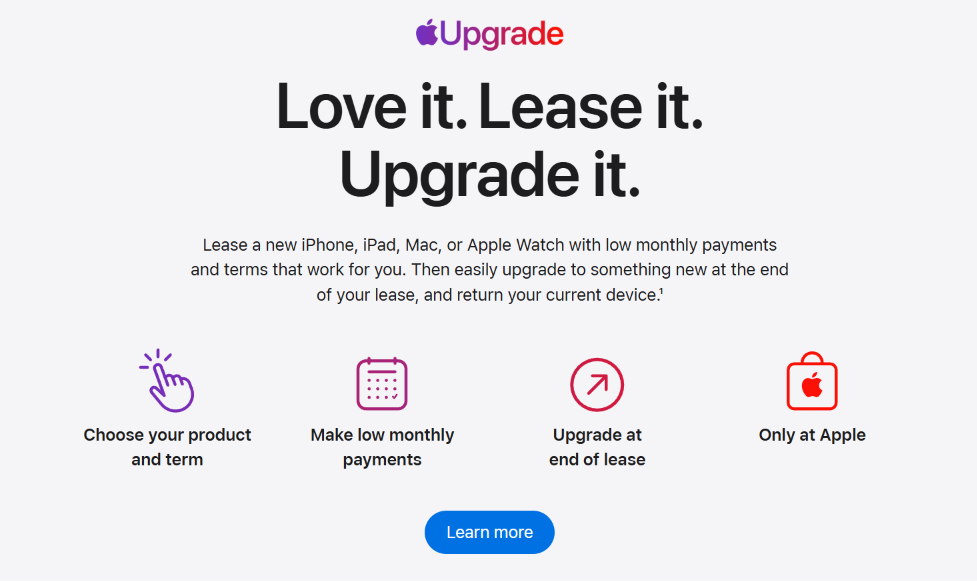
Apple spreads an iPhone’s cost over 24 months at 0% interest, bundles AppleCare+ into the payment, and lets customers upgrade after 12 payments by trading in their current phone and starting a new plan. The customer never hits a “should I shop around?” moment, because the next phone is already penciled in.
Trade-in credit pays your customer to come back to you specifically, because store credit doesn’t work anywhere else. It also makes the next purchase feel cheaper at exactly the moment they’re deciding whether to buy again.
Case study: IKEA Buy Back & Resell
IKEA buys back gently used furniture from its loyalty members for store credit, then resells it in the As-Is section. After a U.S. pilot in Pennsylvania, IKEA said every item it took in was resold rather than recycled, and in 2022 it made the program permanent across its 37 U.S. stores. In the UK and Ireland, credit runs up to 50% of the original price. The furniture comes back, and so does the customer.
When something breaks, your customer’s first instinct might be to replace the product, and your brand along with it. Give them a repair option, sell replacement parts, or point them toward someone who can help.
Case study: Patagonia

Patagonia completed 92,042 garment and bag repairs in North America in 2025, not counting the ones fixed in stores.
Fun fact: back in 2017, zippers accounted for 30,000 of its roughly 50,000 Reno repairs, and dogs have a weird obsession with the plastic snaps on ball caps. Each repair brings a customer back to the brand years after checkout. If your products age out of coverage, out-of-warranty repairs can become a revenue line instead of a polite “sorry.”
A protection plan gives you a reason to show up for the next two or three years without spamming your customers. Use the touchpoints it creates, like a coverage confirmation after purchase and a check-in before the plan expires. The biggest one is the claim itself and not to mention the extra margin you get after selling it.
Case study: Sennheiser

When Sennheiser added SureBright plans, its warranty attach rate passed 29% while returns dropped 26%. Fewer returns means fewer customers heading back to the search bar, and more fixes that run through the brand they bought from.
Pricing changes often on all of these, so check current plans on each of their site before you commit.
The stats everyone quotes are older than Gmail, but the lesson behind them still holds: customers who feel looked after come back. For ecommerce merchants, that care shows up in the long stretch between purchases, and it matters most on the day something breaks.
SureBright helps you in that moment with a protection plans, so the fix comes through your store instead of someone else’s and you earn a margin on it.
Book a demo to see how it fits your retention strategy.
The strongest customer retention strategies happen after the sale: reliable delivery, painless returns, fast warranty claims, repairs, and consumables or accessories that give customers a reason to come back between big purchases.
It depends on how often your category is bought. A consumables brand should expect far higher repeat rates than a furniture store, so compare your rate against your own past cohorts over a window that matches your purchase cycle.
Research suggests loyalty programs rarely lift repeat buying beyond what a brand’s market share already predicts. They work best in high-frequency categories and do much less for products people buy once every few years.
AI helps most where there’s a pattern to spot. It can predict when a customer is due for a reorder, flag shoppers who are likely to churn, and answer support questions around the clock. For ecommerce stores, its biggest payoff is in support and claims: faster answers on what’s covered and earlier warnings when a product’s return rate starts rising.
On average, yes. A 2022 meta-analysis of 429 findings from 30 years of research found loyalty programs reliably lift repeat buying, though they do far less to make customers feel attached to a brand. Results depend heavily on program design and industry.
.jpg)


M Khizar is a writer enjoys making complicated things feel simple. He writes about warranties, ecommerce, and the small details people usually overlook, until they matter. His work focuses on clarity and helping readers make smarter decisions without overthinking it. Outside of work, he enjoys reading, writing personal blogs, and binge eating with friends.





.png)