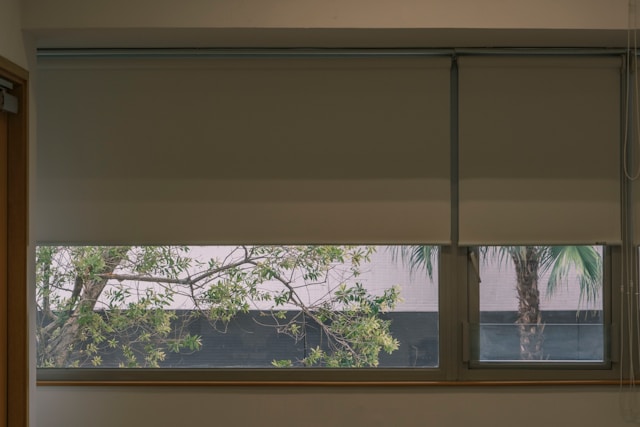


Quick question.
What do a motor manufacturer, a high-end textile mill, and a smart-hub maker have in common?
They all played a role in building you the motorised shades that make your living room look like a penthouse, but shy away from taking responsibility when the whole thing stops moving. It’s kind of like getting stuck on a high-school project with a reluctant partner.
Now, take this couple on Reddit weighing motorized blinds for a front room with eleven windows:
“Motorized blinds are initially very expensive and a normal warranty is only 2 years. We don't have the budget to replace all the blinds every two years or even every ten years... Any thoughts of how to solve our problem?”
Frankly, expecting a 10-year warranty on smart home tech in 2026 might be a tad ambitious. But their concern? 100% valid. They’re about to drop serious cash on eleven mini window-robots, only to be handed a two-year safety net. So when something inevitably jams, who actually picks up the tab?
The problem is that a motorized shade, like most custom installations isn't one unified product. It’s an alliance of separate components - a motor from one brand, fabric from another, and electronics buried inside the tube. When something jams, even a dedicated installer who genuinely wants to help is left completely at the mercy of three different fine-print contracts.
%20(1).jpg)
But now, that coverage gap can be closed for good.
By the time you’re done reading this blog, you’ll see why a better approach exists and how your standard coverage is leaving you caught between a premium purchase and barely any peace of mind.
If you talked to someone 20 years ago, motorised shades were a rich-uncle flex.
In 2026, they are a common home upgrade. In fact, the global blinds and shades market sits at $17.3 billion in 2026 and is projected to reach $24.6 billion by 2030, with automation driving a significant share of the growth.
And interestingly enough, what’s driving the growth has little to do with showing off.
A bare glass is basically an open hole in your wallet.
In July, your windows bake the living room like an oven; in January, they let heat escape out into the cold. At the same time, scheduled shades act like a shadow thermostat, blocking all that friction before your HVAC system ever notices.
Research also found that automated shades chop year-round energy use by up to 25%. Which basically means you’re turning your windows into a self-funding climate-control system that pays you back every season.
Nobody wants to balance on a wobbly chair over the kitchen sink or haul an extension ladder upstairs just to block two hours of afternoon glare. For most homeowners, sheer convenience turns motorized shades from a luxury into a no-brainer.
As one Redditor put it:
“It was about $1,200 for 4 large windows - definitely expensive, but worth it for my wife and me to be able to use blinds on those unreachable windows. They open at sunrise and close at sunset, or we can control them with our voice.”
Sure, manual blinds exist. But once your shades follow the rhythm of the day or respond to a quick voice command, the experience completely shifts. You’re living in a home that anticipates your mood.
It’s seamless. It’s immersive.
Much like the rest of your connected home tech, those high-end shades come backed by a shaky Jenga tower of component warranties, each piece expiring on its own uncoordinated schedule.
Hunter Douglas caps motorized parts at 5 years, strictly for the original owner. And if the Reddit trenches are any proof, buyers aren’t exactly happy:
“When I reached out for a solution, their response was appalling:
The motor is obsolete – Not only is it out of warranty, but Hunter Douglas no longer makes replacement parts for their own high-end blinds unless you're still under warranty.
No upgrade path – They admitted a newer motor exists but won't retrofit older blinds.
Their only "solution" – Pay $475 plus freight to downgrade my blind to a manual wand system, completely stripping the motorized functionality I originally paid for.”
And if you think this is an anomaly, no, it’s more of an industry standard.
Somfy also covers its motors for 5 years.
And Lutron gives you 8 years on their shading systems. But before that sounds like a much-needed silver lining in the dark cloud of fine print ambush, look at what this one owner experienced:
“The blinds are spectacular and we have been very happy until a motor blew out. Thats when a call to LUTRON informed us that the motor was discontinued. We would have to find on the secondary market. We did at a very steep price. We then learned that the only way to get new motors was to upgrade the entire system at a very significant cost. We would need lots of new hardware. These blinds were seldom used in the first 4 years as the house was only occupied for maybe 30 days a year. We have begun to take legal action.”
Sounds like a rough day for both Lutron and the owner.
Meanwhile, the fabric gets branded with a ‘Lifetime Warranty’ - a comforting promise that protects the piece of cloth hanging on your wall but leaves the microchips rolling it up out in the cold.
If something quits, you don’t even need to get them on the phone to watch the blame game start.
Somfy outright voids your warranty if their motor runs with electrical accessories they didn’t approve in writing. And they make it crystal clear that paying an installer to take the broken blind off your wall and hang it back up is 100% on you.

Basically, everyone’s legal department wins, and you’re stuck in a half-shaded room, paying out of pocket to start all over again.
If you assume an uncontrollable lightning strike is precisely what coverage is built for, think again. Brands like Texton explicitly write 'acts of God' into their terms as an automatic pass.
Even moving into a home with existing shades wipes the slate clean. Because of the original-owner rule, the moment the house keys change hands, the coverage dies.
One 35-year veteran installer candidly laid out the industry reality:
“As a blind installer. I know for a fact that quality control is severely compromised. The company just ships out blinds without checking them for defects. I am sick and tired of being the involuntary quality control *** I am sick and tired of being there unpaid repair technician . I keep looking in the shipping boxes for a check for the repairs I have be doing for free for the last 35 years. Still have not found any payment.”
Component warranties exist to protect component makers, not your living room. And those messy, legal seams are precisely where the whole system breaks. When nobody stands by them, your installer has little incentive to play middleman for free, leaving a massive coverage gap that someone actually needs to fill.
Whole system warranty stops treating your smart shades like four separate gadgets taped together, putting a single umbrella over the whole circus - the motor, the fabric, the power, and the tech with the ladder.
Under the standard model, a shade frozen halfway hands you an assignment that can devour a well-deserved holiday. You’re left standing on a stool trying to figure out whether the motor torque, the internal battery, or the smart hub gave up before you even know which company to call.
With whole system protection, something as simple as “the living room shade won't lower” can qualify as a claim. Diagnosing the faulty part becomes the provider’s job, and sending a professional up a ladder to fix it is built right into the plan.
.jpg)
The logic here is pretty simple.
If you put a couple of basic motorized shades in a home office, rolling the dice on standard manufacturer fine print might be a risk you’re willing to take.
But once you automate an entire house with high-reach windows and custom smart hubs, a breakdown is never a “broken part.” It’s a costly truck roll, an unwanted research project, and an insult to a system you paid good money to operate seamlessly.
You shouldn’t be forced to pay extra cash for a repair the manufacturers should have backed from day one or unexpectedly discover that while everyone covered their own component, nobody covered your system.
Want to see how Whole System protection fits your installation? Contact our team today to get started.
.jpg)


.jpg)