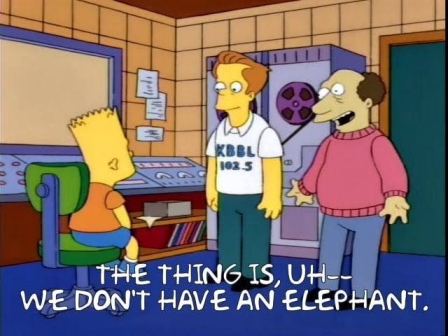
In a classic episode of The Simpsons, two radio DJs launch a promotion offering contest winners a choice between $10,000 in cash or a live African elephant. They assume everyone will take the cash. Then Bart Simpson wins, demands his elephant, and forces the station manager to admit the truth, “We don't have a damn elephant.”
You're probably not giving out four-ton mammals to increase sales. But you do have your fair share creative marketing offers, there’s also a calculative accountant trying to justify its ROI. Often you also wonder- was your offer really the best incentive, or could another offer've worked better?
Leading brands build intentional boundaries around their perks.
Amazon offers non-Prime free shipping on orders over $35 to nudge cart totals higher. Sephora reserves birthday gifts for Beauty Insider members with a minimum $25 spend required online. Dunkin' handed out a million free coffees but locked redemption to one per customer inside its app.
All these are different ways to help customers unload their wallets while not feeling bad about it. Some pla Some take a long-term approach, while others focus on immediate rewards, but the core idea is the same.
So how do you choose the right incentive for your business? Which one drives the most sales with the best ROI? Let’s break down when coupons, free gifts, and added benefits deliver and how to structure offers that drive incremental revenue.
To set the stage, let's start with some history.
In 1887, Coca-Cola had a problem familiar to any brand launching a new product - people couldn’t buy something they had never tried, but delivering the drink door to door wasn’t effective either. So they began distributing coupons for a free glass of Coke. The idea was to get people through the door and let the drink do the convincing. By 1895, Coca-Cola was being served in every US state and the campaign was since etched in history as an early example of coupon marketing.
You see, that free glass had a very specific job, which is to get an unfamiliar product into people’s hands.
Your store's problem could be entirely different. Maybe shoppers already want your products, but they keep their carts small. Or they're happy with their first purchase but have little reason to return. An incentive works best when it gives customers a reason to take the next step your business needs. So before choosing what you want to offer, work out where the hesitation lies.
A coupon is one of the strongest incentives that speaks to a stranger.
Someone who has never heard of you, has no reason to trust your product, and can see a cheaper option one tab over is not going to be moved by a free tote bag. Price is the wall, and a discount is the only tool that goes through it.
One research found that 68% of consumers were prompted to try a new or unfamiliar brand because of a coupon, cash-back offer, or discount. So the coupon has one job it does better than anything else - it buys you a first try from someone with no reason to give you one.
The trouble is that a discount that reaches strangers cannot distinguish between a stranger and a regular customer.
A merchant posted on the Shopify forums this month about a customer who had worked that out:
“Today became aware of a customer who has worked out that purchasing using a different email each time allows them to use the Welcome discount code that is for 1st order customer only - can only be used once. They have purchased 6 times from us within the past 2 months - keeping their name and address, but using a different email address - therefore, the way that discount codes are set up is they link to a customer’s email address.”
None of this makes the coupon the wrong tool. It makes it a tool with a known leak, and the leak narrows once you stop tying the entitlement to something as free to create as an email address. Phone verification, account-only checkout, and blocking plus-aliases all raise the effort past the point where looping is worth anyone’s afternoon. We’ve walked through the full set of guardrails in our piece on promo code abuse, so it’s worth a look before your next welcome campaign goes out.
A free gift can make a purchase feel more rewarding, particularly when it's something customers would genuinely use. Patrick Ta Beauty, for instance, offered three complimentary products on purchases of $150 or more during its Black Friday promotion. The bundle gave makeup shoppers a reason to reach the threshold while introducing them to more of the brand's products.
But there’s a catch with gift-with-purchase offers - the customer has to realise they're eligible, and the gift needs to be somthing they are interested in.
One Shopify merchant ran into precisely this problem when setting up a free-gift promotion:
“one thing to watch out for with the native buy x get y discount is that shopify doesn’t actually auto-add the free item to the cart, the customer still has to add it themselves and then the discount applies. so a lot of people miss out on the free gift entirely which kind of defeats the purpose.”
That's a generous offer doing a rather impressive impression of no offer at all. If shoppers have to figure out the mechanics themselves, some will reach checkout without their gift and might just feel betrayed.
And the problem isn't always the cart setup. Sometimes, the customer does everything right and still misses out.
In an October 2025 complaint about Estée Lauder Companies' Fall Gifts promotion, a customer said both gifts tied to her two orders were unavailable after checkout. She was furious:
“I specifically ordered because of the free gifts …and AFTER payment when they have your money they tell you sorry no gift!”
The gift had helped win the sale. Its absence left the customer questioning the entire offer.
So make the qualifying conditions clear, automate gift addition where your setup allows it, and keep inventory in sync with the promotion. If a gift runs out, update the offer before more customers place orders expecting it. A promotion designed to encourage spending can backfire when the reward disappears after checkout.
The gift itself matters, too. A complementary sample can introduce shoppers to another product in your range. A giveaway with little relevance to the purchase may do much less to encourage repeat business.
Say you sell bikes. A discount is a great incentive, but it doesn't help if the buyer is concerned about assembly and gear adjustments.
REI tackles that concern by including free bike assembly and one year of free adjustments with every bike it sells. The benefit extends beyond checkout to post purchase care.
The trade-off is that this promise requires service capacity, trained staff and a network of locations. It makes sense for a retailer that can build those services into its overall customer experience, but it would be a costly promise to replicate without the necessary infrastructure.
And this is where paid add-ons enter the picture.
Some benefits work as high margin add-ons, giving customers a choice while creating another source of revenue for your store.
IKEA does this with assembly, offering it through Taskrabbit on online furniture purchases from $52. Nobody is forced to buy it, and the shoppers who do not want to spend their evening with an allen key can pay someone else to handle it.
Product protection works the same way, answering post purchase worries that coupons or gifts with purchases cannot touch.
Legacy audio brand Sennheiser took this approach with extended product protection for buyers wary of product breakdowns after manufacturer’s warranty. Through its partnership with SureBright, it gave customers the option to extend coverage beyond the box warranty. As a result, their average order value rose 2%, but most importantly returns fell 26% year over year.
The appeal of the offer was straightforward - customers who spend premium amounts can protect their purchase, while Sennheiser earns revenue from plan sales rather than cutting the price of its headphones. And SureBright handles the claims, so the operational burden does not land on the brand.
A similar value add is shipping protection, which works on the same principle, covering specified risks such as loss, theft, or damage in transit.
The goal is the same as with coupons, gifts, and other add ons. Give customers a compelling reason to buy, while ensuring the offer and the economics work for your business too.
To estimate the potential revenue from product protection against your own product mix and sales figures, use SureBright's revenue calculator.