

I bought a pair of gold hoops two years ago that currently live in my “dresser dish of doom,” which is where things in my house go to be dealt with in some other lifetime.
The post on the left earring is bent. It did not snap off or vanish into the ether; it just bent enough to make putting it on feel like an unnecessary hassle. After three consecutive mornings of fighting the inconvenience, I gave up and stopped reaching for them.
One forgetful month later, when I marched back to the store, the woman behind the counter was cheerfully polite but said she could not help. She just handed me a slip of paper with a URL scribbled on it and told me the brand would handle the repairs directly in about 10-14 days. That was the end of my involvement. I never visited the website and never purchased from that store again.
Compare that silent departure with a customer who bought a Toteme bag through Mytheresa and took to the internet to chronicle the entire saga:
“I used the bag exactly four times, and shortly after, visible scuffing appeared on the corners... MyTheresa claims that they consulted Toteme, and Toteme confirmed that this is not a defect.”
She escalated the issue, demanded an official inspection, got an answer she hated, and published it for the world to see. Mytheresa knows precisely how furious she is. But research shows 56% of unhappy consumers silently ghost a store and just take their money and future referrals to a competitor instead.
.jpg)
A giant like Mytheresa can take a public review hit. If you’re a growing retailer in this space, you usually pay for the repair out of pocket, because a goodwill fix among the luxury crowd is far cheaper than a toxic one-star review sitting on your product page for a year.
So let's look at what manufacturer warranties actually cover, where they abandon you, and how to turn those expensive goodwill repairs into pure incremental revenue. Yes, you can even calculate your additional earnings with our instant warranty ROI calculator.
Most warranties in luxury retail seem to be built on a fundamental misunderstanding of how human beings interact with physical objects. The fine print is obsessed with answering just one self-serving question - Was this item made wrong? Meanwhile, your customer is asking a far more practical one - Why did it break when I used it normally?
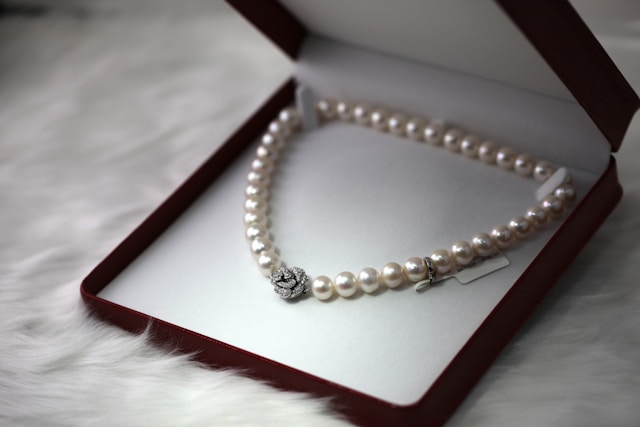
Jewelry is where this paradox achieves its highest artistic form. Gold, silver, and delicate settings are soft materials meant to be worn against skin, silk, denim, and other fabrics which means they exist in a constant state of physical conflict with everyday life. Mejuri’s Two-Year Warranty Terms explicitly exclude “scratches, tarnishing, bent posts, and damage caused by accidental strain or daily wear.” It promises total coverage, right up until the customer actually wears the piece. Pandora’s US Warranty Policy operates on the exact same legal rhythm.
Handbags operate on the exact same logic, just with a faster countdown clock. Coach, Michael Kors, and Kate Spade hand buyers a neat one-year warranty for manufacturing defects, with Kate Spade spelling out in plain English that damage from normal wear is strictly excluded. So if a brass zipper jams on day twelve, it is a tragic factory defect that earns an instant replacement. But if that same zipper jams on month fourteen, after being pulled open two hundred times, it is reclassified as an unfortunate customer lifestyle choice.
By the time you reach timepieces and eyewear, the exclusions may read like a checklist of the only reasons anyone buys the product in the first place.
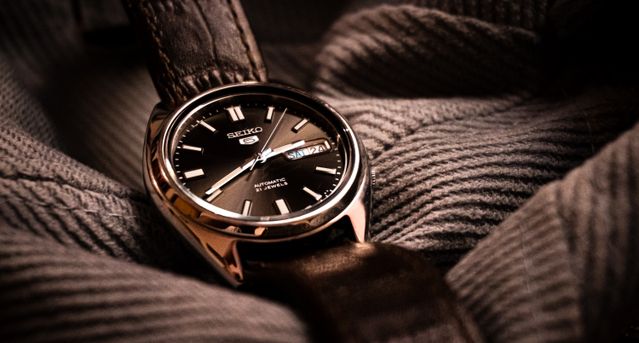
Rolex grants a generous five-year warranty, but carves out worn bracelets, scratched crystals, and water damage. Oakley will eagerly replace a lens if its chemical coating delaminates, yet scratches and snapped hinges, the two events that account for virtually every sunglass tragedy in human history, sit firmly outside the terms.
.jpg)
Across every category and price point, the rule never changes. Brands underwrite the pristine moment an item leaves the factory, ignoring the daily life that follows. That would have worked if your customers were buying museum pieces. But they bought a ring to wear daily, a bag to commute with, and glasses to toss in a glovebox. The clasp, the prong, the crown, and the hinge are where real life happens, and they are precisely what factory warranties abandon on your customer service counter.
The uncomfortable reality of multi-brand luxury retail is simple - you own the customer relationship, but the brand owns the verdict.
When a piece fails, the customer contacts you because your name was on the invoice. You reach out to the brand. The brand takes its time and hands down a decision you had zero part in making. A Net-a-Porter customer experienced this-
“We purchased a Loren Stewart necklace from NET-A-PORTER for approximately $350, and it arrived damaged. We contacted NET-A-PORTER immediately and provided photos, but they ultimately refused to replace, repair, or refund the necklace and directed us to Loren Stewart. We then contacted Loren Stewart directly, and they also refused to replace or repair it.”
Her review summed up the experience for hundreds of others considering NET-A-PORTER, stating that neither the retailer nor the manufacturer would stand behind a brand-new product.
It's worth noting that NET-A-PORTER is the first entity mentioned in that terrible review.
In luxury retail, a four-figure spend is the baseline. Fine jewelry runs an average order value of $500 to $2,500 and converts at roughly one percent, while luxury return rates sit at 18 to 30 percent. You are working extraordinarily hard for every sale, and a fifth of them are coming back anyway.
If you remove the repair path, your customer has two options, and both cost you money. A return, or a chargeback. One Saks shopper refused a refund on a damaged item, disputed the charge instead, and said Saks responded by coming up with new claims rather than answering the evidence. That one costs the sale, the dispute fee, and the review, in that order.
The official route to repair in these categories is slow. A full Rolex service runs $800 to $1,600 and four to eight weeks, and twelve in a busy season. Coach owners describe two weeks for a quote and another four to six for the actual work.
Somebody who spent $3,000 in October is not in a generous mood by Christmas, and every week of silence is a week they spend composing a review in their head.
A $20 quick fix can destroy your customer’s safety net, even as you feel helpless
When the official channel means an eight-week wait, customers do the sensible thing and go to a local shop. A loose prong, a stitch coming away at a corner, twenty dollars at the neighbourhood jeweller - sorted.
But months later when something serious fails, the brand's diagnostic team can open the piece, find one solder mark that is not theirs, and the coverage is gone due to unauthorized tampering.
.jpg)
In theory, the Magnuson-Moss Warranty Act prohibits companies from voiding coverage purely because a third party did the work. But it does not automatically act as a blank cheque when the repair bill lands. The invoice still belongs to your customer, and the law has nothing to say about who ends up paying it.
Macy’s built its own WorryNoMore plan specifically to cover the wear-driven repairs factory warranties ignore, like worn shanks and polish work. Many others just buys it in - Blue Nile partners with Jewelers Mutual because its own warranty excludes lost stones; Grown Brilliance and Jomashop also partner with other programs to cover chipped diamonds, scratched lenses, and broken clasps.
So, the baseline has shifted. A store without a protection plan at checkout is now the defenseless outlier on the shelf.
Macy’s can run an after-sales program in-house because it operates hundreds of stores and maintains legacy repair networks. That operational infrastructure takes decades to build, and it can still be excruciatingly hard to maintain such a program on your own.
Which is precisely why almost every specialty e-commerce retailer on that list chose to partner instead. You get a conversion-boosting coverage at checkout, with zero repair networks to build and no claims liability sitting on your balance sheet.
A quick word of warning, because this area is where merchants often stumble.
Kay customers paid for warranties and then discovered the terms. One was told the plan covered any possible problem, then learned two years later that it covered diamonds and not other gemstones. Another lost coverage entirely because the store had no record of a required inspection. You can just imagine the internal blame-game that would have followed.
Those reviews name Kay, not the administrator. Sell a program with unclear rules, and you have bought yourself a double bonanza for customers to be furious about.
Ask the following simple questions from any warranty provider you consider to maintain your reputable brand:
Look back at your support inbox. Zippers, clasps, prongs, movements, hinges. Ask the provider directly whether wear and tear that causes a mechanical failure is covered, because the phrase "wear and tear" is doing one of the heaviest lifting in every contract.
Surebright’s luxury bag coverage is engineered around real-world mechanics, covering zippers, clasps, buckles, snaps, and locks. For timepieces, our plans cover the mainspring, gear train, balance assembly, and quartz movement, picking up the moment factory terms stop. And for luxury eyewear, the accidental plan covers everyday mishaps such as drops and spills.
Your customer should never feel like a hot potato passed between you, the manufacturer, and an obscure claims department.
.jpg)
Ask who answers the claim, whether physical receipts are required, and what the turnaround time looks like.
With SureBright, customers file online in under two minutes. We manage the repair, replacement, or reimbursement directly, keeping your customer support team completely out of the crossfire.
A multi-brand merchant cannot manage four different protection programs. Ask whether one provider seamlessly spans bags, fine jewelry, timepieces, and eyewear. Ask how pricing updates as inventory shifts, and what happens when you upload new SKUs next season. Manual policy mapping is an operational tax you will pay forever.
An after-sales protection program should not be another favor you do for the customer. Ask about your net revenue share, average category attach rates, and whether a high-value claim costs your store anything.
With SureBright, we carry 100% of the risk, claims cost your business nothing, and the program operates as a direct net revenue share. You can model your potential margin lift directly on our platform with the warranty ROI calculator.
Finally, ask them what their policy does not cover. Any provider worth signing will give you a straight answer without flinching, and you will want that list in writing before you launch.
.jpg)



.jpg)