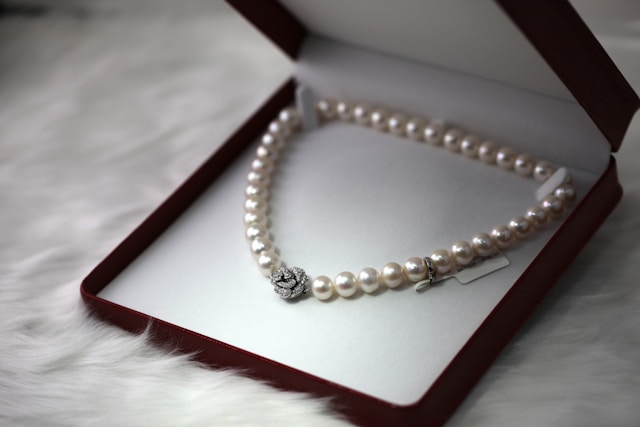


Jewelry is undoubtedly the most inherited and gifted product category.
When you slide a dreamy ring on, you feel this symbol of love can truly conquer everything.
Well, almost. Everything but an accidental bump against a dishwasher or a toddler thinking your chain is a pull toy, or a gym session that bends a prong flat....you get the drift. You see, a diamond might be the hardest substance on earth, the warranty on them - not so much.
So when you head back to the boutique expecting the same red-carpet treatment you got when you bought it - you’re going to be sourly disappointed. And, a honeymoon in Tulum that happens to overlap with your six-month inspection window is all it takes to void a “lifetime” warranty.

And it’s not just rings, here’s what a customer experienced:
“Hand chain snapped 7 days after receiving it, company won't refund/exchange and want to charge me for repair.”
Right now, the industry leans hard on words like "lifetime guarantee," "diamond bond," and "commitment plan" - language that blurs the line between warranties and guarantees while burying the fact that coverage is conditional and claims often involve weeks of haggling over what counts as normal wear.
Yes, there are better solutions that can help, but first let’s see what the current system truly looks like.
We’re breaking down exactly where these dreamy warranties tend to disappear, why standard coverage often fails when you need it most, and how to find protection that actually keeps up with you.
You hear ‘lifetime warranty’ and imagine a safety net for the ages. What you actually get is a coverage plan that functions like a strict librarian - one who has a six-month deadline.
“didn't even know they had inspections or warranties like this. this is very interesting.”
-A confused Redditor
Interesting – yes, but truly heartbreaking - if you miss out on your appointment.
Kay’s Lifetime Diamond & Gemstone Guarantee, for example, requires inspections “performed and documented by an authorized representative” every six months.

Morgan Jewelers, Sharif Jewelers - same story. Miss a window and the whole thing collapses.
These ecosystems are comprehensive but buried in dense fine prints and unclear coverage terms susceptible to discretion.
If you have the heart to visit one, review pages can truly run high on emotions:
“They would not return, exchange, repair, or give store credit. I'm stuck with a broken $200 necklace. Never again. There are some reputable jeweler companies. Kay is NOT one.”
And even if you follow the rules, there’s another catch.
If an inspection happened but wasn’t logged in their system, it doesn’t count.
Here is what a customer experienced:
“The ring was cleaned at the same Kay Jewelers location several times and I always informed the employee that it was purchased there. Not once did any employee suggest the cleaning needed inspection documentation.”

During your mandatory visit, the jeweler can flag “recommended repairs.” It can be helpful.
But Brilliant Earth’s own terms state that coverage is excluded for “damage or loss caused by a failure to obtain the repairs required to preserve the integrity of the jewelry.”
So if you decline the repair they recommend, and that issue later worsens, your warranty can deny the future claim for “failure to maintain the piece.” The free check-up starts looking less like a courtesy and more like a thinly veiled sales funnel.
The irony? You know for a fact that plenty of jewelry survives generations without a single mandatory check-up.
“I literally wear my great grandmothers’ hundred year old rings every day (one ring from each side of my family).”
Take your necklace to your local jeweler for a simple chain solder or a clasp swap, and your warranty is done.
Blue Nile, James Allen, Ring Concierge, Berlinger - they all include language voiding coverage if anyone other than the original seller touches the piece. Even for minor work.
“Because I had it resized elsewhere, the warranty was voided (which is understandable), but they now tell me the resizing caused damage beyond repair to the ring.”
-A Star Wars Fine Jewelry buyer on Reddit
Even for work that has nothing to do with the issue you’re claiming.
Which makes this worth knowing: Despite the scary fine print, federal law - specifically the Magnuson-Moss Warranty Act - actually prohibits companies from voiding your warranty just for using a third-party repair shop. But in practice, coverage can still be denied if that repair is blamed for the damage.
The most expensive part of your jewelry can be the one thing not invited to the party. We’re talking about the center stone - the diamond, sapphire, or emerald that typically accounts for 70 - 80% of the total value.
Don’t expect your jeweler to cover the center stone, whether it’s from the store or not.
-A Reddit maven
In a move that feels like buying car insurance that doesn’t cover the engine, LabGrownDiamonds.com puts it bluntly: “We will not replace center diamonds as part of our warranty.”

It gets even more restrictive as the price goes up. Some jewelers impose a carat cap that excludes center stones with a retail value over $12,000.
Which is shorthand for: the more you spend, the less protection you actually have.
And as we mentioned, some big names have a split-product trap. At Kay, the Extended Service Plan and the Diamond Bond are two separate items.
The service plan does not cover the cost of broken, chipped, or lost gemstones or diamonds.
“they pretty much told me i'm young and stupid and don't know anything. But they will let me buy a new diamond at a discounted price. (only 1/3 of the price of the original diamond)”
- A disappointed bride shared on The Knot
You’d think a luxury metal could handle a little lotion or a dip in the pool. But tread lightly because your warranty begs to differ.
Alongside normal wear and tear, metal discoloration caused by skin oils, moisture, perfume, or cleaning chemicals is an automatic disqualifier for every major manufacturer. Ring Concierge lists “pools, hot tubs, lotions, and perfumes” as specific reasons they’ll deny a claim for fading or discoloration.
It’s a bizarre standard for something designed to be worn against human skin.
Getting your jewelry fixed by online jewelers involves a logistical nightmare.
You have to ship your piece back for an evaluation. This usually means a 3+ week turnaround time.
“ok, a bit pissed because it was obviously a quick repair, but I wasn't going to judge the place for having a long queue. Now, I go in to pick it up yesterday, and immediately when I picked it up to put it on, I blurted out "OH, is this a different chain?"”
-A frustrated customer shared
Now factor in the shipping risk.
“We had to pay $100 for shipping. They provide this if you send the ring back within 30 days, but we waited longer to get it resized so we gladly paid. After not having it for 3 weeks, we picked it up from FedEx yesterday. It is exactly the same.”
-A buyer on Reddit complained
Jewelry is meant to be passed down. Isn’t that what their own advertisements always suggest us to do?
Yet, almost every major manufacturer warranty - is strictly non-transferable.
So your daughter gets the heirloom, but she’s officially on her own if a diamond decides to make a break for it. Happy graduation, I guess.
“My little brother pulled my gold chain while playfighting with me but the way it broke doesn't make any sense to me”
This Redditor’s experience is how jewelry usage works on a random day.
Now this person needs a repair that costs somewhere between $50 and $500 depending on the chain type and metal.
Their manufacturer warranty won’t touch it - that only covers factory defects.
So where does that leave them? In what we’d call the Dead Zone - the gap between a warranty that covers how jewelry was made and everyday damage that happens in all sorts of unpredictable ways.
It’s almost like gold is a soft, malleable metal and life is... not.
And in no time, your cherished purchase turns into vulnerable online tales:
“Appointment at jewelry store ends in tears”
You might. And if your ring disappears into the Atlantic or someone breaks into your house, that policy is worth every penny.
The problem is the expenses.
“You shouldn't pay more than $150/year for a jewelry rider of $25,000, however since everything has gotten more expensive, that could be off. Mine has a $500 deductible.”
-A Reddit user shared
And your manufacturer warranty? That's a different beast entirely. It covers factory defects - basically, the jeweler saying my bad for a missed solder point or a loose setting. But catch your ring on a car door? That's "trauma," and the standard warranty says no.
So insurance handles the catastrophe. The warranty handles the rare manufacturing mistake. And the $50 to $500 everyday repair that actually brings most jewelry into a shop? Neither.
It’s a gap that exists across almost every high-value item you own. The logic is the same: one covers the maker’s mistakes, the other covers the world’s malice. Neither covers your Monday morning clumsiness.
Not exactly a win-win. But yeah, there’s a solution.
While standard warranties look for excuses to say no, a jewelry-specific extended warranty is designed to say yes to the $50-$500 repairs that actually happen. It bridges the gap between a manufacturer who only cares about factory errors and an insurance policy that only cares if your house burns down.
There are also accidental warranties that cover the scratches, the bends, and the snaps that occur because you dared to live your life while wearing something beautiful.
You have 30 days post-purchase to decide if you want real protection - It’s simple, it’s transparent, and it doesn't require a magnifying glass to find the gotchas in the fine print.
And with SureBright Anywhere the limits are much more relaxed. Accidental warranties can be purchased within a limit of 30-days, and extended warranties can be purchased as long as the product is under manufacturer warranty.
Finally, a way to wear your jewelry without feeling like you’re walking on wafer-thin ice (Told you there’s a solution if you keep reading).
.jpg)


.jpg)