TL;DR - Most camera problems are not dramatic. They are annoying. A crack, a spill, a shutter issue, or a repair cost that lands at the worst possible moment. That is why a camera warranty often feels more useful than insurance. It is built for the kind of trouble camera owners are actually more likely to deal with.
You finally buy the camera you have been thinking about for weeks, maybe months.
You compare bodies, lenses, low-light performance, autofocus, battery life, and then tell yourself you are done spending money.
Then you hit the less glamorous part of buying a camera. The fun is still there, but now your brain is doing math you did not invite it to do, i.e.-
How do you make sure you are not paying that kind of money again for repairs, replacement, or the general cost of keeping your camera in good shape?
Most camera companies offer a manufacturer's warranty, but it usually covers very little and often comes with claim terms that are more frustrating than reassuring.
“Most companies won’t help you with warranty if something goes wrong. I just don’t get it. I think camera companies have one of the most strict warranty policies” – A reddit user expressing his anguish over strict manufacture warranties.
The answer to that worry is quite simple - invest in reliable protection, whether that is camera insurance or an extended camera warranty. But that leads to another question, which one to choose?
It’s quite alright to be confused here, because the two sound close enough to be the same thing.
However, they are not.
And that difference matters more than it may seem initially, because once you understand what each one is actually meant to cover, choosing the right protection becomes a lot less confusing.

Camera insurance usually leans toward broader risk, while a camera warranty is more focused on the camera itself, especially when the problem is damage, breakdown, or a repair you did not see coming.
That difference stops feeling technical very quickly when you realize even a more affordable camera kit can start in the hundreds, and if you’re an enthusiast – that amount can move past $2,000 in a blink.
Pro-level cameras can sit near $3,899 before you even start talking about lenses, which have a talent for making things worse in a very expensive way. Add a good lens into the mix, like a $2,599 standard zoom, and protection stops sounding like an extra and starts sounding like common sense.
And if you’re trying to protect yourself from regular ownership trouble, like drops, impact damage, sudden breakdowns, or one repair bill showing up at exactly the wrong time, a camera warranty can be more ideal.
Because most camera trouble does not begin with some wild, once-in-a-lifetime disaster. It usually begins with regular use, and then one expensive mistake happens.
Here’s a table comparing manufacture warranty, insurance and camera warranty-
Now that the fog has lifted a little, let’s break down camera insurance and camera warranty properly and see what each has to offer. We are setting manufacturer warranties aside for the moment, mostly because they tend to talk a big game and cover very little.
But hey, you can be the judge.
If your biggest worry is broader risk - like theft, loss, or damage during travel or other unpredictable situations, insurance can make sense depending on the plan.
For some people, that kind of wider protection feels reassuring, especially when the gear is expensive enough to make your chest tighten a little.
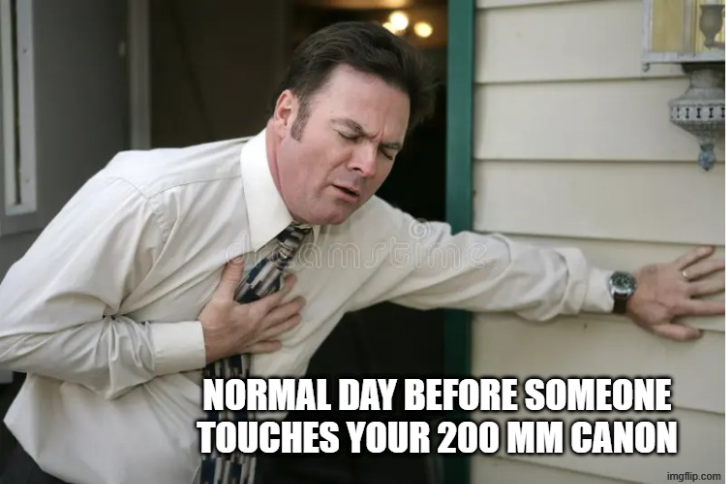
Because for many camera owners, the real fear is not some cinematic disaster.
“I have anxiety using my camera. In the sense where I am so afraid of getting a scratch on it, to the point where I'm afraid of even putting it on a table or any hard surface”, a worried camera owner on reddit.
It is usually the far more ordinary stuff, a drop, a crack, a spill, a part acting up, or a repair you didn’t anticipate. And while camera insurance can help with some broader risks, it is not always the most relevant fit for routine product-related problems, especially internal mechanical or electrical issues.
It is also worth remembering that insurance often comes with more moving parts. Coverage can vary by policy, claims can depend on documentation, and deductibles may enter the chat at exactly the moment you were hoping they would not.
A user vented about their expensive insurance on reddit- “$3000 replacement value costs $23 premium + $100 "broker fee" = $123/year. Deductible is $350. It seems a bit pricey to me... Why am I paying a giant broker fee when all this is done online without a broker?”
Even though there are some red flags, insurance can still help.
But if what you want is straightforward protection for the camera you actually use, every week, every trip, every slightly careless moment, insurance is not always the cleanest fit.
That is usually where warranties start making a lot more sense.
In a lot of real-world situations, yes, it probably is.
Not because insurance is bad. It just solves a different kind of problem.
Insurance is usually better for bigger, broader risks like theft, loss, or major travel-related incidents. But a camera warranty is often better for the kind of trouble most owners actually run into, which is repair-heavy, product-specific, and painfully ordinary.
The first big advantage.
If your shutter fails, a button stops responding, the autofocus starts misbehaving, or the camera simply stops working the way it should, a warranty is usually the more relevant fit.
Insurance is built around outside events. A warranty is built around the camera itself.
Then there is the cost side.
Many warranty plans come with low or no deductible, which matters a lot when the repair itself is a few hundred dollars.
The process is often simpler too.
With insurance, you may need to explain what happened, provide documents, and hope the claim fits the policy language neatly enough. With a warranty, the issue is often much more straightforward: the camera has a problem that’s covered under the standard terms, and it needs repair. That’s it.
And for a lot of buyers, that simplicity is the real win.
It is also the reason why third-party warranty providers like SureBright appeal to most camera owners. The benefit is not that they replace insurance in every situation. It is that they are often a cleaner fit for the everyday damage, breakdowns, and repair costs camera owners are more likely to face.
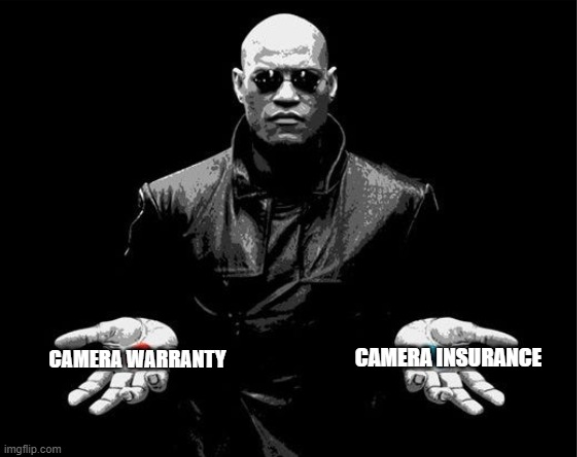
If you just want to protect the camera without turning the whole thing into a second admin job, a camera warranty will usually feel like the more natural choice.
That is where SureBright is an ideal fit. Its camera protection plans are designed around the issues owners genuinely face, including mechanical and electrical breakdowns, wear and tear, and accidental damage on broader coverage, with a simpler experience that does not ask for a receipt, product registration, or a deductible just to get started.
Because at the end of the day, you bought a camera to use.
Not to spend your weekends decoding claim language and wondering what counts as a covered event.



.jpg)
.jpg)