.jpg)


It’s just another Tuesday afternoon. You’re showing your coworkers the cool shots you took on your drone last weekend. Then, you get a notification: ‘The FCC has banned all foreign-made drones.’

You knew there was tension around because of the drone sightings back in 2024. But you didn’t expect things to actually go south, especially for regular consumers.
“As a drone hobbyist and photographer/filmmaker; I use my DJI Mini 4 Pro, because DJI makes the absolute best drones in the world. DJI has no equal that offers the latest cutting edge technology at reasonable prices. And because of this, I have invested what little money I have in DJI drones and products. As a disabled resident from Ohio’s 8th district who’s only income is Social Security disability, I ask you to please oppose the Countering CCP Drones Act, HR 2864, which would negatively impact many Americans like me who use drones for business, research, recreation or public safety.”
- A heartfelt letter written by a drone pilot to a Congressman.
Things have escalated from 0 to 100 too fast.
What happens to the support options for your drones? Will you still get repairs and replacements?
There are too many questions following the news, especially for DJI and Autel drone pilots. So, let’s break down what the ban really restricts, what happens to existing pilots and sellers, and how drone warranties will be affected.
First up, let’s clear the air - Not all foreign manufacturers are being banned, and drones in use from banned companies won’t be confiscated.
What the ban is doing is blocking new FCC authorizations for certain foreign-made drone manufacturers. DJI and Autel are the most affected.
This means:
As a pilot, it’s like sitting around in an active fire and having to pretend like it’s okay.

Nearly 42 percent of drone pilots have experienced at least one minor (if not major) crash. That's not a fringe statistic. That's nearly half. That's a coin flip where one side says "functional drone" and the other says “junk in the attic” that you can’t get fixed.
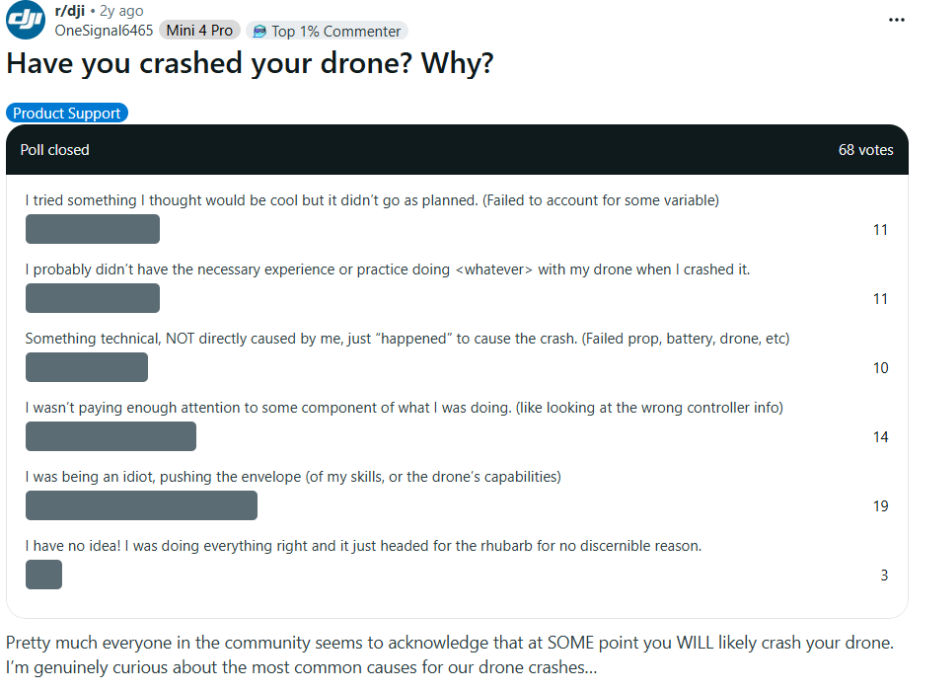
Now, with the FCC drone ban, you might not be able to get your device repaired the old way.
But one wonders, was the “old way” even that good?
Even before the restriction was in place, standard manufacturer warranties for drones were never built for their actual usage pattern. They cover defects from the box, as if you’re supposed to cradle your device like a newborn all the time.
.jpg)
They didn’t cover:
Even the drone manufacturers recognized the limitations of their standard warranties. So, they created their own protection plans:
These used to be decent, but not great. But since the announcement, there is much uncertainty on whether these protection plans can be honored.
As of now, apart from Skydio (which is US-based), both Autel and DJI are in hot water.
.jpg)
As for the other manufacturers, the FCC has permitted them to import to the US until the end of 2026, given that they fully comply. The list of brands include:
These still don’t match the quality nor the value-for-money DJI brought to the table.
Warranties can still technically be honored because the FCC doesn’t mind repairs and replacements if carried out with models already within the US. The only caveat is that the parts follow the same rule,
But what can’t be guaranteed is if manufacturers change policies or if they still don’t have the capacity to provide support even with current units.
Here, trusted third-party warranty providers like SureBright come in. They offer a ton of coverage far beyond what manufacturers do when it comes to accidental damage protection plans.
If you’re still going to buy a DJI or Autel drone that’s already in the country, relying solely on their own care programs assumes stability that doesn’t exist. You can still get support if you look for third-party warranty providers who don’t have to worry about the ban.
With the FCC drone ban in place, the whole equation around buying and maintaining a drone has changed. Accidents will have a lot more weight placed on them if you don’t have the right protection plans in place.
While the future of DJI and Autel is uncertain, there are still measures in place that can protect the models already in the US.
If you know fellow drone enthusiasts, share this article with them to help them not crash out and burn (like their drones probably will).



.jpg)