

“I had a water heater installed 3 years ago and it's still under warranty. It started leaking. The manufacturer said they’d replace it, and I just had to pay for the installation. Then, the installer tells me to get the manufacturer to send me a unit. WTF? Now I have to fill out the paperwork to get a plumber to certify the issue, BUY the unit from the manufacturer for $1000 (original install was only $750). Have the unit delivered to my house, then the installer will come and install it.”
- A frustrated homeowner venting on Reddit.
Experiences like there are more common than most homeowners expect. And when failures happen, repair costs can get really, really pricey.
According to Consumer Affairs, the average water heater repair costs about $605, with some repairs reaching $1,700 or more depending on the parts and labor required. And if you thought your standard warranty would cover these for you, you’re in for a rude awakening.
Needless to say, it’s really annoying to deal with these appliances failing. Think about it: we use water heaters every single day, much more than a washing machine or a laptop. We need them to take showers or baths, clean dishes, and help with the laundry.
This means that if your water heater gives out, you’re done for (especially during winter). The combination of the frustration about losing hot water plus the anxiety of potential repair costs can send most folks into fight, flight or freeze.

To avoid situations like this, you need to understand standard warranty coverage, the limitations of those plans, and how third-party water heater warranty works help.
Let’s go over these to ensure you don’t run into unexpected repair bills and claim denials.
When you purchase a water heater, there’s more than one option to help you with damage and product failures.
This is the default coverage that comes automatically with the unit and protects against defects in materials or workmanship. If a heating element fails because it was manufactured incorrectly, the manufacturer will usually provide a replacement part.
However, most manufacturer warranties include full parts and labor coverage for only the first year. After that, parts may still be covered, but labor costs often become the homeowner’s responsibility.
It might not sound that bad until you realize that licensed plumbers typically charge $50 to $140 per hour, meaning labor often becomes the largest portion of repair costs after the standard warranty expires.
According to an industry report, 62% of homeowners in the US are now more concerned about affording maintenance than they were in 2024. One user on Reddit shared their anxiety:
“Since buying our 123-year-old home 4 months ago, I'm pretty anxious about keeping enough cash on hand for maintenance and house related emergencies. I've budgeted $10,000 per year for these costs for the first 5 years of home ownership. We are replacing the boiler, oil tank, and roof this year so at least those things are handled. Hoping to hear some feedback on how much you personally set aside annually or monthly, especially if you have an old house.”
Unfortunately for homeowners, houses need multiple repairs a year. You think one thing is fine, and then another appliance fails.
Breakdown warranty plans cover a lot more than manufacturer warranties do, even mechanical and electrical failures that tend to happen when you use the water heater on the daily. These plans are typically offered as an add-on, and they provide continued parts and labor coverage after long after the standard warranty expires.
The type of unit you own changes the warranty situation too.
According to The U.S. Department of Energy, tankless water heaters have a different and more complex warranty structure. And when units with tanks burst, they release approximately 50 gallons of water out into your home in a matter of moments.
Make sure you factor in these differences when budgeting or picking protection programs. For the latter, it would help in deciding the years of coverage.
Manufacturer warranties serve an important purpose, but they are designed with a specific scope; to cover any pre-existing issues the water heater had before you bought it.
The warranty generally covers:
Despite their average lifespans of 10 years, power surges, leaks, mold, pressure buildup, and rust can break your heater quicker than you anticipated. If we look at the exclusions more closely, they include:
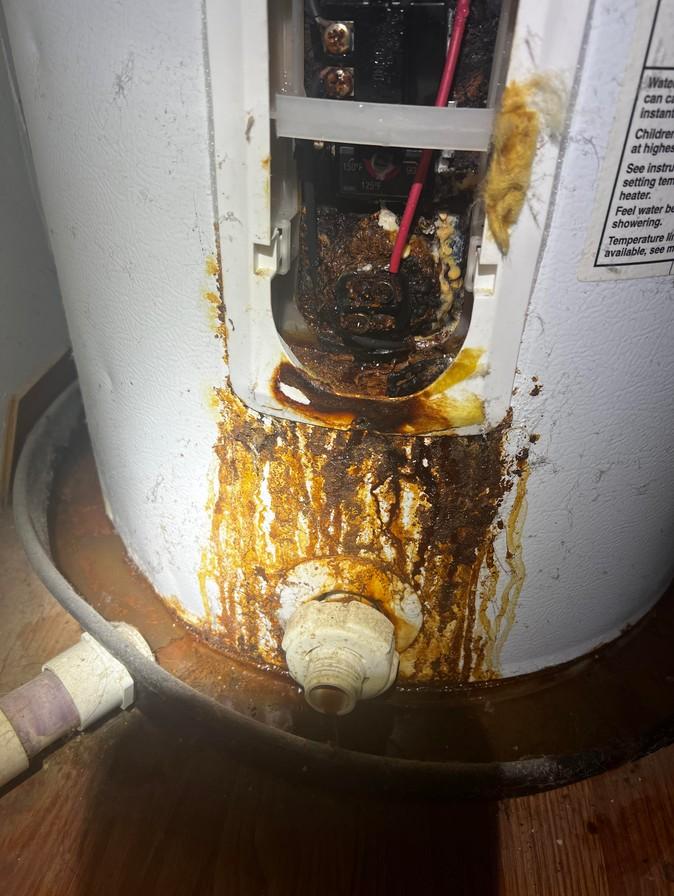
These exclusions matter a lot because your home doesn’t exist in a sterile environment. If anything, it’s more like a petri-dish, with all kinds of bacteria and fungus waiting to strike.
According to industry research, mineral buildup, corrosion, and sediment accumulation are major contributors (if not the top ones) to reduced efficiency and premature water heater failure.
Worst of all- even if the parts are covered, installation costs remain. So, you would have to spend hundreds of dollars in labor costs along with getting a new unit.
“Just got a labor quote for $3000 for a 50 gallon water heater, it was a drop-in replacement. The prior install was up to code (noted on the quote). In 2010, the cost was $900, with a new expansion tank, new 1/4 turn valve, new earthquake straps and mounts, new pan, and new drain pan pipe routing.” - Observations from a homeowner across the past decade and a half.
Suppose your water heater breaks down, and you reach out to the brand. After a bunch of calls and emails across multiple weeks, they reply to your claim request. You open their final email only to be notified that they’ve denied your claim. So all the back-and-forths, and the elaborate phone calls were all for nothing.
To avoid that scenario, you need to confirm that:
If you’ve ensured all of these and run into an issue that’s covered by the standard warranty, you should be golden.
Usually, the claim process for manufacturer warranties looks like this:
There’s also unfortunately a lot that can go wrong after you file the claim. For instance, claims timelines vary depending on technician availability, approval requirements, and parts logistics. These can take from weeks to even months, leaving you with high costs and cold water to wash away the tears.
Manufacturer warranties and breakdown protection plans address different types of risk. If we compare the two, it looks like this:
Most people set aside any thoughts of repairs and warranties, thinking that hot water heaters can run up to 15 years. However, countless homeowner horror stories prove otherwise.
When it comes to coverage, manufacturer warranties cover the defects in parts, but breakdown protection plans cover all the stuff that happens in real life: rust and corrosion, mold and bacteria, leakages, the list goes on.
Without breakdown protection, you’d have to take on full financial responsibility for repairs (which are really expensive).
When you have both the plans together, you reduce financial risk, improve repair coordination, and keep the appliance functioning well throughout its lifespan.
If you’re looking for the right provider, SureBright has a great breakdown warranty plan on water heaters, and it covers parts and labor for mechanical and electrical failures.



_11zon.jpg)

.png)