


You are half watching a sitcom rerun on your phone when your support team calls. No greetings, no context, just warranty questions like “Do we actually cover this?” and “What are we supposed to do with this claim?”
You open the warranty flow and immediately regret it. The language is vague and makes terms unclear, plus the pricing does not match what’s live on the site. Whatever this program was supposed to be, it definitely was not ready for a real customer.
Adding warranties was supposed to be an easy revenue win. Research shows 76% customers want product protection. Warranties generate good margins for business. Internal service systems are in place to make claims go smoothly.
And yet, in-house warranty programs still manage to go sideways with impressive consistency.

Let’s go over the various possible mistakes you must avoid if you’re a merchant who’s looking to build a warranty program.
The is one of the easiest mistakes to make. Imagine everything is done and you add the warranty plan option to your checkout flow. Then 2 months later, when you check with the team, you realize no one’s been keeping track of how well the plans have been selling/working.
The tracker might live in a spreadsheet, or an app that never quite got configured properly, or on a Teams/Slack channel. How are these plans expected to magically perform if no one is continuously optimizing them with a proper system?
“I’m helping a small retail business, and I’ve hit a surprisingly annoying problem: product warranties quickly turn into a mess once you sell more than a handful of items. Receipts get lost, customers come months later, suppliers have different warranty rules, and at some point everything turns into manual checking and guesswork. Right now it feels like warranties are treated as an afterthought in most setups, even though they cause a lot of support work later.”
- A frustrated employee shared on Reddit.
Bad results are unsurprising if you make this mistake. They’re more of a reflection of the mismanagement rather than the value of the plans themselves.
You won’t know what to tweak for improvement when metrics aren’t tracked and ROI isn’t measured. If no one owns the outcome, performance plateaus by default.
You can set your warranty programs up for success by tracking their progress on the regular.
There’s a persistent belief that “serious” warranty programs need to be complicated.
At first, all the complex steps might feel cool and comforting because they signal control and feel business-ready.
In practice, these usually just create more places for things to fail and fall apart. Apply Occam’s Razor here: the simplest solution is often the best one.
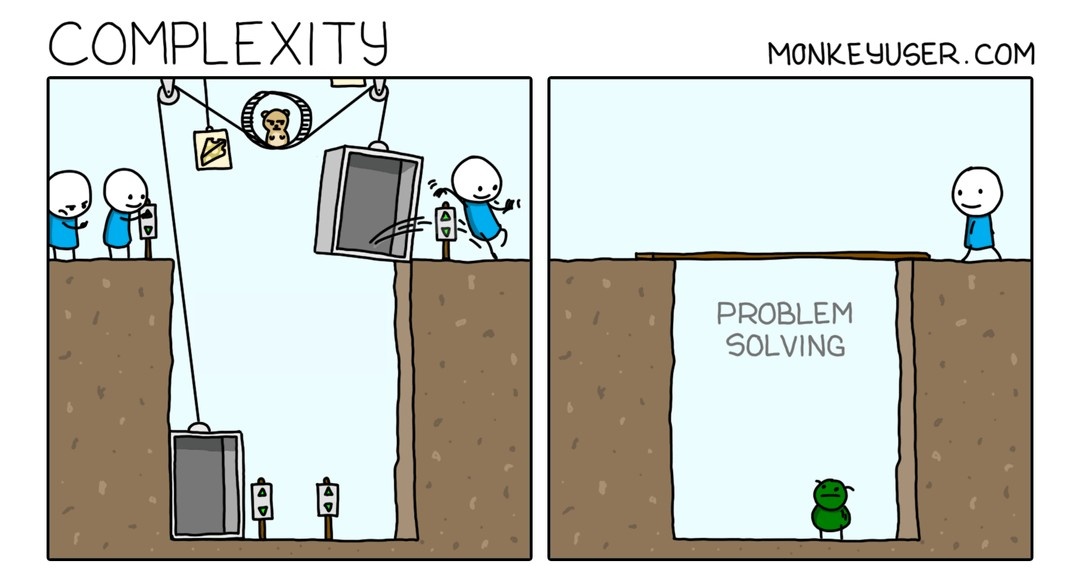
If you have to spend valuable business hours and resources to train your teams instead of opting for something a little simpler, you’re throwing money down the drain.
Simple doesn’t mean shallow. It means fewer failure points.
The most durable warranty programs tend to be boring in the best way. They run in the background, adapt as catalogs change, and don’t require a specialist to explain how they work. Most third-party warranty providers keep things simple for you – but we’ll get into that later.
If your warranty setup needs a walkthrough every time someone new joins, that’s not sophistication, but resource wastage. This usually evolves into a huge risk and a headache for your team.
Fast claims sound great in marketing copy. Ninety seconds, one click, instant resolution.
But speed alone doesn’t define a good experience.
A fast claim that ends in a rejection still creates work. The customer is confused. Support gets pulled in. Someone has to explain a policy they didn’t write. Trust takes a hit, even if everything was technically “by the book”. And let’s not forget the angry backlash on Reddit and Google Reviews.
Customers don’t measure warranty experiences in seconds. They measure them in outcomes.
Did the brand stand behind me when something went wrong, or did I hit a wall of fine print?
Merchants feel the difference quickly. Fewer angry tickets. Fewer escalations. Less time spent explaining decisions they didn’t make.
The goal of a warranty program isn’t just to move claims through a system. It’s to resolve them cleanly and predictably.
Speed helps. But trust and predictability do the heavy lifting.
This myth refuses to die.
Somewhere along the way, warranties got grouped in with dark patterns and pushy upsells. Merchants worry about annoying customers or cheapening their brand, so protection plans get buried, hidden behind toggles, or framed apologetically.
Customers notice that too.
The reality (backed by research and a thriving warranty industry) is simpler. Customers don’t hate warranties. They hate confusion. They hate vague coverage. They hate paying for protection that disappears the moment they actually need it.
When warranties are clear, relevant, and presented at the right moment, customers opt in. Often at rates that surprise teams who assumed demand was the problem.
At SureBright, we’ve seen merchants regularly report 20% attach rates. In some cases, customers boost their attach rates up to 50%.
If people truly didn’t want protection, extended warranties wouldn’t be one of the most profitable post purchase products in retail.
The issue isn’t appetite. It’s execution.
You check the mockups and you like what you see. There are toggles, dashboards, and settings that make internal teams feel informed and in control.
Then, when you hit checkout, everything is off. The experience doesn’t seem to match your brand at all.
Warranty programs should be designed from the checkout backwards, not from the org chart forwards.
If it’s smooth for customers and stays easy to manage for your internal teams, that’s a win.
Most merchants do not actually want to run a warranty operation. They want warranty profits. That distinction matters.
Owning the experience is not the same thing as owning the solution.
When you’re building warranties in-house, things can get really messy because when something breaks, it’ll all fall on you. Take it from us; No team is absolutely immune to angry calls from a disgruntled customer with a vengeance.
Building in-house warranty programs will definitely give you more control, but it’ll also give you permanent responsibility.
Most merchants underestimate the entire claims process. That’s where the real cost lives, and it’s rarely obvious until you’re already committed.
That’s why third-party warranty providers like SureBright exist in the first place: to take the operational burden of warranties off your shoulders.
The value of a good provider doesn’t show up in flashy features. It shows up in the work you never have to do:
When it’s working well, merchants notice two things: Revenue increases, and support tickets stay low.
That’s not luck. That’s design.
But when it fails...

Using a third party doesn’t mean sacrificing flexibility anymore.
Modern integrations adapt to the merchant, not the other way around. Coverage aligns with your catalog as it changes. Pricing fits your margins. UI matches your storefront. Placement works where customers actually see it.
You customize the experience without inheriting the operational burden. That balance is what most teams are actually looking for.
A good warranty program shouldn’t add noise to your business. It should remove friction.
The strongest programs are easy to launch, scale without drama, earn trust quietly, and generate revenue without demanding attention.
Avoid the mistakes above, and warranties stop being a side project. They become what they should have been all along: A reliable profit center that does its job and stays out of the way.