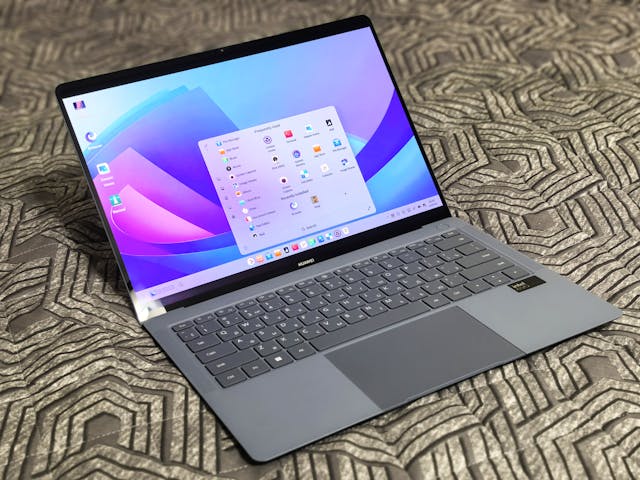


Tl;dr - The brand on your laptop means nothing for warranties. The product line does. Business lines (ThinkPad, EliteBook, Latitude) get three years and a technician at your door. Consumer lines get one year and a shipping box. Gaming laptops get the same one-year coverage as a $249.99 Chromebook, regardless of how much you paid.
Congratulations on your new gaming laptop.
I know you spent three weeks comparing processor benchmarks, display refresh rates, and chassis weights. You’ve read sixteen Reddit threads and watched at least four YouTube breakdowns without skipping ahead.
But wait! What happened? Did it just break?
Interesting series of events, isn’t it?
Now, I am really sure what you almost certainly did not research is what happens when it breaks.
Why would you? It wasn’t supposed to break, right?

Average laptops have an expected mean time between failures of roughly 4-6 years, and that's under normal conditions... not the coffee-near-the-keyboard or hinges-opened-ten-thousand-times conditions that most laptops actually face. A study found that 1 in 3 laptops will experience a hardware failure within the first three years of use.
Coincidentally, that’s also when most people learn what their warranty doesn’t cover. So, if you are on the same boat, hop on in. We’re exploring a very interesting part of this sea called laptop warranty... one which claims that:
Brand matters less than you think. The product line is what actually decides your warranty quality.
Yes, you read it right.
Dell, Lenovo, HP - every major manufacturer sells you wildly different levels of protection depending on which product line you bought. The consumer version and the business version of the same brand can differ by two years of coverage.
An OMEN MAX Gaming Laptop and a HP Elite are both HP. But their warranty terms are NOT remotely the same story.
But why is that? Why is the laptop coverage of some series skewered when compared to others even across the same brand or varying prices?
We’re investigating just that.
Alright! The court is now in session. The accused, ‘gaming laptop warranties’ is on the stand.
See, your honor, the defense would have you believe that a $2,500 laptop comes with $2,500 worth of protection. The marketing certainly suggests as much. "Premium build." "Military-grade durability." "Built for the most demanding users on the planet." And all that jazz.
And yet, your honor, we submit the following evidence.
Razer, whose Blade laptops routinely cost around $2,000, ships those machines with a standard one-year limited manufacturer warranty. It is mail-in, with no on-site service and no accidental damage coverage. One year, my dear jurors. The same duration you get on a $249.99 entry-level Chromebook.
MSI and ASUS ROG - two other names plastered across the $1,500-and-above gaming segment, offer the same. One year, limited, manufacturing defects only. You drop it, you spill on it, the GPU fries itself after 14 months of thermal stress: that is, in the elegant language of warranty fine print, your problem.

And these machines run harder than almost any other consumer laptop on the market. The dedicated GPUs generate serious heat under sustained load. The high-refresh displays 144Hz, 240Hz, 360Hz and are more expensive to replace than a standard panel. The cooling systems, the power delivery, the fans: all of it goes under strain in a way that a productivity laptop used for spreadsheets simply cannot. Gaming laptops have more components likely to fail, and yet they still come with less warranty coverage to handle it.
The prosecution rests its case here.
Here is something the consumer laptop market does not advertise loudly: if you buy a business-line laptop instead of a consumer one, you get better laptop coverage and overall performance.
This Redditor answered it well:
“Here’s the question: what kinds of laptops do you think professional IT experts in Fortune 500 companies use? Hint: not consumer hardware. They use HP Elitebooks, Dell Latitudes, Lenovo Thinkpads, or Apple Macbook Pro. Possibly the occasional Toshiba.”
Let’s take an example of Lenovo. They sell the IdeaPad to consumers and the ThinkPad to businesses and professionals. Same brand, same factories, but a ThinkPad comes with a three-year warranty as standard on many configurations, includes on-site service options, and has a global service network that actually shows up. The IdeaPad gives you one year and a return shipping label.
HP and Dell run the same playbook for their laptops.
The business-line machines also tend to be built to survive this treatment. ThinkPads undergo MIL-STD-810 testing where they are stress-tested for drops, dust, humidity, and extreme temperatures. The warranty is longer partly because brands become confident in what they built.
That being said, here’s a laptop warranty comparison across the same brand and product lines to help you understand better.
Disclaimer: Terms vary by region, retailer, and specific configuration.
One pattern jumps off this table immediately: the brands that have no business line like the Razer and MSI also have no path to better warranty coverage, regardless of how much you spend. You are stuck with one year no matter what.
The answer is less mysterious than it seems.
Business buyers are a completely different customer segment. An IT manager procuring 500 ThinkPads for a company does not negotiate on processor specs first, they negotiate on service terms. What is the response time? Is on-site service included? What happens if a laptop fails during a client presentation in a city with no authorized service center? These are the questions that determine whether Lenovo wins a $750,000 contract or not.
Consumer buyers, historically, do not ask those questions at the point of sale. They are standing at a checkout comparing price and RAM. The warranty is in a leaflet inside the box that most people never read until something goes wrong.
Manufacturers know this. So they built two products: one that competes on spec-sheet value for consumers, and one that competes on reliability and service for businesses. The consumer product has a lower price and a thinner safety net. The business product costs more and comes with real laptop coverage.
The less publicized truth is that nothing stops a consumer from buying the business-line machine.
But now you know better. The next time you are comparing laptops, check whether a business-line version exists at a modest premium. It frequently does, and the peace of mind alone can justify the cost.
But what if you are claiming the warranty outside of your region of purchase?
Here’s a scenario:
A professional buys a laptop in the United States. They travel to Europe for a two-month work engagement. Three weeks in, the display develops a fault. They contact the manufacturer's support line. The response: your warranty is only valid in the country of purchase.
For some brands, this is exactly what happens.
Apple is the notable exception. AppleCare and Apple's standard limited warranty are honored internationally, making MacBooks a genuinely strong choice for people who travel frequently or live between countries.
Dell's international coverage depends heavily on which service contract you have. Lenovo offers an "International Warranty Upgrade" as an explicit, separately purchased add-on. While HP and ASUS (for a select products) offer worldwide limited warranty and technical support.
The practical advice here is simple: if you frequently travel internationally with a laptop, ask specifically about international coverage before you buy. Not after you land.
Now let’s talk about what happens when your laptop runs into something no manufacturer laptop warranty ever planned to meet: your toddler.

The damage most likely to happen to your laptop is the damage least likely to be covered.
No standard warranty will cover gravity, your caffein problem, your pet’s anger, you child’s anger, your wife’s anger, or just what we like to call - every day life.
Yes, brands do offer Accidental Damage from Handling (ADH) for extra money but read that clause carefully before you get excited. Dell's ADH add-on excludes "damage that is cosmetic" (like dents and scratches) and damage caused by animals "cats, dogs, rabbits, rodents" and even "termites, rats". Thank you for not mentioning Elephants, Dell).

The same case is with HP. If your laptop takes a knock, dents the chassis, but still turns on, HP considers that your problem, not theirs.
That’s a very tight rope to walk on.
But there’s a better way to save yourself from all that hassle: third-party warranty companies like SureBright.
Even better, you don’t have to decide this on day one. If your laptop is still under the manufacturer’s warranty, you can add protection later and extend your coverage for what comes next, even if you bought it 10 months ago.
This is the coverage layer that actually reflects how people use laptops in the real world. SureBright's anytime warranty plans cover accidental damage, hardware failures that show up after the manufacturer's window closes, and do it without the claim-denial gymnastics that manufacturer warranties are known for.
After all, the only thing worse than a broken laptop is a broken laptop and a warranty that does not cover it.
1. Which laptop brand has the best warranty?
A. No single brand wins outright. It depends on which product line you buy. Lenovo ThinkPad, Dell Latitude, and HP EliteBook consistently offer the strongest standard warranties (up to three years with on-site service). Among consumer lines, Apple's AppleCare+ is one of the more comprehensive manufacturer-extended options. Gaming laptop brands like Razer and MSI offer the weakest standard coverage relative to their price points.
2. Does a laptop warranty cover accidental damage?
A. Standard manufacturer warranties almost never cover accidental damage. Drops, spills, and cracked screens are excluded by default across Dell, Lenovo, HP, ASUS, and MSI. Apple's AppleCare+ is one of the few manufacturer plans that includes accidental damage coverage, subject to a per-incident service fee.
3. Does opening a laptop void the warranty?
A. It depends on the brand. Apple and Microsoft Surface treat user-opened devices as warranty-voided in most circumstances. Dell and HP consumer lines fall somewhere in between; check the specific model's warranty terms before opening the chassis.
4. Is an extended laptop warranty worth it?
A. For most buyers, yes, particularly if you own a gaming laptop, a premium consumer laptop, or a machine you depend on professionally. Standard warranties cover manufacturing defects for one year. Extended and third-party plans cover the hardware failures and accidental damage that standard warranties exclude, and they do so for the two-to-four year window when most laptops actually encounter problems.
5. What voids a laptop warranty?
A. Common causes of warranty voidance include: unauthorized repairs or modifications, opening the chassis (particularly on Apple and Microsoft devices), pre-existing cosmetic damage used to deny unrelated claims, and in some cases, sustained thermal load described as "improper use" on gaming laptops. Reading the exclusions section of your specific warranty document before purchasing or modifying anything is genuinely worth your time.
.jpg)


M Khizar is a writer enjoys making complicated things feel simple. He writes about warranties, ecommerce, and the small details people usually overlook, until they matter. His work focuses on clarity and helping readers make smarter decisions without overthinking it. Outside of work, he enjoys reading, writing personal blogs, and binge eating with friends.


.jpg)