You usually start looking for a new mattress for a very simple reason- Your old one has started acting like an enemy.
Maybe your lower back feels stiff in the morning or maybe it’s just that either you or your partner is looking to sleep on a separate mattress due to snoring issues. Or maybe it’s about time that your kids have outgrown their bunk beds and demand a queen size mattress.
A survey revealed 31% of US adults were engaged in a ‘sleep divorce’, when they were asked about their sleep timings
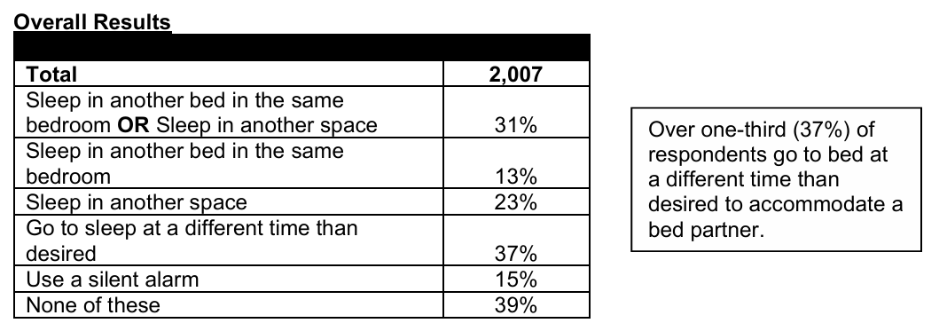
Since you didn’t want to be in a sleeping divorce (neither the other one), you open a few tabs and start browsing, hoping to find something which is actually within your budget.
Then the prices show up - $1,200 for a queen size mattress after a discount of 20%, and the price remains the same or similar in all your open tabs - almost as if all mattress businesses are 'in bed together’.

And backing out is not really an option either, because this is not some random impulse buy. You actually need the mattress.
That is what makes mattress shopping feel so complicated.
A mattress looks simple. It just lies there, minds its business, and somehow still costs enough to make you rethink your budget.
At the same time, it is not something people can afford to get wrong. If your mattress is bad, your sleep suffers, your back starts complaining, and every morning begins a little more annoying than it should.
A user on reddit shared his mattress shopping experience, “I was shocked when I just went mattress shopping - during the Memorial Day sales- and found most of the decent mattresses are around $1500 for a queen size”.
So, asking the question about why it’s so costly is only fair.
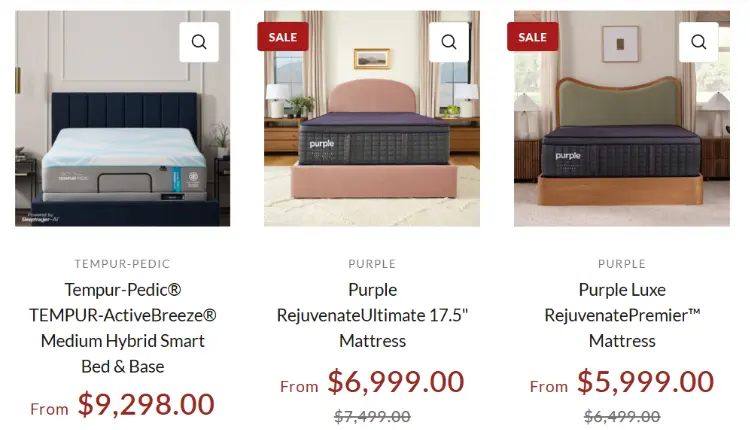
Yea, you are seeing the numbers correctly, and it’s not a glitch. And this is not even their ‘premium’ segment, it’s just referred to as ‘upper price range’.
And if you thought that was costly (which frankly it is) - one of the most expensive mattresses is worth over $1 million, only 15 people can make it - comes with stingray leather and horse hair.
Part of the reason mattress prices feel so shocking is that they really have gone up over time.
According to U.S. Bureau of Labor Statistics data, mattress manufacturing prices have almost increased by 2x since 2003.
Meaning, if you bought a mattress in December 2003 for $400, the average factory-level price today will be closer to $727.
So, at the factory level, mattress pricing is now roughly 82% higher than that baseline.
That price jump lands harder because mattresses still look simple from the outside.
You are not buying a gadget with a screen, a motor, or a long list of features you can point at. You are buying a bed, a bed which is supposed to take care of your back without creating guilt for overspending on it.
Unfortunately, that’s unlikely to happen as current consumer price ranges are adding fuel to the fire.
Sleep Foundation found that most mattresses now sit somewhere between $600 and $2,000, while the average queen-size mattress often lands around $1,000 to $2,000 depending on materials and construction.
So, when every tab on your browser keeps showing similar numbers, it is not just your luck having a bad day. Prices have genuinely moved up, but the product still looks deceptively basic, which makes the whole thing feel harder to accept.
And when the mattress is tied to your sleep, your back, and partner’s sanity, the number stops looking like a price tag and starts looking like a decision you really cannot afford to mess up.
If you ask doctors, the answer is usually some variation of - enough to support your spine without wrecking your savings. Very helpful, thank you.
But there is an actual number hiding behind that vague wisdom.
Most doctors and industry experts suggest a mattress should last you anywhere between five to eight years. That does give a little comfort, but yeah, the price tag still doesn’t lose the sting.
Now, mattresses have types, and each type has a unique cost attached to it - often varying by a lot.
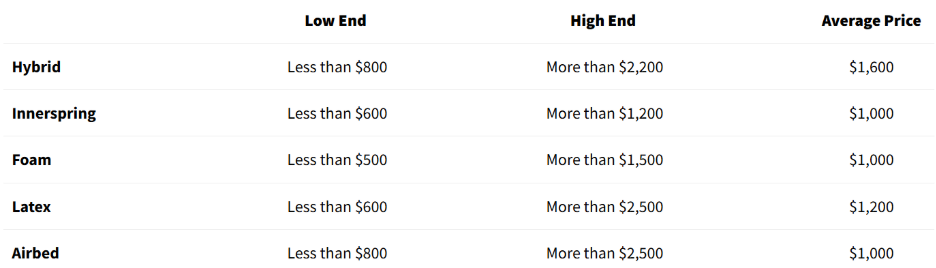
The optimal spending range for most people lands somewhere between $600 - $1,000 for a quality but in budget mattress - and that is where you start getting materials and construction that actually hold up over time, instead of a mattress that begins slowly giving up on you around year three.
Going below that range is not impossible, but the tradeoffs tend to show up fast.
Cheaper mattresses often use lower-density foams that compress earlier, which means you end up sleeping in a slight dip and wondering why your back feels like it attended a wrestling match overnight.
Going above $2,000 is also an option, of course - if you enjoy features like cooling gel layers, individually wrapped coils, and the quiet satisfaction of telling people what you paid for your mattress.
One thing doctors do agree on - the firmness question is more personal than the industry would like you to believe.
Harvard research has found that people who sleep on firm mattresses actually report lower quality sleep compared to those on more plush surfaces - which quietly undermines the idea that firmer always means better for your back.

The better approach, according to spine specialists, is to-
So, the honest answer to how much you should invest?
Enough to not replace it in three years, and enough that your back stops being the loudest thing in the room every morning.
Now you have purchased the mattress, maybe spent a little extra on delivery too. And maybe even convinced yourself that it is a long-term investment, and then mentally closed the topic.
Done. Finished. Please do not return with more expenses.
But mattresses have a very annoying habit of becoming expensive again later.

Sometimes it is stains from coffee, sweat, or something you ate in bed once and forgot about. And sometimes it is a small tear, a dent from years of pressure, or damage that just seems to appear out of nowhere.
Suddenly, the mattress starts feeling much older than it should. And paying all over again for something you already felt slightly robbed buying the first time, can be, more than a bit painful.
So, the smarter move is not always buying the cheapest mattress or the most expensive one. Sometimes it is protecting the money you already spent, so one bad spill, one structural issue, or one annoying surprise does not send you right back into mattress-shopping mode again.
That is why mattress businesses now have extended and accidental warranty partners to offer an extra level of protection.
Because after spending over thousands of dollars on a mattress, the goal is not just to sleep better.
It is to sleep without wondering when this purchase is going to cost you again.



Abdullah is a marketing professional with five years of experience in content, brand strategy, and audience growth. He has built a strong understanding of warranties, product protection, and the customer trust factors that influence purchase decisions. His work focuses on turning complex topics into clear, engaging, and reader-friendly content. Outside of work, he enjoys football, slow-burn dramas, and stories that take their time to make an impact.



.jpg)