


Have you ever heard the legendary Nordstrom tire story?
A man walked into a Nordstrom in Anchorage, Alaska, carrying two worn car tires and asking for a refund. There was just one tiny problem: Nordstrom was a high-end department store that had never sold tires.
Most employees would have pointed the guy to the door. Instead, one of them called a local tire shop, checked the going rate, and handed him lump-sum cash on the spot.
.jpg)
Now, that is a bit of a stretch for any business, and no, we aren’t remotely suggesting you hand out refunds for products you have never stocked. But the tires were never really the point of the Nordstrom story. It was about how friction in the customer journey got handled, no matter how absurd the request.
The man was not thinking about Nordstrom’s inventory system or return policy. He knew Nordstrom’s employees were customer service fanatics who would make his problem vanish without making him work for it.
Your shoppers expect the same, okay, maybe slightly less, from their shopping journey with your store.
They do not care what runs underneath the surface, whether it is your ecommerce platform, your checkout, that returns portal you bolted on last year, or the helpdesk responsible for their emails. To them, it is all one experience with your brand’s name on it. One exec summed up these expectations very clearly:
“Customers almost never know which team they really need. We’ve got separate teams handling billing, technical support, accounts, cancellations, and most customers don't even know who they're supposed to speak to. They just want to talk to someone who can help.”
The takeaway here is simple enough: experience and brand are likely to be the winning recipe as ecommerce becomes increasingly commoditized with AI’s increasing gatekeeping role.
So, before you pour more money into attracting new shoppers, it is worth mapping the exact points where friction creeps into the journey, and figuring how to address them before they cost you the customer for good.
Machines failing to understand humans will be the greatest of all epic fail stories we tell generations to come. Just ask this Amazon customer who had a hilarious, desperate plea:
“Please stop giving me chocolate milk when I search for computer memory.”
Or this Walmart shopper who gave up on the store's search bar entirely:
“I search for Walmart product on Google “XYZ+Walmart.com,” and that works.”
.jpg)
Now these are shoppers who know what they want. And you actually sell what they want, so a broken or un-optimized search bar is a pretty terrible place to lose a high-intent customer.
And if you think this was a last decade problem, hold your breath. Research found 56% of ecommerce sites still have significant search UX issues, including cases where shoppers search for a product that exists but can’t retrieve it through search. One ecommerce operator working with 300,000+ SKUs described how this problem looks on the backend:
“Here are a few actual examples we saw: Someone searches: 452XYZ Product exists as: MFG-452XYZ No results Someone searches: ford fiesta oil filter Gets generic oil filters Someone types: break pads Zero results What stood out wasn’t the edge cases, it was the intent. These weren’t casual searches. These were people who already knew what they wanted.”
In short - your search bar should understand the shopper, not make the shopper understand your catalog.
Zero-result queries are a useful window into what shoppers are trying to find, and where your catalog or search logic is failing them.
“Yeah, you can find out exactly what people expected to see but didn't find and in the best case scenario, they start another search and find something similar or related. In the worst case scenario, they bounce and go to a new store with the exact product they searched for.”
-A merchant shared on Reddit
If dozens of people search for “windbreaker” and hit a wall because your catalog calls the products “lightweight rain jackets,” you may have found a high returns, extremely low effort discovery gap.
Add synonyms, alternate spellings, common abbreviations, and the words customers actually use.
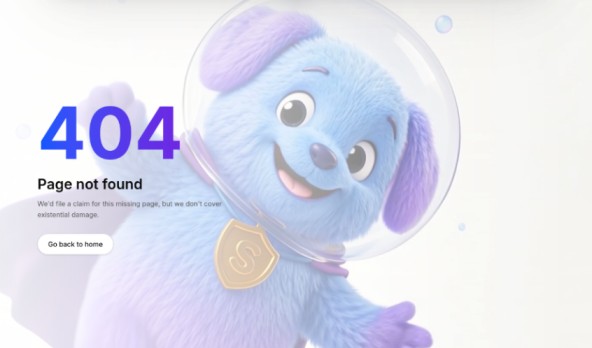
And when a search genuinely returns nothing, don’t leave shoppers at a dead end. Provide a useful no-results experience - suggest related products, broader categories, or a way to revise the search instead. Customized 404 pages are one of the most memorable user experiences you can deliver. Just check this page -
Nobody has ever finished an online purchase and wished it had taken longer. Yet most checkouts pile on friction at the exact moment a shopper wants to be done, and the surprise total is the sharpest jolt of all.
“I don’t mind paying for shipping, but tell me upfront. Don’t waste my time making me fill out all my info just to find out shipping costs more than the product.”
-A consumer detailing his experience on extra fee
That reaction is the most common cart-killer there is. Force a shopper to create an account and roughly one in four walk away. Hand them a form asking for eleven fields when seven would do, and each extra box is one more moment to reconsider.
Ask for less and hide nothing.
One button helped a large retailer generate $300 million in additional sales over a year. They were hemorrhaging sales at a single screen, the forced “Register” wall standing between a full cart and the payment page. Then the team replaced it with a plain “Continue as guest” button and a note that you “do not need to create an account to make purchases,” moving account creation to after the sale. Conversions climbed 45%, adding fifteen million dollars in the first month and three hundred million across the year.
You do not need that budget to copy the lesson. Let shoppers check out as guests and offer the account on the thank-you page, where it reads as a perk rather than a toll. Show the full landed cost, shipping and tax folded in, back at the cart so nothing leaps at the end. Cut the form to what you genuinely need, and let express wallets and autofill do the typing. Every field you delete is one fewer reason to abandon a cart that was ready to convert.
There is perhaps no more infuriating sentence in customer service hell than “I can connect you with a human.”
Because sometimes that promise leads to… another chatbot. When merchants themselves complain about this struggle, imagine the annoyance of your customers:
“Is there any way to complain to them about this? I asked to speak to a human but the replies to my questions were long, incredibly fast and too well structured. It really pissed me off that they advertise it as a human.”
For context: “them” was Shopify itself. According to research, nearly one in five consumers say AI-powered customer support provides no benefit at all. Half worry that AI support will prevent them from reaching a human.

The customer shouldn't have to fight the system to reach the person who can.
Measure what actually gets solved, and do not define success solely by how quickly the customer gets a response. Track first-contact resolution alongside response time and deflection so a chatbot doesn’t look successful simply because it kept customers away from a human. Even giants like IBM replaced HR staff with an AI bot, only to watch it choke on policy exceptions and basic human nuance. They brought the humans right back.
Keep a clear, visible path to human support, especially when the issue is complex, or the AI cannot resolve it. And when a handoff happens, carry the full conversation and customer context with it so shoppers don’t have to repeat their story from scratch.
Let’s face it, modern shoppers have the patience of a toddler waiting for microwave popcorn. The second they hit “Place Order,” an invisible countdown clock starts ticking in their head, and waiting more than five minutes for a shipping update is taken as a direct personal insult.
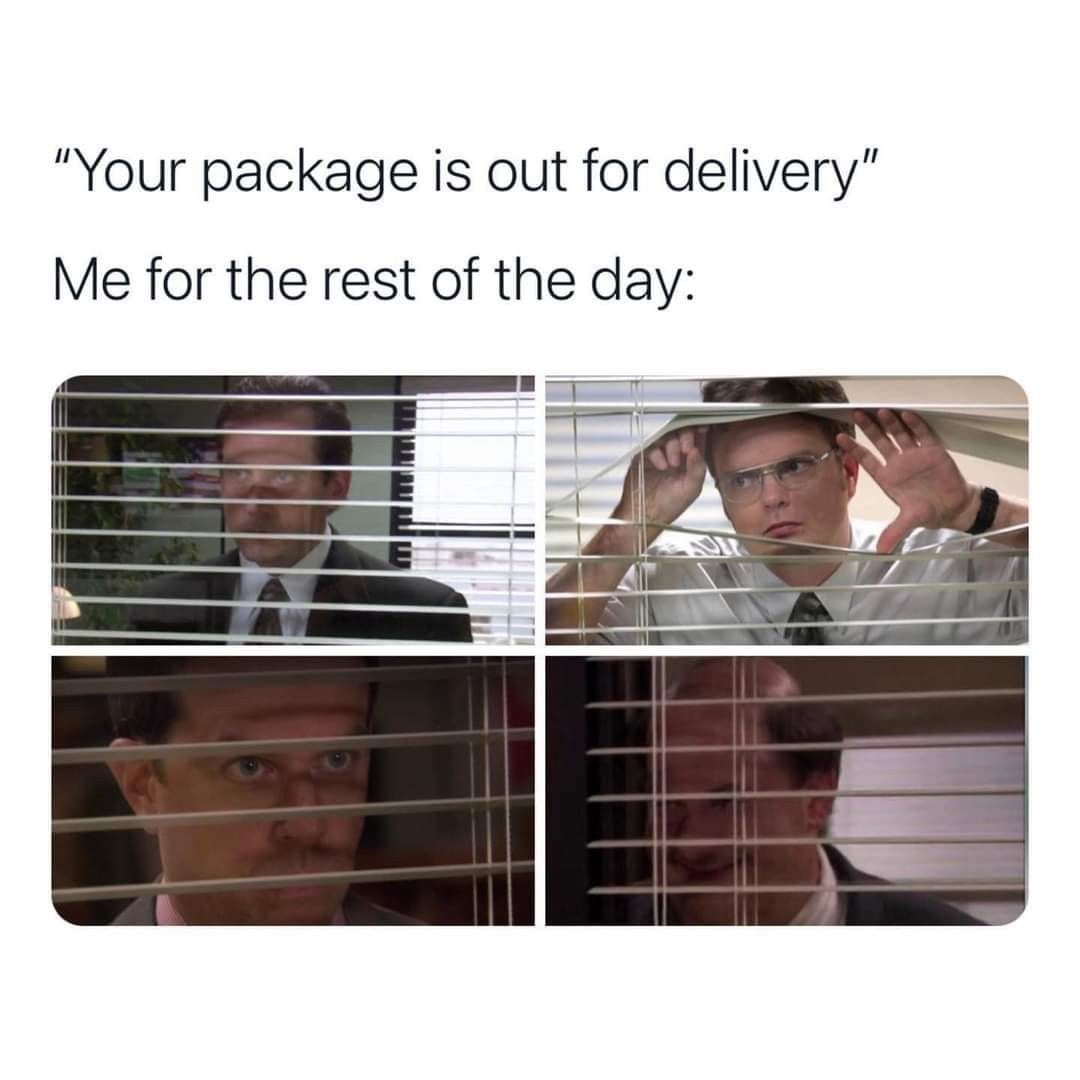
This shopper will tell you we’re not exaggerating here:
“package says it’s going to be delivered today, but it is still 7-10hours away from me as of 2 or 3am this morning it’s currently 8 AM. Should i just expected tomorrow or is there a chance it’s not updating and still on its way today? When’s the latest that it’ll say out for delivery if it is just not updating in real time?”
Wild as that spiraling sounds, it’s just basic human psychology. Call it the Uber effect: watching a tiny car creep toward you on a map doesn’t make the driver go any faster, but seeing where it is instantly kills the anxiety. Nearly half of all consumers (46%) just want you to raise your hand and own up to a shipping hiccup when it happens, while 45% want live, real-time updates so they can stop obsessively hammering the refresh button.
No, it’s not necessarily more emails but actually useful information at the moments customers need it.
So send branded updates when the order ships, reaches a major carrier milestone, hits a delay, or is out for delivery. Put the estimated delivery date somewhere obvious, not just a tracking number that forces shoppers to go hunting. And when something goes wrong, tell them before they have to ask.
While a late package is just frustrating, one with no explanation is a sure-shot route to a loud angry 1-star review.
Returns are where far too many brands suddenly drop the charm. The moment a purchase does not work out, the shopper often gets demoted to unpaid logistics manager. They are forced to hunt down a hidden policy, find a working printer, re-box the item, drive across town to a drop-off hub, and wait endlessly for an inspection team to release their money.
Make returns feel like a continuation of the purchase.
Put the return policy somewhere shoppers can actually find it before they buy. Give customers a simple self-service path to start a return, track its progress, and see when their refund or exchange will land. And where your economics allow it, offer faster resolution options such as instant exchanges or refunds.
You don’t have to give every customer the most generous possible outcome. Use customer value, purchase history, fraud signals, and the reason for return to decide where you can afford to be more flexible.
Take a closer look at your returns queue, too. Many of those requests might not be true returns to begin with.
A blender dying on day 25, a motor giving out in month two, or a box crushed in transit often get dumped into the return pile by default. Yet product defects belong in a warranty workflow, while transit damage belongs in a shipping-protection claim.
Routing these issues correctly means customers receive a quick repair or replacement instead of a refund-and-goodbye. You protect your revenue while preserving the customer relationship.
The Nordstrom clerk in 1975 did not have a fraction of the digital resources sitting in your tech stack today. He simply made a customer’s problem vanish. Five decades later, that basic instinct remains the ultimate competitive edge in commerce.
Tools have grown exponentially but what shoppers actually want hasn't shifted an inch. Every single fix in this guide really boils down to one core rule - stop forcing the customer to absorb your internal complexity.
Get those fundamentals right, and buying from you simply becomes the path of least resistance for buyers.
.jpg)



.jpg)