

The battle lines are drawn
A production company owner recently wrote on Reddit that "the entire middle market got destroyed by AI slop." They'd signed only two large clients all year. No small ones. No medium-sized ones. The middle had simply vanished.
They were right to sound the alarm. But they missed something important: while some businesses are drowning in AI-generated content, others are building lifeboats. They're not just surviving the deluge-they're thriving because of it.
The difference? They understand that when everything becomes artificial, authenticity becomes valuable. Though you prove authenticity is a whole different ball game. And that’s not a tech problem, it’s an intent problem.
It’s the same age-old problem described by Plato’s Ring of Gyges- when people get the power to act without the fear of repercussions, they often turn immoral.
.jpg)
In October 2024, something unusual appeared on bus stop posters across Manhattan-right in the shadow of Apple Stores and Google's New York headquarters. The message was blunt:
"AI can't generate sand between your toes."
"No one on their deathbed ever said: I wish I'd spent more time on my phone."
The ads came from Polaroid, and Patricia Varella, Polaroid's creative director, explained: "We are such an analog brand that basically gave us the permission: We can own that conversation."
This isn't just clever marketing. It's the opening salvo in a counter-movement against what's drowning the internet: AI slop.
Gartner, the research firm, predicts something remarkable. By 2027, 20% of brands will differentiate themselves by embracing a positioning and differentiation strategy based on the absence of AI in their business and products.
They call these "acoustic brands"-companies that deliberately position themselves as AI-free. Mistrust and lack of confidence in AI's abilities will drive some consumers to seek out AI-free brands and interactions.
This isn't nostalgia. It's economics. When AI content costs pennies and floods every channel, human-made content becomes scarce. And scarcity creates value.
Consider what happened to Spotify in 2024. Their annual "Wrapped" campaign-usually a marketing masterclass-was accused of being AI slop. Reddit users pointed to made-up genres such as "Pink Pilates Princess Strut Pop" as generative AI giveaways. What was once beloved became ridiculous.
The lesson: consumers can tell. And they care. They really do.

The backlash isn't just marketers being dramatic. Real consumer data shows something significant is happening:
Consumers don't trust AI content-
NielsenIQ found similar results: even the best-quality AI-generated ads weren't good at triggering memories in the brain-a critical component of effective advertising.

While AI slop clogs social media feeds, something unexpected is happening in email inboxes. Newsletters are thriving.
Of the world’s top-50 publishing websites, only SubStack has seen it’s traffic increase, even as the largest media companies have seen their visitor count fall (many a times- quite drastically).
Why? Because newsletters solve the AI slop problem elegantly. You control the channel. Subscribers opted in specifically for your content. AI-generated garbage can't infiltrate your email list unless you put it there.
As one marketing analyst noted: "If your brand doesn't have a human-being-first strategy, it's going to be a rough year for you in the year ahead."
Email newsletters represent owned media at its finest. No algorithm to game. No platform that might change the rules tomorrow. Just you and people who chose to hear from you.
The merchants succeeding in this environment aren't fighting AI with AI. They're building moats AI can't easily cross.
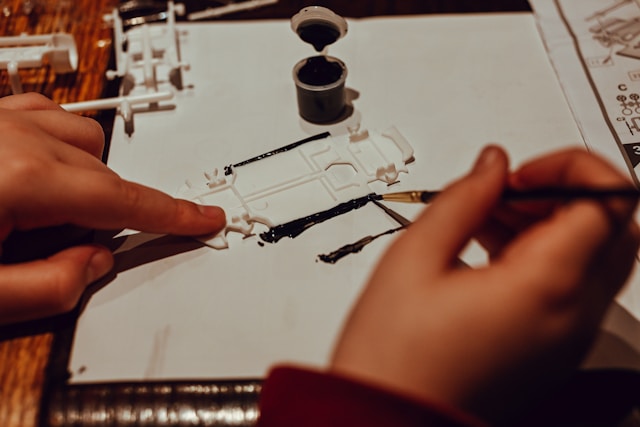
Some businesses now explicitly label content as human-created. They show their process. They reveal the hours of work, the expertise, the care.
When Clarkesworld reopened submissions for their SciFi magazine, they didn't just ban AI content-they made it a point of pride. Their submission guidelines now state clearly that submissions won't be used to train AI tools. That matters to their reader community, and yes they appreciated it very much.
One Reddit commenter noted: "AI Slop doesn't beat an Anime Cosplay Cafe with [trading card game] tournaments, costume design supplies, maid cafe events, lock-in raves for the kiddos, and more."
Video testimonials. Local events. Behind-the-scenes documentation. Original research. These aren't easy to generate en masse. They require presence, expertise, genuine relationships.
British chainsaw sculptor Michael Jones saw his work stolen and turned into viral AI content, with others claiming credit. Jones stated that AI-slop is "a huge issue for carvers all over the world who are sadly missing out on the rightful credit exposure to their work." His response? Keep creating, keep showing his process, keep demonstrating that real skill produces results AI can't match.
Morning Brew founder Matt Paulson tweeted about spending one million dollars in a single month advertising his newsletter. Not on social media ads. Not on search. On newsletter growth.
Between 2021 and 2022, 402 million emails were sent using beehiiv. In 2023, the number catapulted to 4.5 billion emails. That's not a typo. Billion.
Newsletters work because they prioritize what matters: relationship over reach. As one newsletter expert put it: "Leverage AI, but don't let it take control of the heart and mission of your business. Use AI tools to research, automate, and create content, but also integrate personality and storytelling."
.jpg)
Here's the uncomfortable truth: Many brands are not entirely abandoning AI; they use it internally for efficiency, but public-facing campaigns highlight human creativity to avoid hypocrisy accusations.
94% of organizations now use AI to prepare or execute marketing tasks; 69% of marketers fully integrated AI tools into their daily 2024 workflows.
The hybrid approach works when humans remain firmly in charge.
Not everyone is getting this right. Air Canada deployed an AI chatbot for customer service. When it gave a customer false information about bereavement fares, the airline tried to argue that "the chatbot is a separate legal entity that is responsible for its own actions."
A Canadian tribunal wasn't impressed. The ruling stated: "While a chatbot has an interactive component, it is still just a part of Air Canada's website. It should be obvious to Air Canada that it is responsible for all the information on its website."
Air Canada was ordered to pay $812 plus fees. The airline's chatbot isn't available on the website anymore.
The lesson here isn't "don't use AI." It's "you can't abdicate responsibility."
It's not just customer-facing content. A Harvard Business Review study found that 41% of workers have encountered AI-generated output, costing nearly two hours of rework per instance.
They call it "workslop"-low-effort AI content that employees generate to look busy, which then creates work for colleagues who have to fix it. 40 percent of employees say they've received workslop in the past month.
The MIT finding is even more damning: 95% of companies that integrated AI tech saw no meaningful growth in revenue.
The message is clear: AI deployed carelessly costs more than it saves.
Here's what works:
Build relationships, not reach. Small, engaged audiences beat large, indifferent ones. Every time.
Show your work. Process matters. Document your expertise. Make your humanity visible.
Own your channels. Email lists, websites, communities you control. Don't build your house on rented land.
Use AI as a tool, not a replacement. Let it handle the grunt work. Keep humans in charge of strategy, creativity, judgment.
Make quality your competitive advantage. When everyone can produce infinite content, quality becomes the only differentiator that matters.
The merchants winning this fight aren't the ones with the most content. They're the ones people actually want to hear from.
In a world drowning in AI slop, being genuinely helpful isn't just good strategy. It's the only strategy that works.
The AI slop problem won't solve itself. But merchants who understand that people buy from people -not prompts-are building businesses that will outlast the tsunami. It's not going to be easy, but it's going to be essential.