


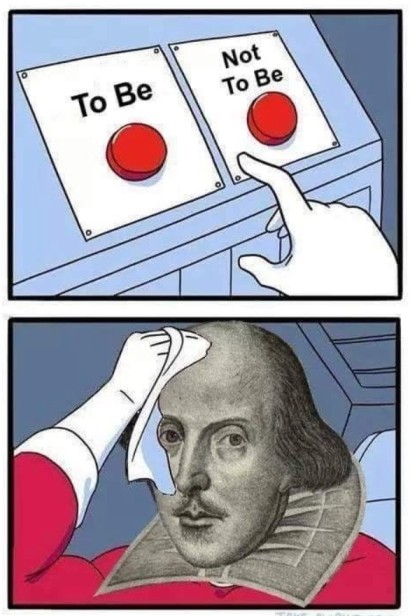
Ever since Shakespeare handed Hamlet a skull and a bad case of indecision, the tortured prince has been our patron saint of the impossible choice.
“To be, or not to be.” Weigh it forever and commit to nothing, then spiral into the night.
Turns out Hamlet would have made a fantastic e-commerce founder.
Because there’s a decision that gives modern store owners the exact same paralysis, as one merchant phrased it very much like a toned-down version of Shakespeare on a community forum:
“To offer free shipping or not to offer free shipping?”
And our merchant has plenty of company, because the answer refuses to sit still. It’s a question as divisive as the cereal first vs. milk first.
One thing is pretty clear - shoppers don’t just like free shipping; they lose their minds a little around it. There’s even a word for it now, freshly minted for 2026: spaving. It basically means spend more to save more.
A customer is $16 short of the free-shipping line, so they drop a $22 item they might not consider a priority off the cart and stroll off feeling like they have bargained the better end of the deal.
And this introduces a whole new untraversed trajectory to the story that seemed black and white so far. Free shipping isn’t simply a cost a merchant has to swallow or pass along. It is a pricing lever. Pull it on the right order, and you can nudge a customer to spend more. Pull it on a heavy item, a thin-margin product, or a return that ships back and forth twice, and that same lever can turn into a little parasite, feeding on your profit.
So, let’s work out when your exact box should fly free and when the customer should pay for the privilege without feeling a sting.
Why “free” KOs “cheap”
Most customers are expert price hunters. The moment they hover over the buy button, they’ve already calculated the exact mathematical odds of their possible dissatisfaction with the product down to the third decimal place.
To see how the most trivial costs can drive this remorse, let’s look at this defensive psychological state in action.
When Amazon first rolled out free shipping, quarterly worldwide sales surged by ~33% year-over-year in nearly every market worldwide, except France. Was free delivery simply too unsophisticated for the French? Certainly not. The culprit was one Franc- roughly twenty cents of the fee that Amazon France had imposed rather than zero.
Once Amazon dropped the fee from twenty cents to absolute zero, French sales instantly exploded to match the rest of the world.

Renowned behavioral economist Dan Ariely calls this the zero-price effect.
The same instinct that makes a zero irresistible makes a surprise fee unforgivable.
Let your shopper fall for the glow, walk them all the way to checkout, then reveal a shipping charge you never mentioned, and watch them head straight to the town square of e-commerce revolt, aka Reddit:
“it would just be so much more convenient to see shipping costs upfront. If I'm shopping on a budget, my budget INCLUDES shipping, so there's no point in me wasting time trying to buy an item that might end up being too expensive after shipping.”
So yes- the free option wins as far as your customers are concerned. But you still have to make sure the order was worth winning. Because once the customer is sold on “free,” the real question moves back to you - can your business afford to give it away?
Remember Goldilocks?
Dadybear’s porridge is too hot. Mama’s? too cold. After an alarming amount of trespassing, she finds the bowl that is just right.
Your free-shipping threshold works the same way.
One Shopify merchant on Reddit changed their free-shipping threshold three times in one year and still weren’t convinced they had found the answer:
“Honestly it feels like I picked the number based on vibes more than anything.”
The replies turned into a miniature masterclass. One merchant suggested looking at the distribution of orders instead of blindly anchoring on AOV. Another pointed out that the threshold should be high enough for the extra margin from a larger basket to cover the shipping cost.
Note that absolutely none of that sounds like just “vibes.”
So here are the green flags that indicate when free shipping is likely to be beneficial for you:
How much money is left after everything else?
If you find yourself in this merchant's shoes, adopting a one-size-fits-all free shipping policy could be fatal:
“a standard embroidered snapback hat cost us $15 all in. It costs us about $0.53 for a box from uline, and say $0.50 max for poly inner bag, tape, printed slip, and shipping label. Then it cost us anywhere from roughly $6-9 to ship with USPS ground advantage….Our competitors are almost exclusively offering free shipping. That puts us all in at a cost of say $25. Competitors are selling hats for $25-30. Say we priced at $29, Shopify takes about $1.15 from that, leaving us with a whopping $3.85 in profit”
You see, shipping should be based on the funds you actually have, not on the funds you wish you had. On the flipside, if your competitor has already trained your consumers to expect free shipping, charging for it can become a competitive disadvantage unless you have a crazy value differentiator.
You do not necessarily have to eat the shipping cost. You can make the customer help you pay for it.
Say the typical order is $48 and shipping costs you $8. A free-shipping threshold can turn the delivery fee into a shopping prompt - pay $8 to ship it, or find something else worth buying and get the shipping for free.
But once customers know the line, they start shopping around it.
Researchers studying a North American online grocery platform found that when the retailer moved its free-shipping threshold from $80 to $100, consumer spending fell 19.4%. Why? The $80 threshold had become a reference point. Moving it higher made the finish line suddenly felt farther away.
So use the threshold your customers are already learning to chase. Look at where orders cluster, what shoppers add when they are close, and whether that extra basket value actually covers the shipping you are giving away.
Free shipping does not necessarily mean free overnight shipping.
Recent consumer research suggests shoppers are surprisingly willing to trade speed for savings. A study found that 90% would accept slower shipping to save money, and the median shopper would tolerate five days for standard free delivery.
Let the patient shopper take the economical route with 5 day shipping for free. Let the person who remembered their anniversary at 11:47 p.m. pay for the privilege of seeing that package in two days.
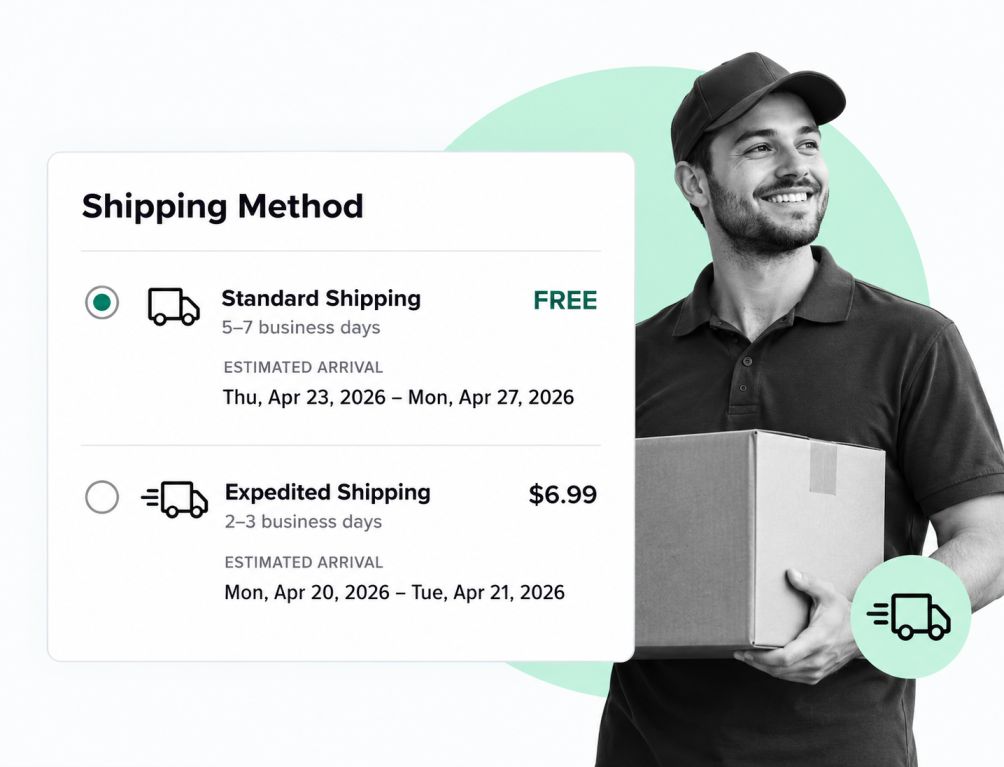
That way, you protect the margin without taking away choice.
A $6 shipping subsidy looks a lot less scary when the customer comes back every month.
This is where subscriptions, loyalty programs, and repeat-purchase categories change the equation. If shipping free today increases the odds of another order tomorrow, you are buying something more valuable than a completed checkout.
You are buying the next checkout too.
The important part is knowing which customers actually deserve that treatment. Blanket free shipping gives the same subsidy to a first-time bargain hunter and a loyal customer who has spent $2,000 with you.
Those two customers should probably not be sitting in the same bucket.
These are guardrails for when free shipping stops being a high-yielding strategy and starts becoming a charity fundraiser for your carrier:
A $7 shipping bill on a $25 order is a very different problem from a $7 bill on a $125 order.
Once COGS, payment fees, packaging, and acquisition costs join the party, the $25 order may have very little left over. This is why low-AOV stores often work better with either a shipping fee, a free-shipping threshold, or a shipping cost baked into the product price.
Heavy and bulky products are where every nice, tidy average shipping cost goes to die.
A $9 average means very little when one treadmill costs $38 to ship.
Dimensional weight, oversized packages can turn a supposedly profitable free-shipping policy into a collection of tiny financial jump scares. As the sacred scrolls of the merchant subreddits so wisely warn:
“that heavy SKU trap is brutal, and it hides because the blended average looks fine. the per shipment view in profit trust is where the loss makers actually surface”
If your $80 lamp costs $6 to ship east and $19 to ship west, one national “free shipping” rule is doing a remarkably poor job of representing reality.
This is where merchants discover that a “$0 shipping” order can become a three-shipment order.
Box goes out.
Box comes back.
Replacement box goes out.
Each leg is its own charge, and they stack something like this:
outbound + return + replacement + handling + any damaged-goods write-off
Suddenly the $8 shipping can easily clear $25 before you have paid a cent to inspect or repack.
The danger is even greater for products vulnerable to damage in transit. A customer returns a product because it arrived damaged, and suddenly you are dealing with a replacement, another shipment and a support conversation, all attached to the original transaction.
This is where shipping protection can save the day. It can cover qualifying loss, theft, and damage during shipping, so the merchant can offer a smoother delivery experience without carrying every covered shipping mishap on the P&L and uplift margins with every plan sold.
I know what you’re thinking; Hamlet sure had an easier job. He had two unrealistic options and absolutely no business to run.
You, on the other hand, have shipping zones, margins, AOVs, competitors, impatient anniversary forgetters, and the occasional package that apparently decides to disappear into another dimension.
So ditch the myth of a single, “perfect” shipping policy and follow the guardrails above.
And once the box leaves your hands? Protect it.
Even the most brilliant shipping strategy can’t stop a package from getting lost, stolen, or crushed in transit. That’s where shipping protection steps in, and with providers like SureBright you end up insulating your profit margins from unexpected mishaps while transferring the claims headache completely off your plate.
.jpg)


.jpg)
.jpg)