Fred Reichheld popularized the survey question that appears at the bottom of every post-purchase email.
“On a scale of 0 to 10, how likely are you to recommend our product, service, or company to a friend or colleague?”
But by 2016, Fred himself was arguing for fewer surveys.
He had watched one short question multiply into an endless loop. It was everywhere - after the dentist, at the apparel store, after a car rental, or after a salad at the corner restaurant. Staff were pressuring customers for top marks. Some were even bribing them.
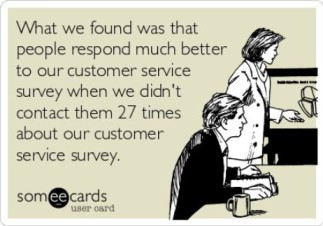
The scores climbed, but Fred questioned whether those inflated ratings said much about a customer's likelihood to return.
“The instant we have a technology to minimize surveys,” he told Bloomberg, “I'm the first one on that bandwagon.”
As an individual, you know how spammy it can feel. Though as a business, you do the same too.
Customer satisfaction software makes it easy to ask that question at scale. There's a tool in your app stack sending the survey, a monthly subscription paying for it, and a dashboard that looks decently healthy. Four-point-seven stars. CSAT in the low eighties. Meanwhile, returns keep coming, and repeat purchases may haven't moved in three quarters.
Yes, both these numbers coexist. A customer can give you a glowing rating and still have a reason to shop elsewhere. The score captures one part of the experience at one moment from someone who chose to respond. Moreover, since 2013, US companies have spent more than $100 billion on customer experience initiatives. Yet by Q2 2026, the national customer satisfaction score had fallen below every quarterly reading recorded in 2013.
So what is all that feedback actually telling you? This piece looks at what customer satisfaction software can reveal and how to read them alongside the signals customers leave when they return a product or file a claim.
Let me paint you a picture here.
Say your customer loves their new linen shirt enough to leave a five-star review. Your review software catches them at the perfect moment - the package has arrived, the fit is right, and they're still riding the high of a purchase they're happy with. The request lands, the five stars roll in.
A week later, they change their mind and try to exchange the shirt for another color. Suddenly, your return portal has them circling around like a Roomba stuck under a dining chair.
That’s one customer experiencing your store in two very different ways.

Now, customer satisfaction software helps you separate those moments instead of squeezing the entire customer journey into one big, reassuring average. At its simplest, it collects feedback and turns customer reactions into scores you can track over time. More advanced platforms can pull together survey responses, support conversations, and digital behaviour to flag recurring problems.
The terminology can get a little crowded, though.
Survey tools ask customers questions after checkout, delivery, or a support interaction. Review apps collect ratings and comments that other shoppers can see on your storefront. And broader customer experience platforms bring feedback from different touchpoints into one place, helping you spot patterns and route issues for follow-up.
At this point, the outcomes come up as three scores -
Each metric gives you a different piece of the picture. And it is especially helpful once you scale.
For instance, when T-shirt brand Perfectwhitetee moved to a D2C setup, co-founders Jen Menchaca and Lisa Hickey gained direct access to the people wearing their products. To get feedback, Menchaca sometimes called customers herself. But the move also brought new operational headaches. During one holiday season, the brand ran out of inventory and its customer service operation struggled to handle the fallout.
In this situation, customer satisfaction software would have helped the founders at a scale that personal phone calls alone cannot sustain. A low score could have flagged a rough experience, while repeated complaints about delivery delays or confusing returns could’ve pointed you towards the source of the trouble.
But the software can only work with the feedback it collects, that still leaves a lot to figure out.
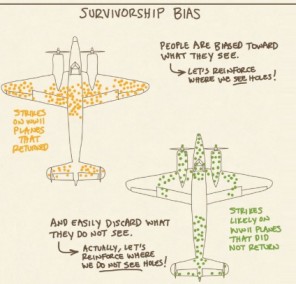
During World War II, analysts mapped bullet holes on returning bombers to figure out where to reinforce them. Statistician Abraham Wald pointed out the real blind spot - the planes hit in unmarked areas might never have made it back. This is survivorship bias.
Your customer satisfaction dashboard has a similar problem. You see the customers who respond, but miss those who ignore the survey or stop shopping altogether. In fact, Quantum Metric found that half of consumers hadn't given a brand direct feedback in the previous six months. The lesson? Pay attention to who's missing from your feedback, not only who's answering.
According to Quantum Metric's 2026 research, half of consumers hadn't given a brand direct feedback in the previous six months, even as 45% of digital leaders said their brands had increased investment in feedback channels. Fewer than one in five consumers considered surveys an effective way to get their feedback heard.
One Shopify seller described this very problem, “Despite sending multiple reminders, customers rarely submit reviews unless they've had a negative experience.”
Another seller heard from customers who loved their products but still refused to spend a few seconds reviewing them. The reasons are fairly ordinary. Your customer has unpacked the order and moved on with their day. Writing a review is another task on an already crowded to-do list, with seemingly no return.
The result? Your feedback can lean toward people with particularly strong reactions, whether delight or frustration, while customers who have an ordinary experience carry on in silence.
Even when customers respond, the answers can still leave you scratching your head.
In a Shopify Community discussion about post-purchase surveys, a merchant described the problem with asking shoppers how they discovered a brand:
“Instagram” wins the pie chart but was it a paid ad, a reel from a creator you paid, or a friend’s story? Or was it just the first option shown in your survey?
That's a lot of different customer journeys crammed into one dropdown option. Each could call for a different marketing decision, yet the survey lumps them together.
Customer satisfaction surveys can leave you with the same puzzle. A shopper gives your delivery experience two stars. Was the parcel late? Was the tracking page confusing? Did the box arrive looking as if it had been through a small wrestling match? Or was it something else?
So yes, a score simply raises the alarm.
By now you know a feedback dashboard can become a beautifully organized museum of complaints. Every chart is labelled, and every dip is color-coded.
And the gap between collecting feedback and acting on it is surprisingly wide. Research found that 52% of surveyed digital leaders had no formal process for acting on customer feedback.
But the job doesn't end when you see a CSAT score go up or down, right? You also need to pay attention to what decision that number should trigger.
Say your customer satisfaction software flags a sudden drop in delivery satisfaction. Before sending everyone an apology email and a discount code, look for a pattern.
Are the complaints concentrated around a particular carrier, warehouse, or week of orders? Do customers mention late deliveries, confusing tracking updates, or damaged parcels? Check the written feedback against order details and support conversations to narrow down the cause.
Customer satisfaction software can help you tag recurring themes, filter responses by customer or purchase, and send alerts when scores fall below a threshold. Depending on the platform, it may also route the feedback into your customer support system for someone to handle.
Each step should lead somewhere. A cluster of complaints about tracking or where is my order tickets need a different fix from a cluster of damaged deliveries.
Sometimes the problem is surprisingly small. In a merchant discussion on Reddit, a seller described linking an FAQ page in order confirmation emails and reported:
“We did that and it killed like 40% of our ticket volume overnight.”
The seller said most of those tickets concerned the same five questions about shipping times, returns, and sizing.
The same logic applies when you use customer satisfaction software. Once you’ve made a change, look at the CSAT score for the affected experience, the number of similar support tickets, and whether the same complaint keeps appearing. Compare similar periods or order groups so that an unrelated change in sales volume doesn’t muddy the result.
The software can surface the pattern and help you track the response.
Customer satisfaction software gives you one view of the customer experience. Your store generates several others through its order history, return requests, support tickets, and warranty claims.
In one Reddit account of a misdelivered $800 order, a customer explained that their package had landed in the wrong state. Support kept insisting it had been delivered to their garage, then suggested checking with the neighbors. The customer replied:
“Sure let me just walk to California and ask them”
The customer was clearly running out of patience, and the support process turned one delivery problem into several more.

Of course, not every negative review calls for a full investigation. One customer wanting a different colour can be logged and monitored. Repeated complaints about damaged deliveries, confusing returns, or the same product failing deserve a closer look.
When a product actually breaks, product protection gives customers a way to get eligible failures repaired, replaced, or reimbursed, while giving merchants another revenue stream.
The results can extend beyond the initial sale. With SureBright , a lawn and garden retailer saw product ratings rise from 4.1 to 4.7 stars in four months, customer complaints fall by 17%, and revenue increase by 16% after introducing extended and accidental protection plans.
And if you're curious what that could mean for your store, use SureBright's warranty revenue calculator to estimate your earning potential.