Give gifts without worries - SureBright protects every purchase



If you run an eCommerce or retail business, this question probably lands in your inbox more often than you’d like.
A customer reaches out after what you thought was a successful purchase. The product isn’t to their liking, and their opening line is: “Can I return this?”
They’re not wrong for reaching out. They just don’t know what to call the problem they’re having.
For them, it’s simple: they bought something. It didn’t work out. They want it resolved.

But when the process feels confusing or slow, customers aren’t known to wait patiently. Some give up, get bored, and file a chargeback instead. And that’s where a simple misunderstanding suddenly becomes expensive.
“A guy once bought a computer from us. 3 months later, well past the return policy, he wanted to return it. I told him we couldn't and advised him to use the limited warranty. He then threw a tantrum and refused any other offer to assist. When the district manager backed me up, he told me he was going to dispute the charge 3 months after the purchase. Which was legitimate.”
- A frustrated merchant on reddit
To avoid paying an average $25 dollars for every return, let’s go over what the whole deal is between refunds, warranty, and when you should choose one over the other.
Let’s clear this up right now.
Returns = “I changed my mind” or “this isn’t what I expected.”
Warranty = “This broke, and it shouldn’t have.”
That’s it. That’s the difference.
Returns usually have a window from around 14 to 90 days, and usually require the product to be unused, and end with a refund.
Warranties kick in after the return window closes and focus on repair, replacement, or coverage over time.
And somewhere in between sits shipping protection, which has your back in case the items were damaged in transit.
Because customers don’t memorize policy pages. And because Amazon has trained an entire generation to believe the solution to almost any issue is “just return it.”
“I'm definitely not complaining, but how are the Amazing reps able to issue a full refund on something so expensive while allowing me to keep it?”
- A reddit user on a post titled, ‘Received a full refund and got to keep the item!’
There are also mixed motivations. Some customers are genuinely confused, while others are opportunistic, to say the least.

Focus on these questions to understand their intent: does this customer have a problem with the product, or do they just not want it? And why?
Answer that, and the path forward to refund, replace or ignore becomes much easier. To be honest, you could leave it entirely up to the warranty provider you work with, but if this question won’t stop bugging you, we’ve got the answers you need.
Timelines
“I didn’t really use it. Can I still return it?”
If it’s untouched, has all tags, and is within the return period, then yes. Otherwise, it’s a big, fat no.

Condition
Damaged vs. defective vs. normal wear and tear sounds obvious to merchants. To customers, it’s all just “broken” or “looks good to me.” Most people genuinely can’t tell the difference.
Expectations
Customers often expect a refund, but warranties usually mean repair or replacement, not money back. And when customers don’t understand this, some of them get really mad. That’s when you start seeing chargebacks filed out of frustration (or vengeance).

Merchants aren’t immune to confusion either, and can wind up making things worse.
These are typically the problems:
And when policies aren’t enforced the same way every time, every claim turns into a negotiation.
Here’s how that confusion usually plays out:
Now, multiply this by scale, and things get messy fast. Imagine 10,000 employees all having differing opinions on whether John from Mississippi should get a refund or not. Meanwhile, he’s already filed for a chargeback.

How you handle the resolution matters just as much as the policy itself. Different problems deserve different outcomes. Here’s a simple way to think about it:
This kind of clarity removes guesswork for your team, and customers know what they’re getting into upfront.
Processing a return can cost you anywhere between 20% and 65% of the item’s value, according to Shopify. So, when returns and warranties are mixed up, costs pile up.
When you keep processing returns incorrectly, you’re refunding money you didn’t need to.
Plus, if they were looking to actually get the product repaired or replaced, and instead get a refund, they might give you bad reviews, social posts defaming your brand, or you lose repeat customers.
On the other hand, inconsistent answers and vague gesturing will wear down your support team, and they’ll get burnt out sooner or later.
.gif)
And if you’re out to grow your business, this needs to be fixed ASAP. If you follow this approach at 100 orders a month and are getting by fine, your business model will break completely at 10,000.
At scale, every inefficiency compounds.
No business lingo, and no more pages and pages of info scattered around. Make the difference obvious. Your customers shouldn’t have to look up a word when they’re trying to make a quick purchase, otherwise you’ll miss out on potential sales. On the flip side, try not to make it too simple.
Use simple, understandable language everywhere, like in product pages, order confirmations, FAQs.
Spell out these as clearly as you can:
Wayfair does a good job at creating an easy-to-use help center for its consumers. They have a page full of information (and links to related queries) on what to expect.
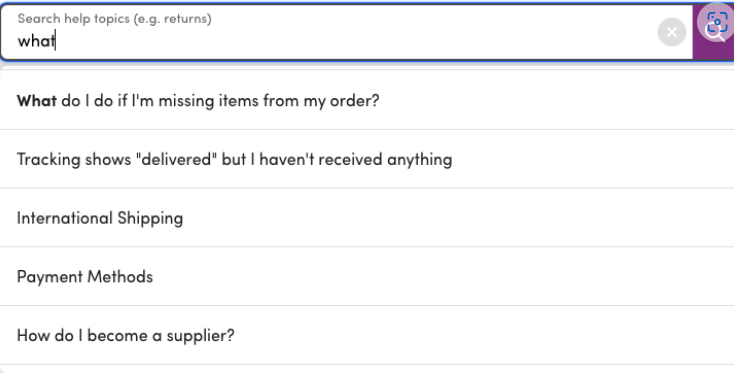
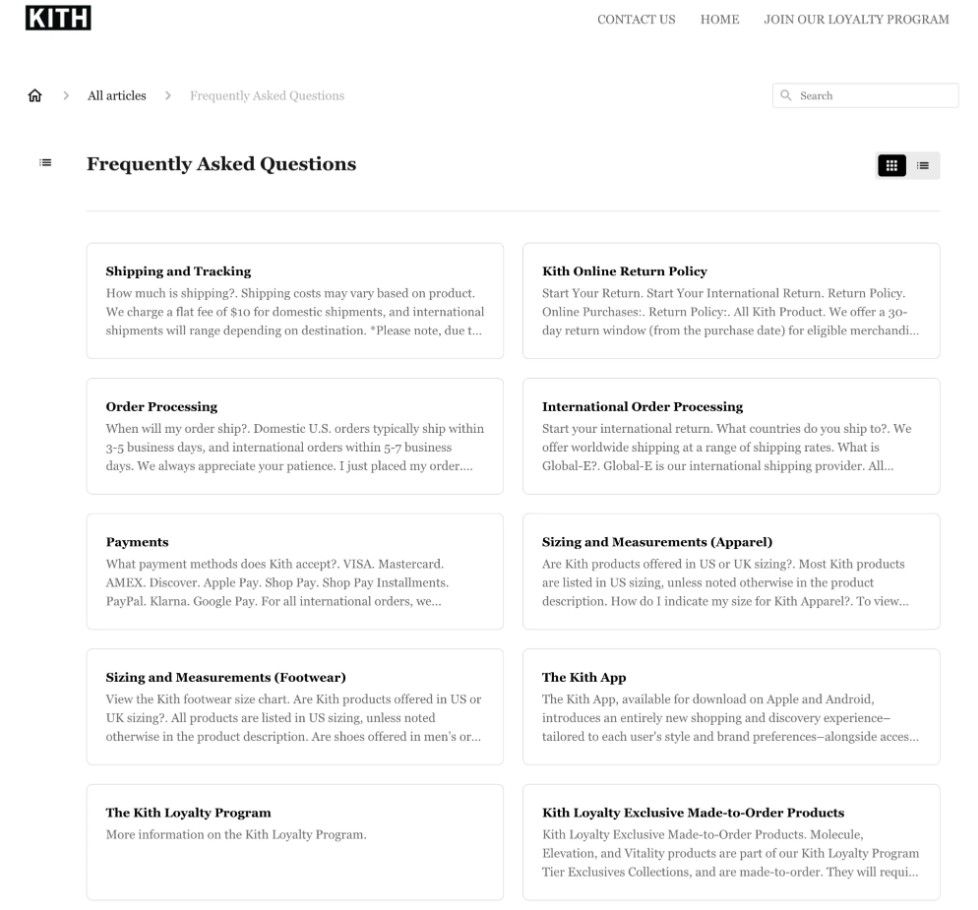
While you don’t need to create an entire help center, having the information spread across and on an FAQ page will save you a lot of time and money in the future. For example, the FAQ page by KITH does a great job at answering queries without a ton of snazzy tech.
Your support team should never be guessing. Policies should be written down, easy to find, and consistently applied.
If the warranty process feels like a hassle, customers will push for returns instead. That’s where choosing the right warranty provider makes a huge difference. When claims are simple and fast, everyone wins.
If you don’t have one already, a good partner for warranty, like SureBright, manages the process for you, making sure you don’t get post-customer yelling headaches.
And if you’re worried about scammers? Don’t be. Customers already agree to your return and warranty terms at checkout. Clear policies protect you just as much as they help them.
Most customers aren’t trying to game the system. They’re just confused, mainly. And helping them through the confusion (while being aware of the processes yourself) makes your relationship with your customer stronger.
If you’re wondering about what more you can do for your business, especially in the case of warranty fraud, asking your peers and looking for resources helps a ton.








.jpg)