
How to create e-commerce offers for high-consideration purchases (without sacrificing your margins)

Overview of Contents
Somewhere out there, a $3,000 sofa purchase is being held hostage by five shades of beige.
Is it warm beige? Cool beige? Greige? Or that peculiar shade of grey that somehow turns brown the moment sunlight hits it?
You can almost picture the customer sitting in their living room, laptop open, holding their existing cushions against the screen and wondering whether the sofa they’ve been admiring for three weeks will make their home look like their inspirational Pinterest board.
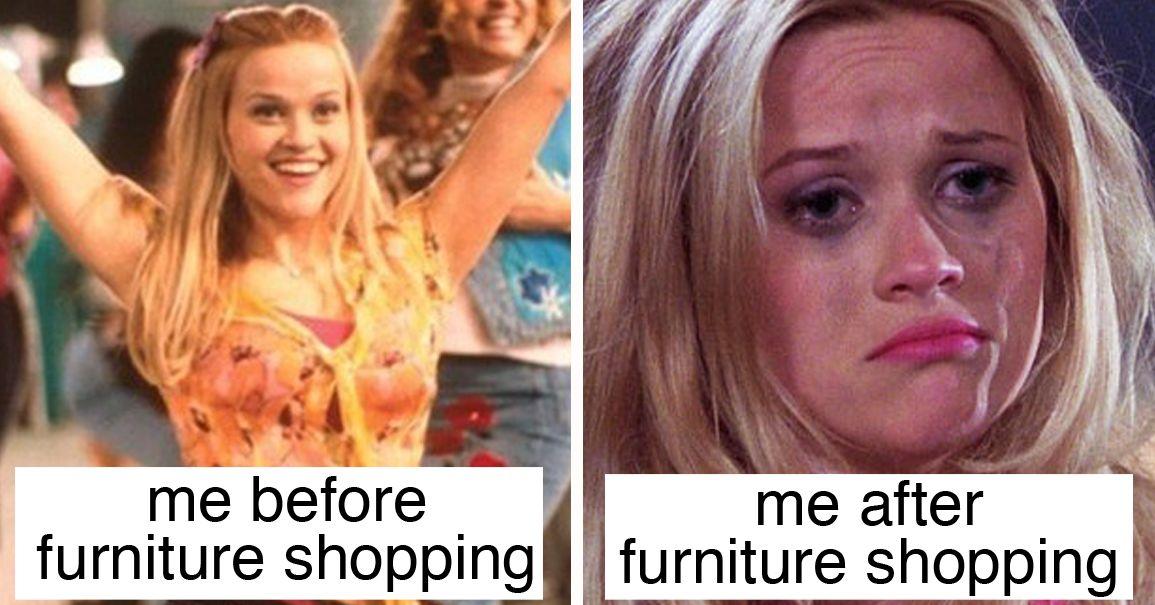
And somewhere on the other side of that screen is a merchant who would very much like to make a sale.
Furniture retailer Burrow solved this existential crisis for their online customers with a pretty low-tech solution by mailing customers up to five fabric swatches for free.
Five tiny pieces of upholstery to help someone decide whether to spend thousands of dollars.
It sounds almost comically disproportionate until you consider what’s actually at stake.
A sofa that looks wrong in the living room isn’t easily shoved back into its original packaging. Neither is a $4,000 refrigerator that doesn't fit through the kitchen doorway.
For shoppers, high-consideration purchases come with the uncomfortable knowledge that a poor decision can stay with them for years. In fact, NIQ's 2026 research found that 39% of tech and appliance consumers had postponed purchases because they doubted the product’s quality or reliability.
Merchants, meanwhile, have their own expensive decisions to make.
A year-long trial might persuade a hesitant customer to buy today, only to leave the retailer arranging a return pickup eleven months later. Complimentary installation might seal a $5,000 sale, but what happens when the technician's bill arrives?
These are the complex calculations hiding behind the seemingly simple task of making an attractive offer.
Because when thousands of dollars are involved, your customer needs a compelling reason to commit, and as a merchant, you need to make sure that commitment is worth winning.
In this blog, we’ll look at how you can create offers that survive both sides of that equation and give customers a reason to stick around after the purchase.
Why do your customers hesitate in the first place?
A Shopify merchant selling guitar amplifiers and speaker cabinets recently turned to Reddit with a familiar problem. His conversion rate had climbed to 0.8%, but he wanted to reach 2%.
One guitarist replied,
"there's no way I'd buy an amp without several in depth demos."
Fair enough. But another observation in the discussion was more interesting.
The merchant was measuring sales of inexpensive accessories and professional audio equipment under the same conversion rate.
Except someone buying a $20 guitar cable and someone spending hundreds on an amplifier are hardly making the same decision. One might check out in minutes. The other could spend weeks comparing models, watching demos, and visiting stores.
And this behavior extends well beyond musical equipment.
In a 2026 Baymard study of 3,023 American home and hardware shoppers, more than half had visited a physical store to see or test a product before completing their purchase online.

So a customer disappearing from your website might be reconsidering the purchase, or they might be doing their homework elsewhere.
That's why an overall conversion rate can only tell you so much.
Look at conversion rates by product category and price, repeat visits, and the questions filling your support inbox. Better yet, ask recent customers what nearly stopped them from buying.
You might discover that some worry about product compatibility, others about delivery costs, and still others about paying for repairs down the line. Each concern requires a different kind of reassurance. And knowing which one you're dealing with is the first step toward creating an offer worth accepting.
Create offers around what matters most to high-consideration shoppers
Once you've identified the problem, next comes the rather unenviable task of deciding how much of it your business should take responsibility for.
And a seemingly generous offer can come back to haunt you.
One customer's account of an LG refrigerator purchased through Costco illustrates this point.
Their first installation appointment ended with instructions to hire a plumber and replace the water inlet valve. The customer complied. At the second appointment, the installer reportedly refused to proceed because the refrigerator was too big.
According to the customer's measurements, the opening was 36¼ inches wide, while the refrigerator measured 35¾ inches.
And so, half an inch had somehow become the most controversial piece of real estate in the kitchen. Meanwhile, the expensive new refrigerator was gathering dust in the garage, and the customer had already spent money on plumbing modifications.
What makes this particularly interesting is that Costco's appliance offer includes delivery, basic installation, and haul-away services for eligible purchases. Its terms also require suitable utilities and sufficient installation space. But the incident above shows how quickly a reassuring offer can become an operational headache when the customer and installer have different expectations about what’s included.
And customers are paying more and more attention and expressing their concerns publicly. In DHL's 2026 e-commerce research, 67% of shoppers reported abandoning a purchase because of the delivery offering. Yet only 52% of businesses identified delivery as a reason customers abandoned their carts.
That’s a rather expensive blind spot, especially when you’re selling products that require two delivery workers and a small miracle to get through the front door.
Can making payments easier help?
A $2,000 purchase suddenly looks much friendlier when the customer can split the bill into manageable installments.
In a 2026 study discussed by Duke University, researchers found that introducing buy now, pay later (BNPL) increased a retailer’s sales by approximately 20%. Better yet, some customers even traded up to more expensive products.
At the same time the retailer had quietly taken on a second occupation - moneylender.
It financed purchases itself, which meant carrying the risk of customers failing to repay. So, roughly one in eight applicants were rejected, and financing approvals were more likely for higher-margin products.
Turns out, even the business encouraging customers to spend more was rather particular about where its money went.
At this stage, you would say, why not leave the lending business to someone else?. For instance, services like Shop Pay Installments handle customer repayments while the merchant receives payment upfront, minus a transaction fee.
That fee, however, is rather stubborn. Shopify confirms that merchants don’t get it back when an order is refunded.
What about trade in offers?
Think of customers who would rather avoid another monthly bill altogether. Perhaps they’ve got an old phone gathering dust in a drawer that could help pay for the new one.
That’s where trade-in offers become relevant.
Samsung, for instance, offers eligible customers instant credit toward a new device before the old one has even been inspected.
But an old device needs to retain enough value to justify what you're offering for it, and somebody has to handle the inspection and eventual resale or refurbishment. Otherwise, your wonderfully generous upgrade program could turn into a costly electronics recycling operation.
For your own high-ticket products, run the numbers before introducing these offers. BNPL fees, trade-in credits, and additional returns can quietly consume the profits from those extra conversions.
Some offers are better made over time
Another peculiar thing about expensive purchases is that customers rarely make every decision at once. There’s a long gestation period, perhaps a few rounds of debate to reach family consensus, hopefully without an occasional threat to marital harmony.
In August 2026, a dad planning a $4,000 home theater had a clear equipment in mind and a budget to work with. But there was one final hurdle:
What he called an “extremely high wife approval factor.”

And this kind of deliberation can stretch for months. A survey found that 19% of recent furniture buyers took multiple months to reach a purchase decision.
For merchants, that means an abandoned cart could still be making its way through the family approval committee.
So, in addition to reminding customers about everything they’ve left behind, give them something useful to take back to the negotiating table. A shareable quote, a saved configuration, or an expert consultation could help settle the questions holding up the purchase.
But suppose the committee finally a unanimous decision.
The customer still has to work out installation, future repairs, and whether additional protection is worth purchasing. Asking them to resolve every conceivable ownership concern at checkout could make buying a home theater feel like applying for a mortgage.
This is why you need to time your offers wisely.
Consider Sennheiser's warranty program with SureBright. Customers could purchase protection at checkout, through phone agents, or through post-delivery communications, within the applicable eligibility window.
The program achieved a 28-31% warranty attach rate, alongside a 26% year-over-year reduction in returns.
Customers could focus on choosing their audio equipment first and consider additional protection when they had more room to think about long-term ownership.
And a good ownership experience can pay dividends long after the original purchase. According to Attentive's 2026 research, 69% of shoppers said post-purchase content, including care instructions and product-use guidance, made them feel more confident about their purchases.
And this is where high-consideration purchases create an interesting retention opportunity. A customer might buy an expensive coffee machine only once every several years, but that doesn’t mean their commercial relationship with the retailer needs to go into hibernation.
Cleaning products, replacement filters, servicing, and eventually an upgrade can all become reasons to return. So make offers relevant to the product’s life, rather than bombarding someone who bought a $2,000 machine yesterday with an invitation to buy another one.
Make sure your offer earns its keep
Before launching your next high-consideration offer, introduce it to the toughest person to impress in your organization (hint - whoever manages the finances.)
Calculate what an average qualifying order leaves behind after product costs, delivery, payment fees, and the actual cost of fulfilling your offer. Then estimate how many additional purchases you would need to justify those expenses.
A free installation worth $150 might help close a $4,000 sale. Wonderful. But if you were already going to win that customer, you’ve effectively volunteered $150 of your margin.
And give returns and cancellations enough time to make their appearance before celebrating the results. They have an unfortunate habit of arriving after the sales team has already opened the celebratory champagne.
To conclude,
There’s an old saying that a promise is a debt unpaid. In e-commerce, that can become quite literal.
A complimentary installation eventually becomes a technician's bill. A generous return policy becomes a pickup request. And an extended warranty might become a repair claim three years from now.
For instance, with a partner like SureBright handling warranty claims and taking on the associated financial risk, you can offer customers long-term protection without turning your store into a repair and claims department.
When you keep your promises, customers remember that too.
Want to give customers that same peace of mind without handling repairs and claims yourself? Schedule a 15-minute demo with SureBright to see how product protection could work for your store.

Author
Muskan Banga
Muskan is a content writer in the warranties and product protection industry, focused on demystifying and simplifying the industry for both her readers and herself. Her process begins with deep research, weaving in real-world examples to make complex ideas feel accessible and relatable. In her spare time, she obsessively devours Substack newsletters and books while losing herself in art films.